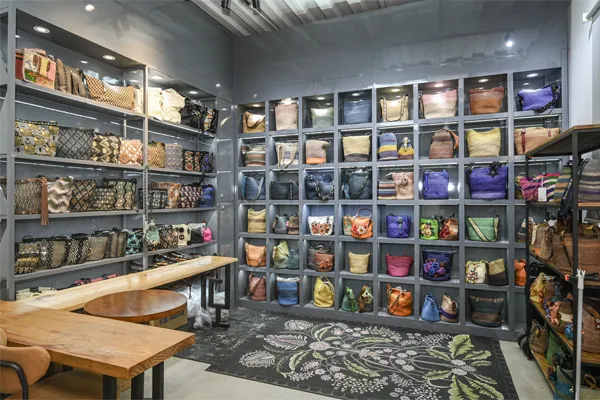
When you first notice a Wayuu bag, it’s usually the colors that catch your eye. But what truly defines its value isn’t just the pattern—it’s how that pattern is woven. Single-thread and double-thread techniques affect everything from texture and durability to production time and price.
Whether you are sourcing for a retail brand or choosing a piece for your personal collection, understanding these technical differences will help you spot quality and avoid overpaying.
What Are Wayuu Bag Patterns (Kaanas)?
Cultural Origins of Kaanas
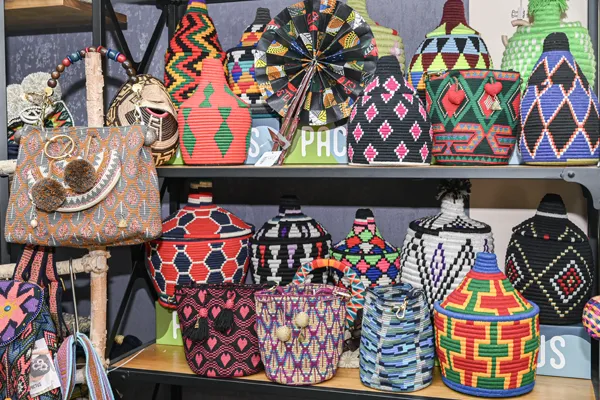
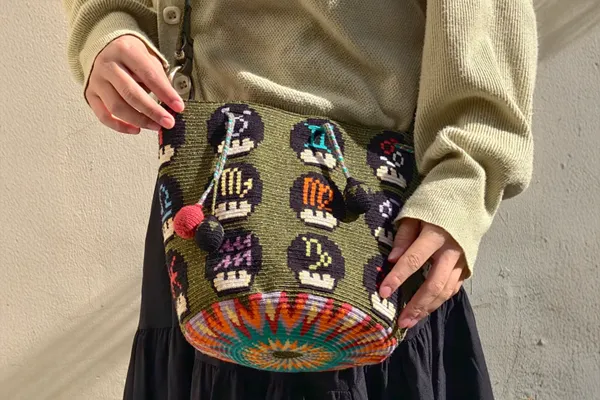
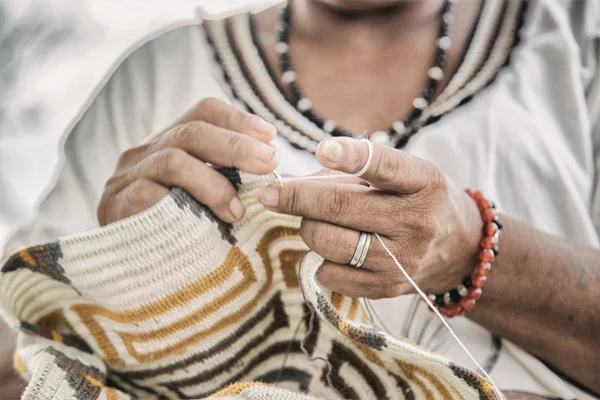
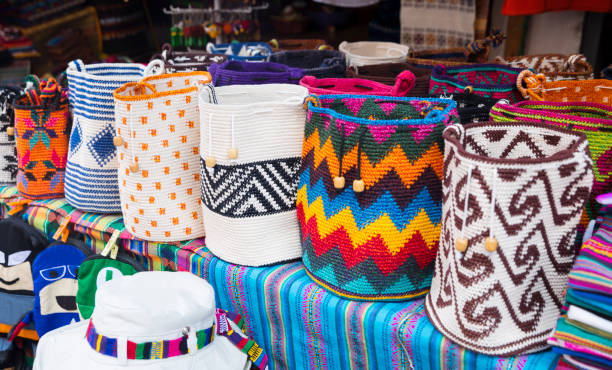
Wayuu bag patterns, known as Kaanas, are traditional geometric designs from the indigenous communities of northern Colombia. In the Wayuu language, “Susu” refers to the hand-crocheted bag itself. Traditionally, a true Susu is crafted using a meticulous single-thread method.
Each pattern acts as a visual shorthand for the artisan’s history and environment. Because weavers work from memory, you will find slight variations in every piece. These tiny “imperfections” are your best proof that the mochila bag is genuinely handmade.
Common Symbols and Their Origins
Most patterns use repeating geometric shapes inspired by life in the Guajira Peninsula:
- Pulikerüüya: Based on the markings of a donkey’s back.
- Molokonoutaya: Replicates the geometric shell of a tortoise.
- Kuliichiya: Inspired by the structure of traditional roof poles.
- Diamonds & Zigzags: These represent paths, movement, and the desert landscape.
- Stars: Traditional symbols used for navigation and spiritual guidance.
Single vs. Double-Thread: Technical Differences
How the Stitching Works
The primary difference is the number of yarn strands the artisan carries. Single-thread weaving is the original technique. It uses one strand, resulting in a tight, fine, and detailed weave. Double-thread weaving is a modern adaptation. It uses two strands at once to create larger stitches. This allows for much faster production, though the finish is thicker and less detailed than the traditional models you see in luxury boutiques.
Texture, Weight, and Best Uses
How the bag feels in your hand and how it performs in your daily life depends on this choice:
- Single-thread: The fabric has a refined, cloth-like drape. It is incredibly flexible and folds flat in your luggage without creasing. Choose this if you want a premium, lightweight accessory for high-end travel or formal use.
- Double-thread: These bags are much more structured and can often stand upright on their own. The texture is “chunkier,” feeling more like a rugged, durable canvas. These are your go-to “workhorse” bags for beach trips and daily errands where durability is your top priority.
Comparison Table
| Feature | Single Thread | Double Thread |
|---|---|---|
| Yarn Usage | Single strand (Fine) | Double strand (Thick) |
| Texture | Smooth and cloth-like | Rugged and chunky |
| Structure | Flexible / Folds flat | Rigid / Stands upright |
| Weight | Lightweight | Heavier |
| Production Time | Several weeks to 1+ month | 10–15 Days |
| Ideal For | Luxury travel / Collectors | Daily wear / Volume retail |
Why Is Single-Thread More Expensive?
Production Time and Labor
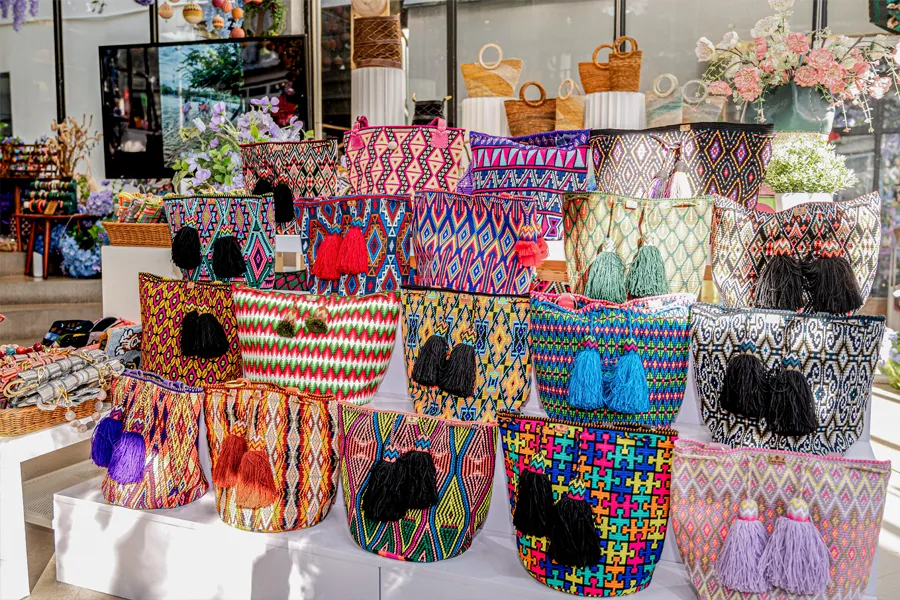
When you compare the two, a single-thread Wayuu bag often requires several weeks to over a month of continuous labor, while a double-thread version can be finished in about half that time. The reason for the higher price is simple math: because single-thread stitches are so much smaller, the artisan must execute thousands of additional loops to cover every square inch of fabric.
This significantly increases the total labor hours required for a single piece. You aren’t just paying for materials; you are paying for the weeks of manual precision needed to build that signature dense weave. For your retail business, this extended production cycle creates the natural scarcity and high-end positioning that justifies a premium price tag.
Technical Skill and Precision
The price also reflects the level of mastery required. Single-thread weaving allows for much sharper geometric lines and more complex Kaanas motifs. Furthermore, thinner threads manage color transitions more effectively. This ensures your bag remains sleek and well-defined, even when using a palette of five or more colors.
How to Identify Single vs Double Thread Wayuu Bags
Inspect the Stitch Density
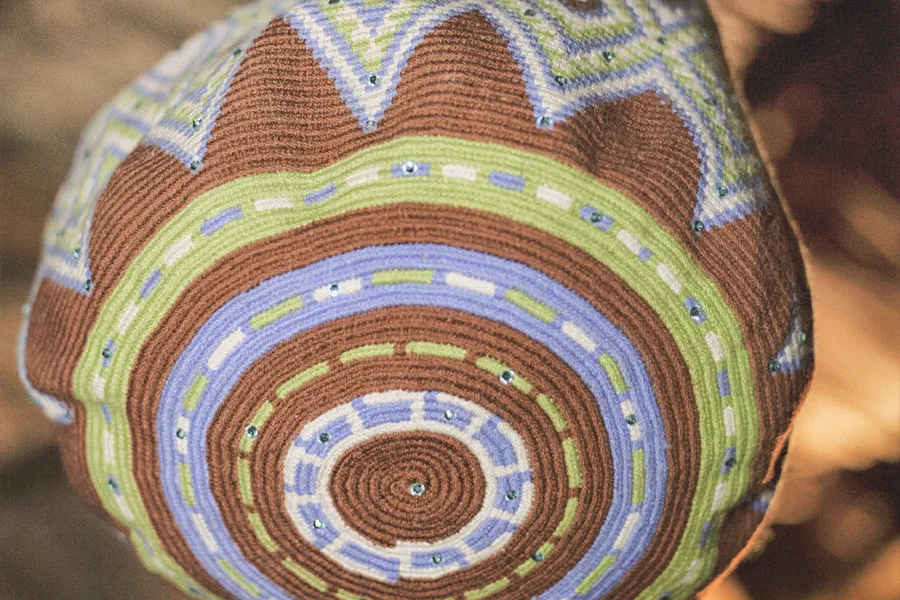
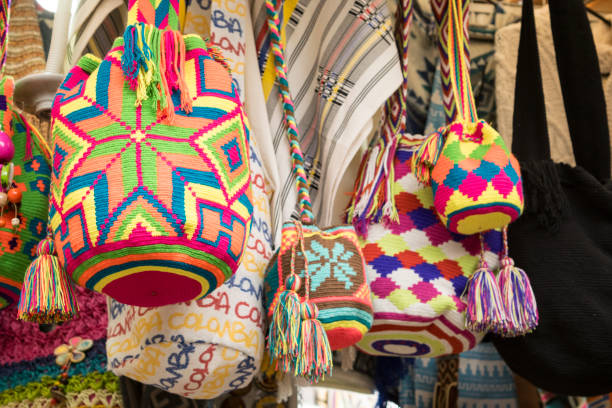
Run your fingers over the rows of yarn. In high-quality single-thread bags, the stitches are so tight you can barely see any gaps. If the weave feels “coarse” and you can easily count the individual loops with your naked eye, you are holding a double-thread construction.
Compare the Weight and Texture
The physical weight is a major giveaway. Because double-thread bags use twice the yarn per stitch, they feel significantly heavier and stiffer. A single-thread bag should feel surprisingly light for its bag size—more like a textile than a basket.
Observe the Pattern Clarity
Check the edges of the geometric shapes. If the lines are sharp and precise, it is single-thread work. If the motifs look “pixelated” or bold, the weaver likely used double threads. The larger stitches of the double-thread method simply cannot hold the fine detail of complex heritage patterns.
Scaling Your Collection with Authentic Sourcing
Managing Lead Times and Supply Stability
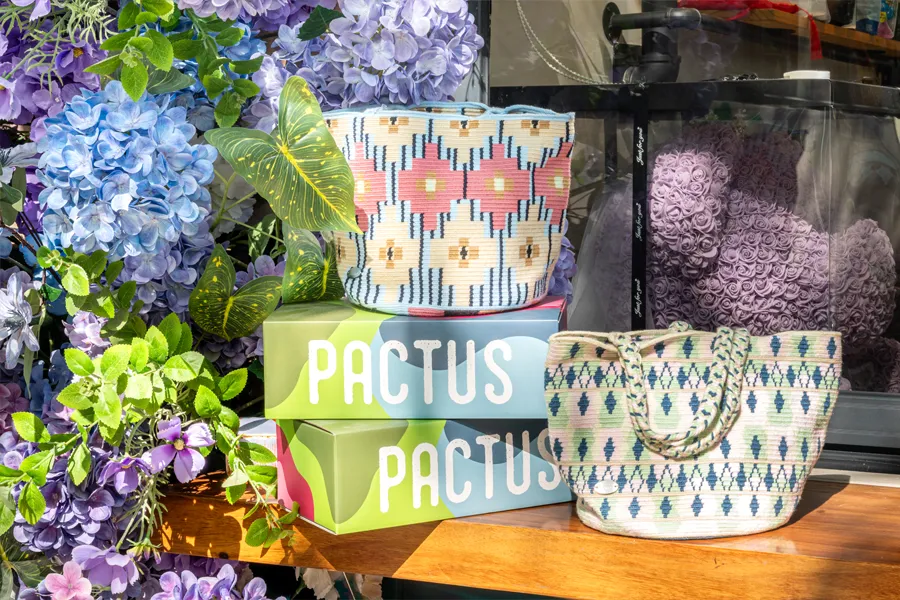
Finding a balance between quality and production speed is the biggest challenge when scaling a Wayuu bag collection. Because single-thread pieces require weeks of focused labor, relying on a single artisan can lead to stockouts. At Pactus, we solve this by partnering directly with over 5,000 Wayuu families. This direct-source model ensures that while the craft remains slow and traditional, your supply chain remains stable and predictable.
A Data-Driven Inventory Strategy
For those building a retail brand, we recommend a 60/40 inventory split to keep your business healthy. Allocate 60% of your stock to double-thread bags to drive consistent volume and accessible pricing. Use the remaining 40% for premium single-thread pieces. These “hero” products establish your brand’s authority and offer the higher margins needed for long-term growth.
Customization and Private Labeling
If you want to differentiate your brand, consider custom color palettes or private labeling. Beyond the weave, you can also upgrade traditional mochilas with Italian leather straps or premium hardware. These small adjustments transform a traditional craft into a high-end, branded accessory tailored specifically for your target market.
Final Thoughts
Wayuu bag patterns are a mix of technical precision and cultural history. Whether you are a business owner or a collector, knowing the difference between single and double-thread construction is the only way to ensure you are getting the level of craftsmanship you deserve.
Ready to see the quality firsthand? We suggest starting with a sample order so you can feel the difference in weave density before committing to a larger collection. Contact the Pactus team today to discuss your project.