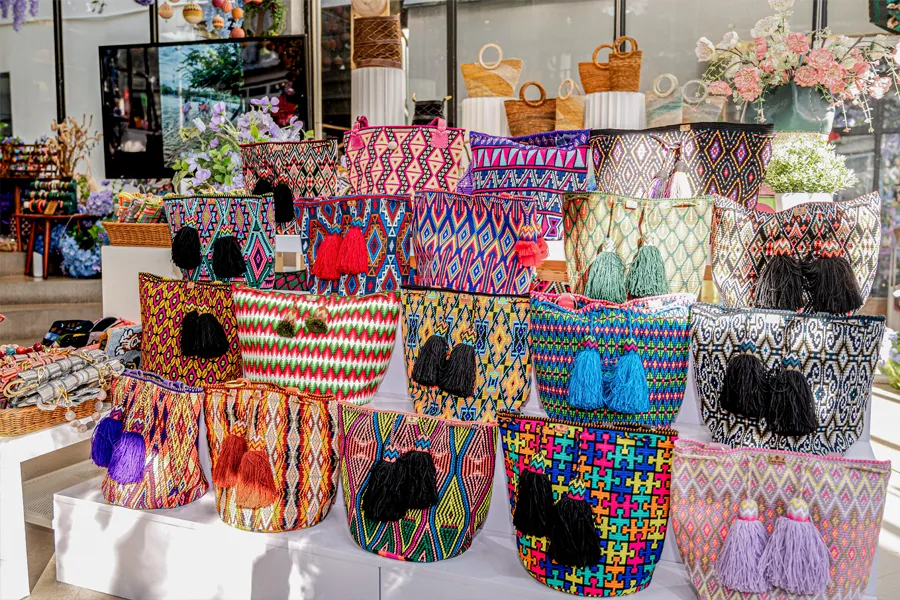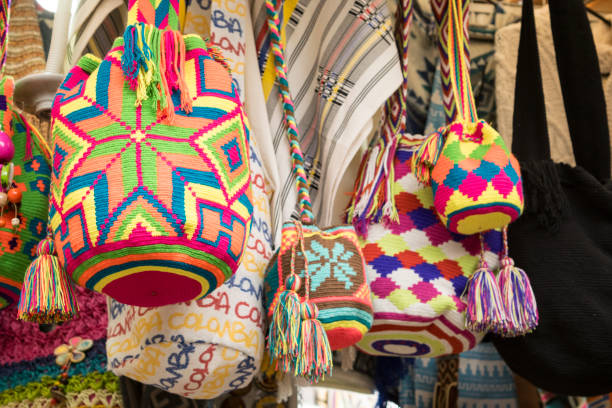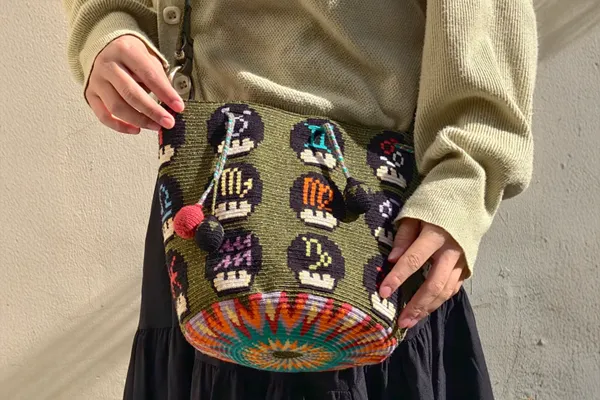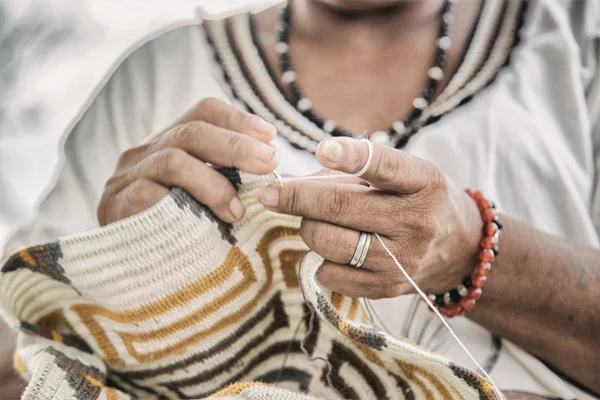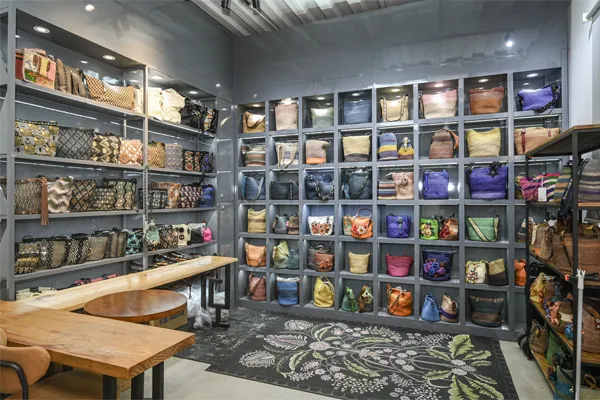
An authentic Wayuu bag is defined by its bold geometric patterns. These designs, called Kanaas, are a visual language born in the Guajira desert. A single triangle or line records a weaver’s lineage or the stars above. It is an ancient art you can carry. But today, soulless copies are everywhere. To find a true masterpiece, you must understand the Wayuu bag patterns first. Let’s decode the stitch.
The Story Behind the Stitch
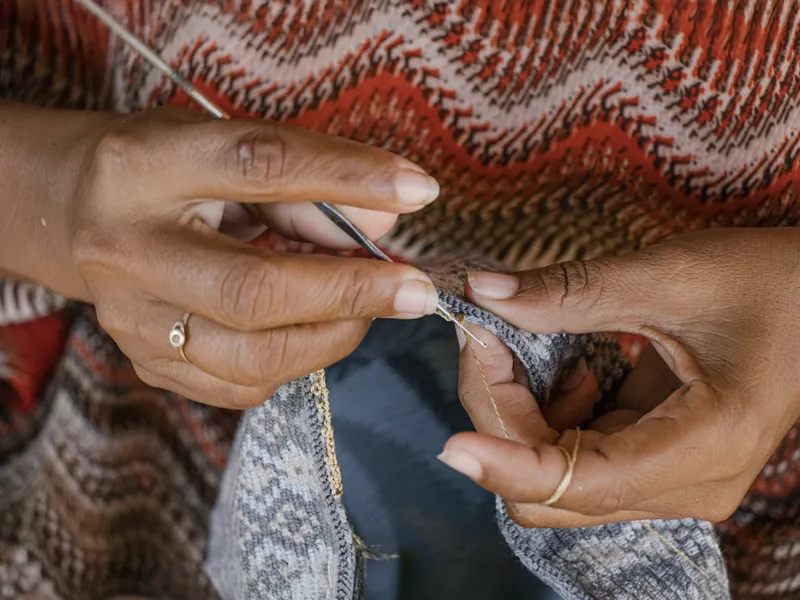
When you hold a mochila bag, you are touching a conversation between a woman and her ancestors. It’s a sacred practice. As you trace the geometric lines, remember that each choice translates indigenous mythology and clan history into something physical you can feel in your hands.
A Gift from the Spider Goddess
The Wayuu credit their weaving tradition to a spider goddess named Wale’kerü. Legend says she taught the women how to map universal harmony through thread. Think of this as a spiritual exercise. As the weavers work, they turn silent thoughts and raw emotions into the art you see before you.
It is also a vital rite of passage. When a young girl begins her encierro (seclusion) at puberty, she learns to shoulder the cultural weight of her tribe through the needle. It is her transition into womanhood.
How Patterns and Colors Map a Worldview
As you look closer at the kanaas, you’ll realize they aren’t just pretty shapes. They are complex visual stories.
Notice how these specific motifs carry deep meaning:
- Snake (Sarayü): Look for repeating zig-zags. They track the eternal journey of the soul and the shedding of the past.
- Sun (Ka’í): Often the central focus of a circular base. It represents the relentless desert heat that fuels the raw creative energy you feel in the design.
- Spider (Wale’kerü): These interlocking webs honor the very origin of the “endless thread” you are holding.
While the patterns provide the structure, the colors set the mood. Blue symbolizes the peace of water. Green reflects the hardy desert flora. Red channels the life-force of the people. It’s a balance of cosmic and emotional forces.
Reading the Patterns: Traditional Kanaas
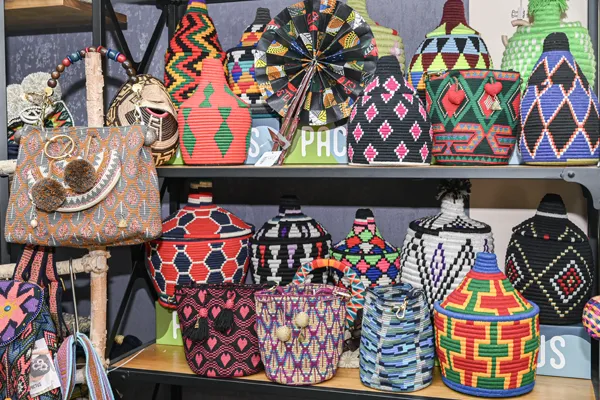
Think of kanaas as a precise visual language. You can use these motifs to “read” the Wayuu bag history and spiritual protection woven into each piece.
| Pattern Category | Motif Example | The Meaning |
|---|---|---|
| Basic Geometry | Circles & Triangles | Unity, life cycles, and your spiritual safety. |
| Mythology | Wale’kerü (Spider) | Creativity and universal harmony. |
| Fauna | Sukü (Jaguar Eyes) | Strength and physical protection for the wearer. |
| Daily Life | Siwottouya | Horse footprints left in the sand. |
The Shapes That Build Your Story
Notice the foundational shapes. They are the building blocks that create the Wayuu bag‘s structural balance.
- Circles: These represent Mma (the Earth). When you check a Wayuu mochila bag, look at the base. A perfect circular spiral is your first sign of a master artisan.
- Triangles: Known as Hatuu’pala, these act as your spiritual shields against negative energy or the “evil eye” while you travel.
- Lines: These trace family paths. You’ll see parallel lines representing the harmony between your physical and spiritual worlds.
- Complex Forms: Interlocking diamonds and stars evoke the balance required to survive in a harsh desert environment.
From Jaguars to Turtle Shells
Every Wayuu bag you find has a defined narrative. You might spot motifs inspired by the wild or the home.
- Kuliwalu: A complex, flowing pattern illustrating the soul’s afterlife path.
- Sukü: The “Jaguar’s eye.” If you want to project strength and vigilance, this is the motif to look for.
- Molokonoutaya: Inspired by the morrocoy (turtle) shell. It’s a dense, symmetrical pattern symbolizing the wisdom of elders.
- Everyday Sights: You’ll even find literal patterns like Pasatalouya (cow intestines). It’s a fascinating glimpse into how the weaver observes the resources that sustain her tribe.
Maximize Profits With Luxury Remake Wayuu Bags
Color Meanings in Wayuu Weaving
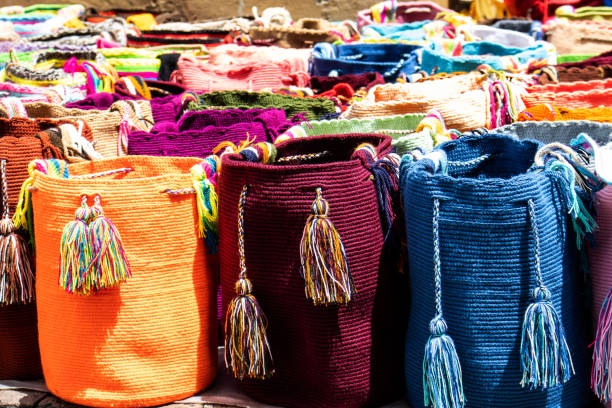
Have you noticed how the colors seem to pop? They do more than just catch your eye. Every choice is a deliberate message sent from the weaver directly to you. Colors in Wayuu weaving act as a sophisticated symbolic language communicating spiritual protection, environmental roots, and ancestral identity directly from weaver to canvas.
Primary Colors and Spiritual Symbolism
Wayuu artisans deliberately select thread colors to communicate specific cultural and environmental realities. Each hue carries distinct sacred weight.
- Red: Represents spiritual protection, life, and blood. Weavers heavily incorporate this hue into sacred items like Tüumma stones and protective infant hammocks.
- Blue: Links directly to storytelling traditions and Juya, the rain god, symbolizing life-giving water.
- Green: Signifies the native cardón cactus, representing environmental survival and resilience in the desert.
- Brown: Embodies Mma, the earth goddess. It reflects feminine force and serves as the grounding foundation of Wayuu philosophy.
- Yellow: Reflects the natural warmth of both the regional climate and the local population.
Color Blending and Cultural Transmission
Beyond single colors, artisans intuitively mix specific hues to create deeper layers of meaning. Blending green and blue expresses peace, while combining red and orange evokes the raw energy of fire.
Weavers pull these vibrant palettes of bright yellows, rich pinks, and deep greens directly from the flora and fauna across the Guajira Peninsula. The natural surroundings dictate the visual contrast and balance of every piece.
This chromatic language survives through strict maternal instruction. Mothers teach specific color combinations to their daughters to embed family identity and ancestral knowledge deeply into personal design narratives. This process ensures each pattern maintains cultural integrity while allowing the weaver to express her individual mood and beliefs.
Why Single vs. Double Thread Matters to the Pattern
You might wonder: Does the weaving technique actually change the look of the pattern? The answer is a resounding yes. Think of the thread as the “resolution” of the artwork you are holding.
Single Thread: High-Definition Art
This is the pinnacle of the craft. When a weaver uses a single cotton thread, she can create incredibly sharp, intricate kanaas.
- Pattern Clarity: Notice how the edges of the triangles and lines look almost pixel-perfect. There is no blurring of the design.
- The Feel: Run your hand over the fabric. It should feel like a dense, smooth canvas that doesn’t stretch or sag even after years of use.
- The Investment: Depending on the detail, one masterpiece can take 45 days to several months of focused work. You are holding a true collector’s item where the pattern will never lose its shape.
Double Thread: A Bolder, Faster Canvas
Here, the weaver uses two threads at once. This creates a thicker, more “ribbed” texture that you can feel immediately.
- The Look: The patterns appear larger and slightly more “blocked.” It’s a great choice if you prefer a rugged look for your daily errands.
- Durability vs. Detail: You get a very strong, sturdy Wayuu mochila bag, but you sacrifice the fine, “needlepoint” detail found in single-thread pieces.
- Accessibility: It’s a faster way for the weaver to share her culture with you at a more accessible price.
How to Tell Real Art vs. Commercial Copies Apart
How do you distinguish a masterpiece from a mass-produced version? It’s all in the structural integrity. You have to look where others don’t.
The Inside-Out Revelation
The first test is a hidden one: reach inside and run your fingers along the interior walls. In a high-quality single-thread mochila bag, the inside should be nearly as smooth and clean as the outside. Authentic weavers carry the secondary colors hidden within the stitch. If you find a “hairy” interior with tangled knots or long, loose threads, you’re looking at rushed commercial work. Real art is as honest on the inside as it is on the outside.
The Tension and Stretch Test
Give the sides of the bag a firm pull. Does it feel like a loose, spongy sweater, or a dense, non-stretch canvas? Master weaving creates a fabric that resists gravity. If the geometric patterns distort or the weave “gaps” to reveal the threads underneath when you apply pressure, the tension is too loose. A true masterpiece maintains its structural “face” regardless of how much you put inside.
The Secret in the Gaza
Don’t forget to audit the strap, or Gaza. This is where most knockoffs fail. A genuine strap is hand-loomed (paleteado). It creates a weave so dense it feels almost like solid leather. It is designed to distribute weight across your shoulder without curling or stretching. Many knockoffs use simple crocheted or braided straps. These feel soft and spongy. Within a week of use, they will likely stretch down to your knees.
The Base Spiral Audit
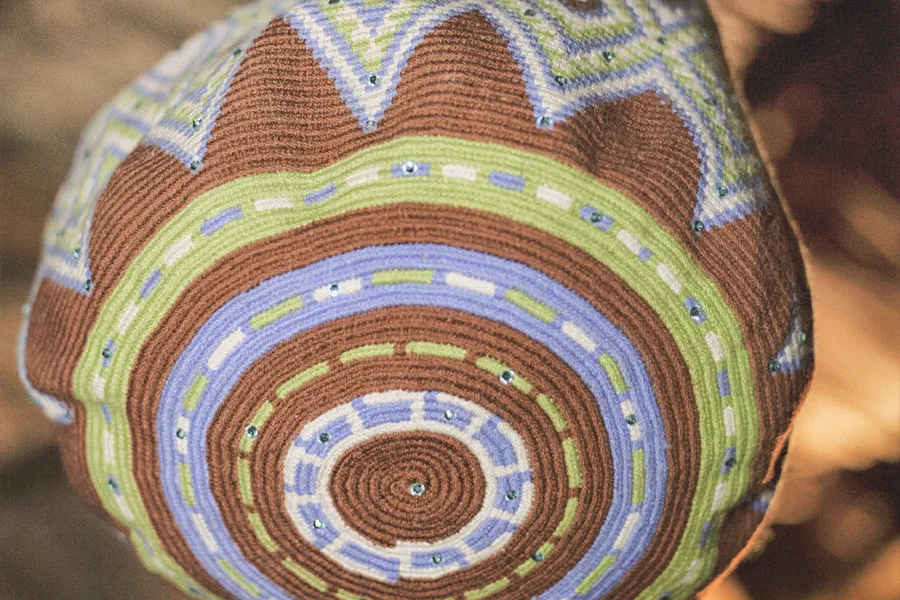
Finally, flip the bag over and examine the very first stitch at the center of the base. This is the ultimate proof of skill. In a master-woven bag, the spiral starts from a perfect, pinpoint center. The geometric motifs radiate outward with mathematical precision. If the center looks like a messy knot, or if the patterns don’t align as they move toward the walls, you’ve likely found a factory-style replica.
Final Thoughts
Wayuu bag patterns carry meaning you can truly connect with, from symbols of nature to stories of daily life. Once you notice these details, choosing a bag becomes a personal expression, not just a style decision. Pactus honors this tradition with both remake services for individuals and OEM solutions for businesses, turning ideas into truly distinctive Wayuu bags.
Ready to create a design that’s uniquely yours or your brand’s? Contact us today to get started.