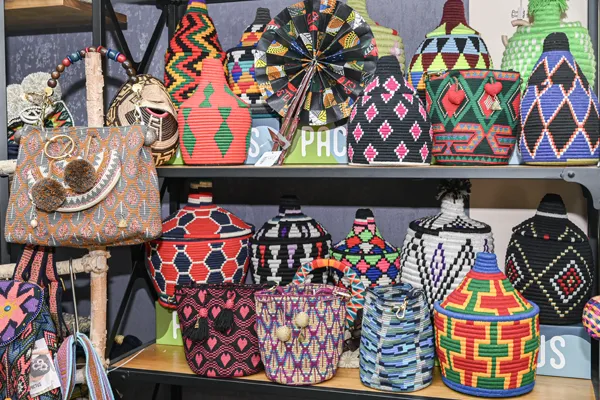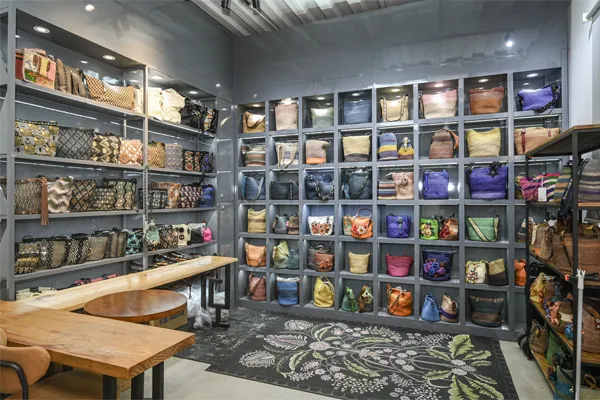
Sourcing authentic Wayuu bags is a balancing act between artisanal heritage and modern retail logic. It requires a series of strategic decisions regarding what to sell, how to price it, and who to trust. As the global market shifts toward ethical transparency and “slow fashion,” these hand-woven masterpieces offer a rare opportunity for high margins and compelling brand storytelling.
This guide provides a blueprint to help you build a scalable, profitable Wayuu collection that resonates with modern consumers.
Step 1: Define Your Boutique Positioning and Target Price Range
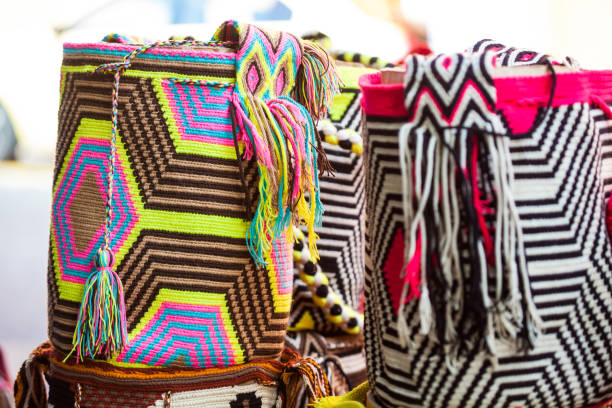
Successful sourcing begins with a clear internal audit of your brand’s identity. Consumers are no longer just buying a “bag.” They are investing in a narrative that fits their lifestyle and values.
Identify Your Target Segment
Are you catering to the “Ethical Luxury” shopper who values 1-of-1 exclusivity? Or is your customer the “Resort Casual” type looking for a durable, vibrant beach accessory? Your answer dictates whether you source high-end single-thread pieces or high-volume double-thread designs.
Establishing the Price Architecture
Define your “sweet spot” retail price before looking at wholesale catalogs. Your sourcing strategy must ensure a sustainable markup regardless of whether your floor price is mid-range or premium luxury. A premium boutique should prioritize intricate Wayuu bag patterns that justify a high-end price tag. Conversely, a resort store should focus on consistent, everyday styles that move quickly.
Step 2: Choose the Right Wayuu Bag Styles for Your Store
A profitable inventory requires a balanced assortment. This minimizes risk and maximizes turnover. We recommend the following inventory formula for a high-performing collection:
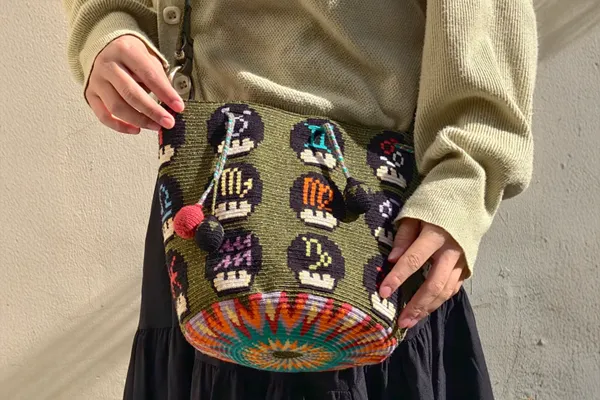
- 60–70% Everyday Bucket Mochilas: These are your core revenue drivers. Focus on desert earth tones and sea-inspired blues. These styles offer consistent demand for both travel and daily use.
- 20–30% Signature / Premium Mochilas: Use these as “margin boosters.” These intricate statement pieces feature complex Kaanas patterns. They elevate your window display and attract high-spending collectors.
- 10–20% Minis & Accessories: These are perfect for gifting and urban “grab-and-go” fashion. These lower-priced items drive impulse buys and fast inventory turnover at the checkout counter.
Step 3: Understand Construction (Single vs. Double Thread)
The technicality of the weave is the primary factor in your landed cost and retail positioning. Use this comparison to decide which construction suits your market:
| Feature | Single Thread Specification | Double Thread Specification |
|---|---|---|
| Craftsmanship | Meticulous, lightweight, fine stitch | Bold, structured, thicker texture |
| Pattern Detail | Extremely intricate & symmetrical | Vibrant, chunky geometric designs |
| Production Time | 20–30 days of meticulous labor | 10–15 days of structural weaving |
| Retail Strategy | High-end “Investment” luxury | Durable, “Summer-Essential” sales |
| Market Trend | Growing demand for “Slow Fashion” | High volume for resort seasons |
Step 4: Check Quality and Authentic Craftsmanship
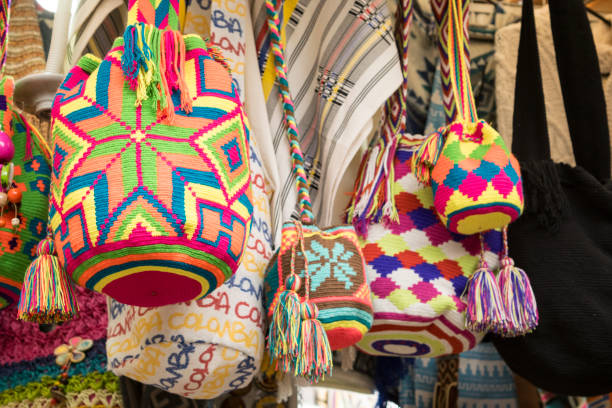
Perform a physical or visual quality audit before committing to a bulk order. Authentic Wayuu weaving is an art, but commercial pressures can sometimes lead to shortcuts.
- Stitch Tension: A high-quality bag should feel firm and hold its shape. If the crochet feels loose or “saggy,” it will lose its structure within months.
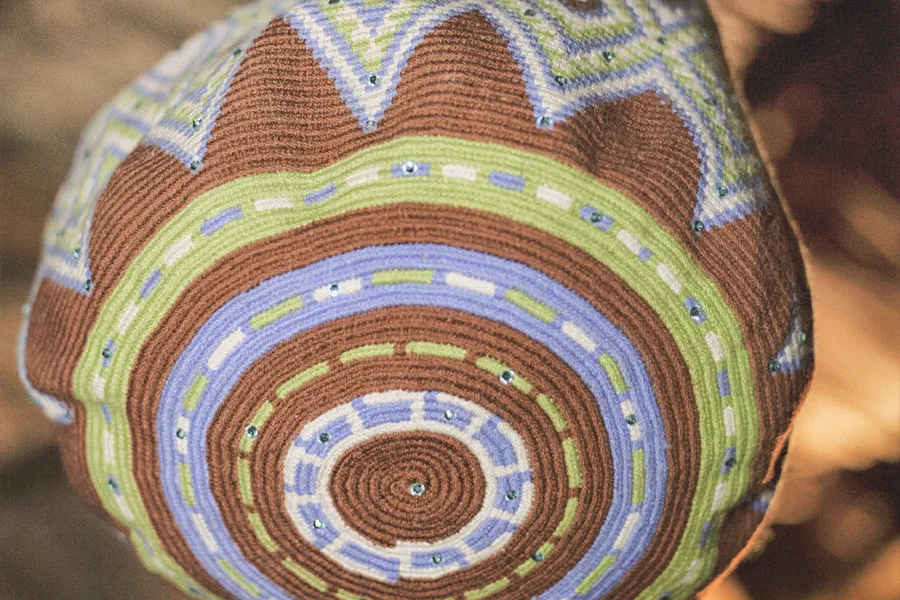
- Pattern Precision: Check the Kaanas (cultural symbols). Even in complex designs, the lines should be crisp, and the symmetry should be balanced.
- Base & Strap Integrity: The bottom must be flat enough for the bag to stand upright. Straps should be tightly braided. If they stretch easily by hand, they will fail under the weight of daily essentials.
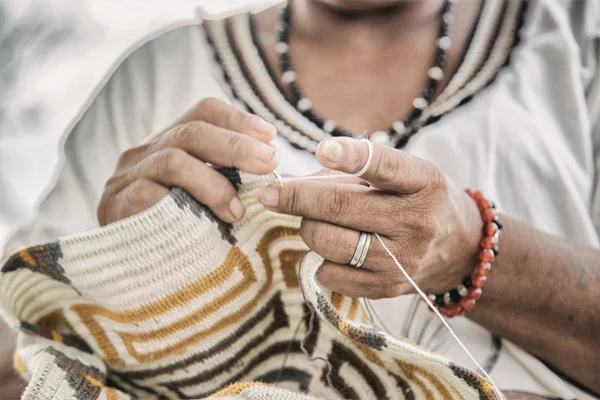
Pro Tip: Look for “Imperfect Precision.” Authentic pieces have subtle textural variations that prove they were handmade in the La Guajira desert. If a bag looks too flat and chemically uniform, it may be a machine-made imitation.
Step 5: Identify and Vet Reliable Suppliers
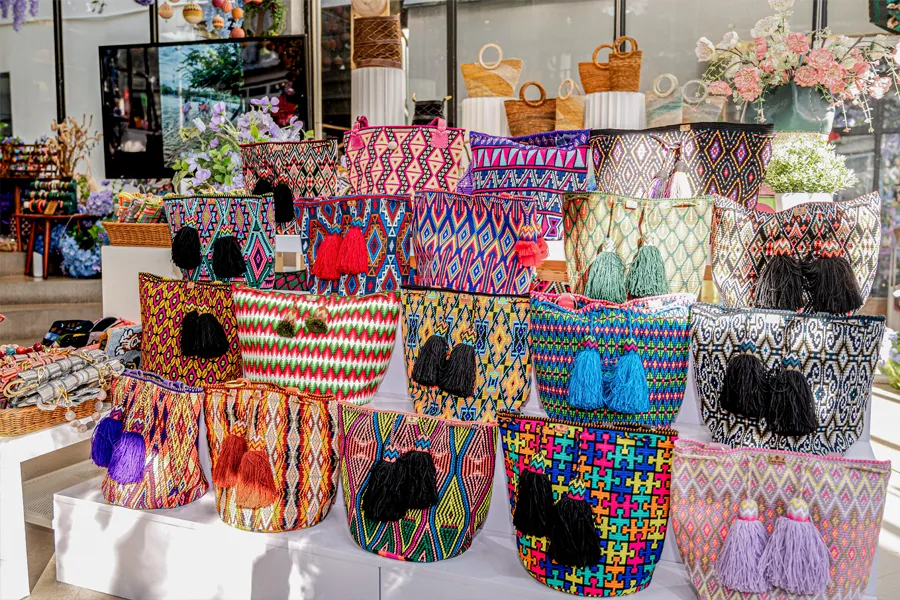
A reliable supplier is a bridge between indigenous traditions and modern retail needs. Selecting a partner who respects the artisans’ rhythm is more than an ethical choice. It is a strategic business decision that ensures your inventory remains authentic and high-quality.
1. Ethical Transparency and Traceability
In today’s market, “Handmade in Colombia” is a baseline, not a selling point. A reliable supplier must provide direct artisan links and a clear policy on how weavers are compensated. Verified “Fair Trade” practices are now a marketing necessity for premium boutiques.
2. Quality Control (QC) Infrastructure
A reliable partner has a local QC team to check for loose threads and pattern errors before the bags leave Colombia. They also verify strap tension. If a supplier ships directly from the weaver without an intermediary check, you take the full risk of defective inventory.
3. Supply Stability and Ethical Growth
Traditional “scaling” is a red flag in the world of handmade Wayuu art. A reliable supplier manages growth through community depth. They increase volume by involving more weaver families across a broad network. This approach respects the artisan rhythm while ensuring your boutique never runs dry.
Step 6: Start with a Test Order
The final step is translating your strategy into action. Every Wayuu bag is a unique masterpiece. Consequently, prices are not fixed. They fluctuate based on the intricacy of the weave, the dyeing process, and the artisan’s expertise. A test order is the only way to verify value before a full-scale launch.
Why a “Curation Batch” is Essential
Start with a 15-piece test batch instead of a massive initial commitment. This allows you to verify physical quality firsthand and experience the color vibrancy. You can gather real-world feedback to see which patterns resonate with your specific demographic. Most importantly, it protects your cash flow by testing the market without tying up capital in untested inventory.
Understanding MOQs (Minimum Order Quantities)
Most professional artisan platforms and wholesale partners require a minimum. This is typically 10 to 12 pieces. This quantity justifies the complex logistics of international shipping. Once you identify your “winners,” you can scale your restocks with confidence. You will know exactly what your customers are willing to pay for premium craftsmanship.
Build Your Signature Collection with Pactus
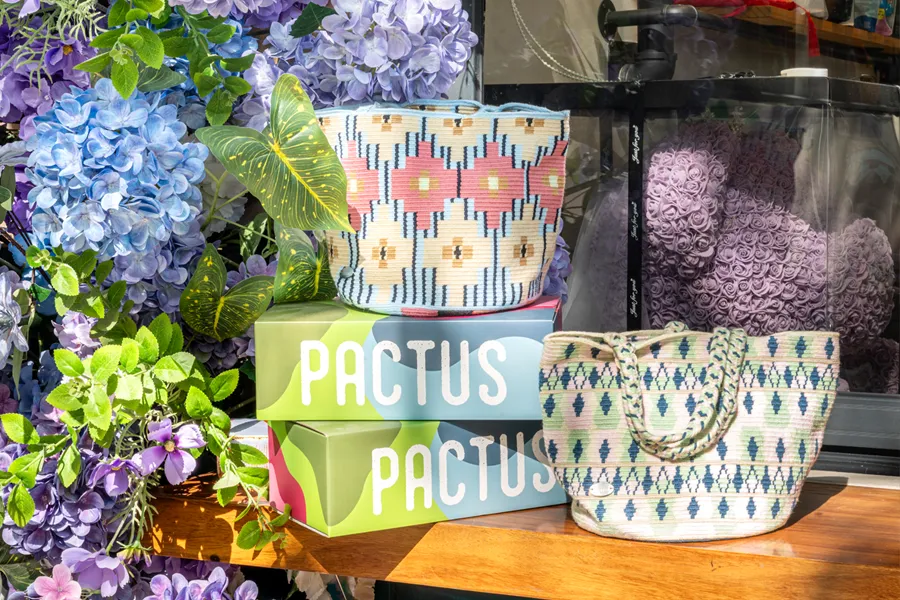
As a global leader in Wayuu sourcing, Pactus bridges ancestral tradition with modern retail excellence. We support over 5,000 artisan families through “compassionate sourcing,” ensuring fair compensation and ethical growth. With 70% direct control over our supply chain in La Guajira, we eliminate the instability of traditional trading. This provides your boutique with a reliable, ethically-sourced inventory you can trust.
Our Guangzhou innovation hub transforms authentic weaves into luxury-grade masterpieces. 그만큼 “다시 만들다” collection features premium Italian leather and high-end hardware, helping you bypass low-margin price wars. To ensure your success, we offer a flexible 20% 첫 파트너를 위한 교환 정책. Combined with low MOQs and 1-on-1 video inspections, we provide the transparency and agility needed to scale your brand.
Contact us today to receive our latest catalog and begin your successful Wayuu bags collection.