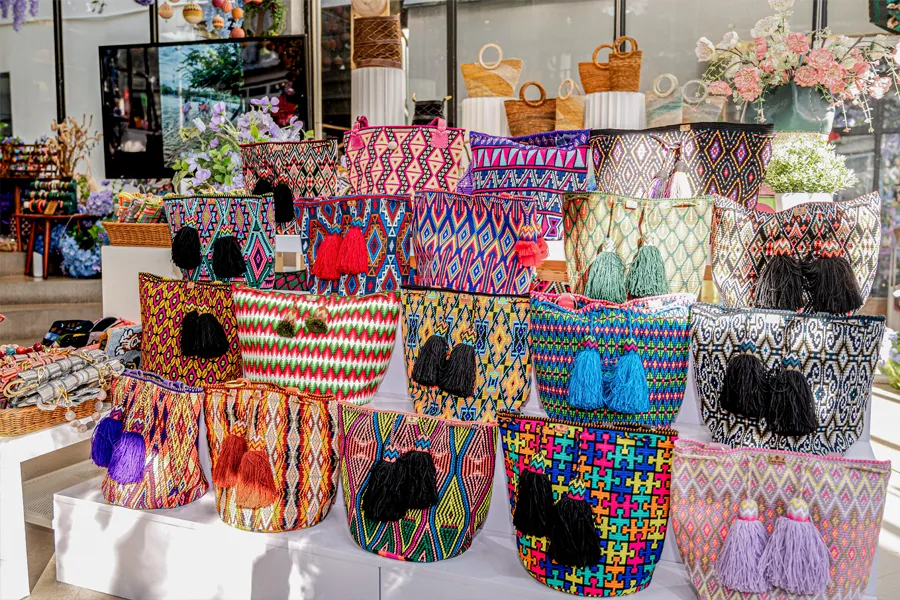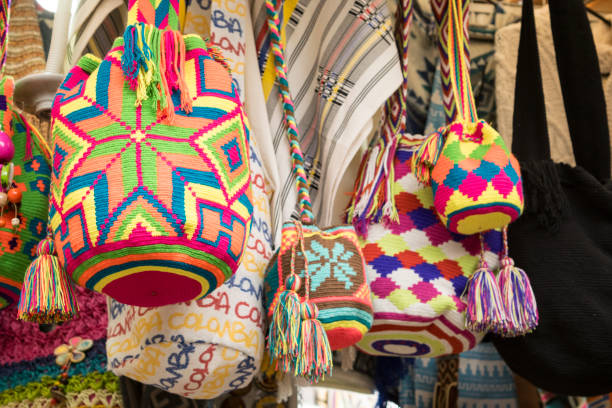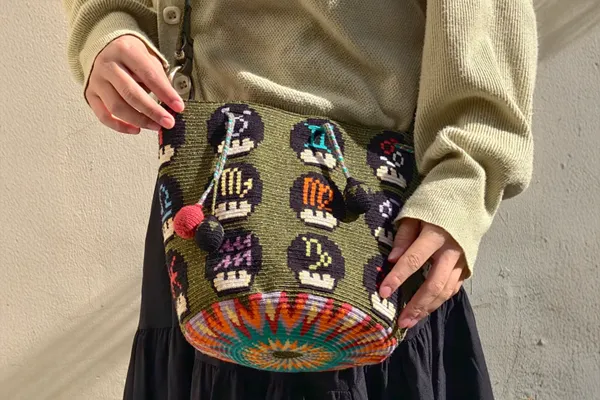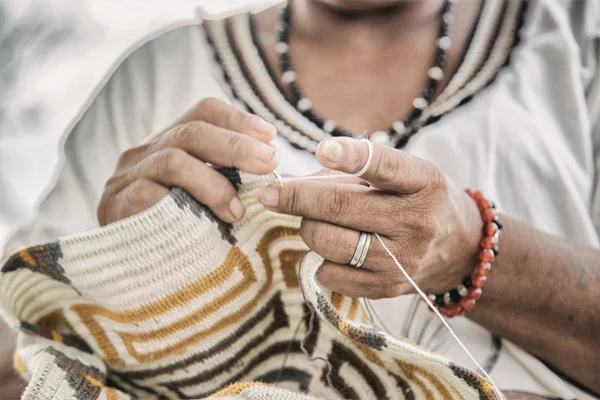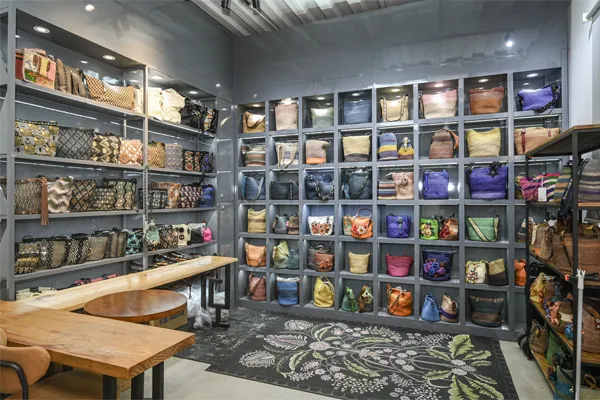
You can spot a Wayuu bag from across a room, but have you ever tried to read one? Those sharp geometric lines are a living script, documenting a desert culture that has resisted change for 2,000 years. This is a lineage passed from grandmother to granddaughter, now evolving with high-performance Wayuu thread. Let’s look at the story behind the weave, starting with its ancient roots.
The Pre-Columbian Origins of the Authentic Mochila
Ancient Roots and Migration
The journey of the Wayuu people began long before the first Spanish ships appeared. Around 150 A.D., these Arawakan groups trekked from the Amazon rainforest to the arid Guajira Peninsula. To survive in such a harsh landscape, they had to be masters of utility. This migration wasn’t just about moving people; it was about transporting the foundational textile skills that would eventually become the modern mochila.
The Legend of Wale’kerü
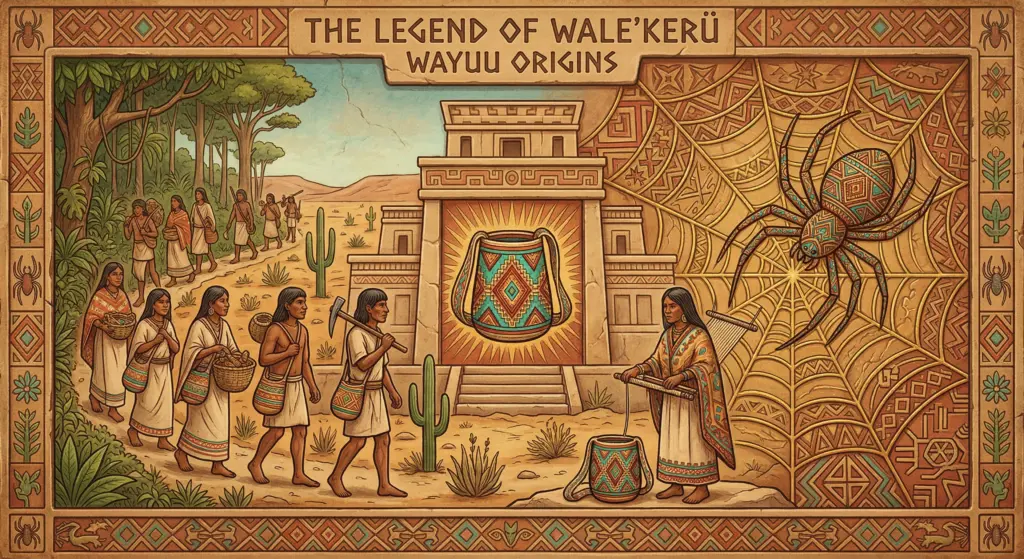
If you ask a weaver where her skill comes from, she’ll tell you about Wale’kerü. In Wayuu oral history, this mythical spider didn’t just spin webs; she taught the first women how to spin thread from their mouths and map out complex patterns. For the Wayuu, a bag isn’t a factory product—it’s a spiritual blueprint handed down by a divine mentor.
Wayuu Women Weavers Keep the Tradition Alive
The Rite of Passage
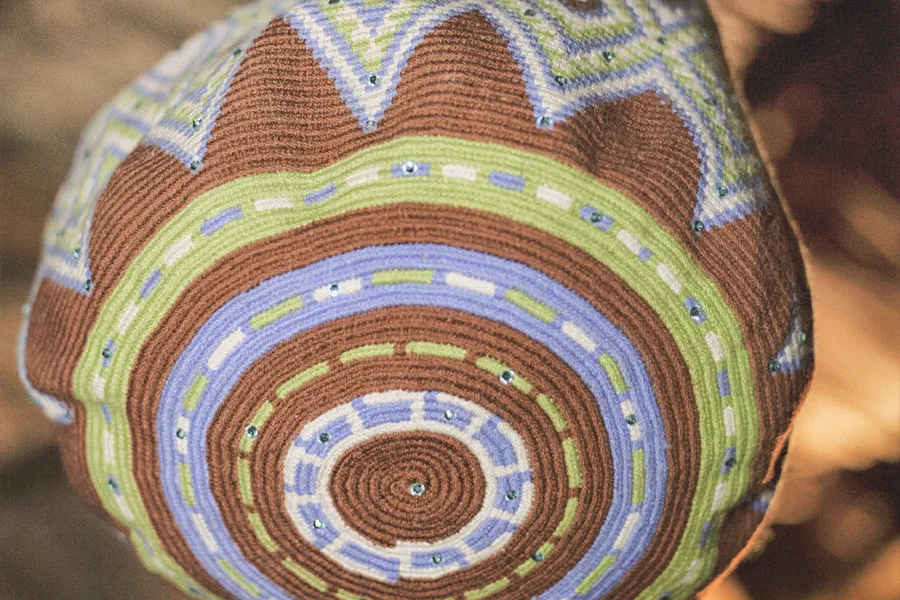
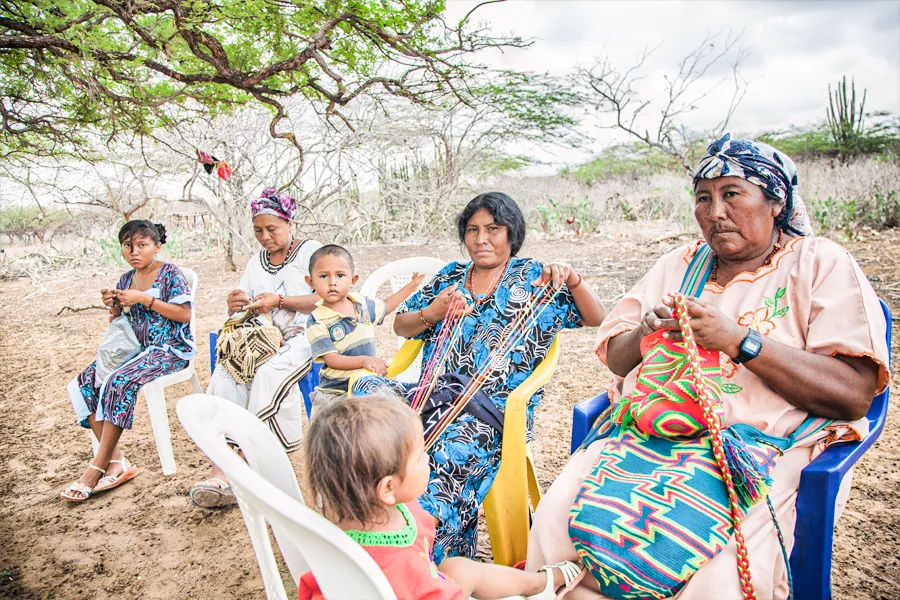
Have you ever heard of the Encierro? It is the most sacred moment in a Wayuu girl’s life. When she reaches puberty, she enters a period of isolation to learn the “secrets” of her ancestors. While this used to last for years, modern families now balance this tradition with formal schooling. For several months, she stays with her maternal elders, mastering the susu (single-thread) technique. This ritual transforms her from a girl into a custodian of her culture’s history.
Reading the Kanaas
Those geometric shapes are kanaas, a visual language. When you see a specific triangle or diamond, you’re looking at a signature of nature. A turtle pattern might represent longevity, while a zig-zag might track the path of a desert animal. Every weaver uses these symbols to write her own diary into the bag, making every authentic piece a one-of-a-kind narrative.
Boost Margins With Luxury Remake Wayuu Bags
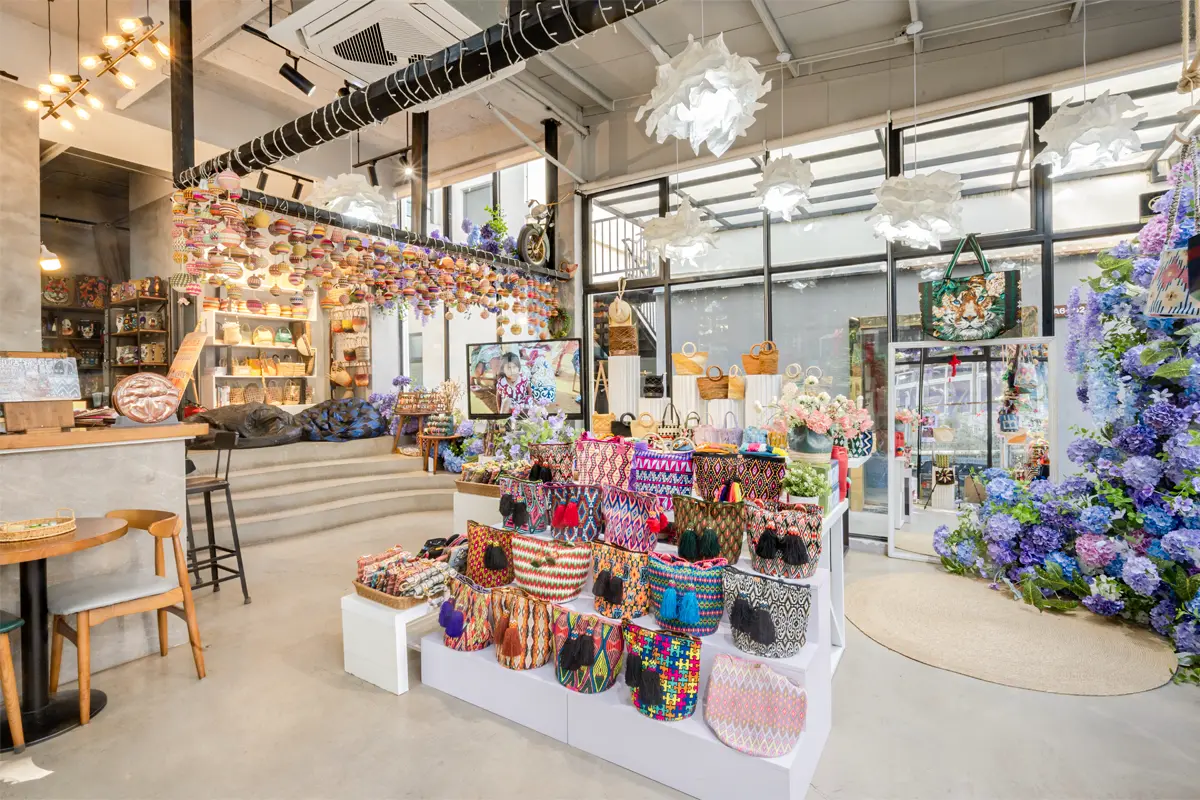
The Evolution from Tribal Craft to Modern Fashion
From Desert Fibers to High-Performance Blends
We’ve come a long way from the wild cotton and tree bark used by early ancestors. To meet the demands of 2026, the materials have evolved without losing their Colombian soul. Today’s authentic mochila uses a sophisticated hybrid thread: 23% natural cotton mixed with 77% high-grade polyester and local plant fibers.
Why does this matter to you? Because this specific blend is engineered for life. It boasts a 99.5% color fastness rating, meaning you can wash vibrant colors together without any fear of bleeding. It’s also designed to resist pilling, so the bag stays as crisp and sharp as the day it was woven.
Modern Techniques for a Global Market
The community’s artistry expanded in the 20th century. Wayuu textile art uses a diverse toolkit. Massive Anütpala looms are still the go-to for weaving heavy-duty hammocks. But for the iconic mochila, the 20th century brought a shift. Weavers embraced crochet hooks to refine their bags, blending ancient geometric logic with sharp, modern detail. This adaptability is exactly why the Wayuu culture is thriving today while so many other indigenous crafts have faded away.
Global Recognition for Colombian Indigenous Art
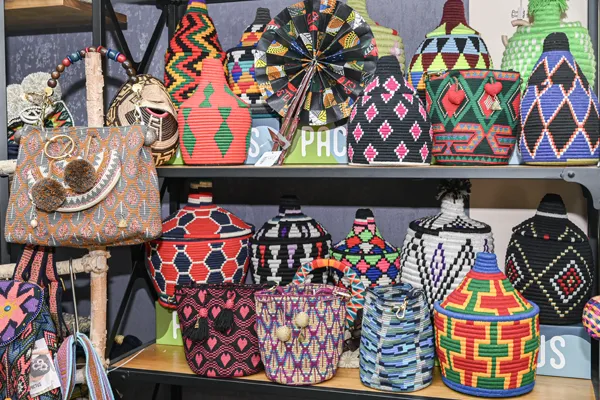
Legal Shields and Identity
In 2011, the Wayuu achieved something massive: an official denomination of origin. Think of it as a legal shield. Unless a bag is crafted by Wayuu hands in their own territory, it cannot legally carry the name. This designation gives retailers a guarantee: you are buying protected intellectual property, not a factory-made knockoff.
The Rise of International Demand
You’ll find Wayuu mochilas in boutiques from New York to Tokyo. This global interest isn’t a coincidence. Modern buyers are tired of fast fashion and want something with a heartbeat. By 2026, the international stage has embraced the single-thread technique as a high-fashion standard. This surging demand does more than sell bags—it keeps a 2,000-year-old culture thriving in a modern world.
How Pactus Supports Ethical Trade and Local Tribes
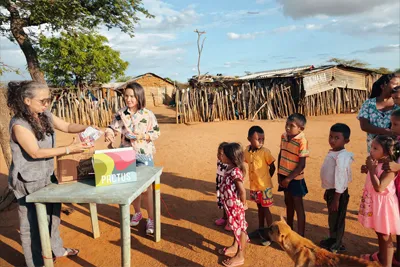
Funding Essential Utilities
In the remote corners of La Guajira, a stable power grid is still a luxury. We believe an artisan’s day shouldn’t end when the sun goes down. By funding and providing solar lamps, we’re helping families reclaim their evenings. This isn’t just about extra weaving time; it’s about a student being able to study and a family living safely after dark. It’s a small light that makes a massive difference.
The Heart of Compassionate Sourcing
Our approach was born during our founder’s first trips to the tribes. We don’t just cherry-pick the “perfect” bags. To truly support a community, you have to support its growth. We often purchase pieces from young weavers who are still perfecting their craft—even those with minor flaws. By buying these “training pieces,” Pactus ensures that every member of the tribe benefits, giving beginners the financial stability they need to become masters.
Respecting the Natural Pace of Life
Deadlines shouldn’t come at the cost of human dignity. At Pactus, we never rush our artisans. Whether it’s a heavy rainy season or local flooding, we understand that life in the desert has its own rhythm. We honor that pace, prioritizing the well-being of the weaver over a shipping schedule. When you hold one of our bags, you’re holding something created with patience, not pressure.
Final Thoughts
A fake bag is just a product, but an authentic Wayuu mochila is a piece of a woman’s life. At Pactus, we believe every bag is an investment in that life. When you choose our direct-trade model, you’re protecting a 2,000-year-old conversation.
Unverified middlemen often compromise the true story and quality of a Wayuu bag. Experience the results when high-performance Wayuu thread meets the skilled hands of Wayuu artisans. Whether you prefer the precision of single-thread or the strength of a double-weave, Pactus ensures the quality you can trust. Test the color fastness and help us keep this incredible story alive.
If you’re ready to see this quality firsthand, reach out to us today to explore our vibrant collection and join us in keeping this ancient story alive.