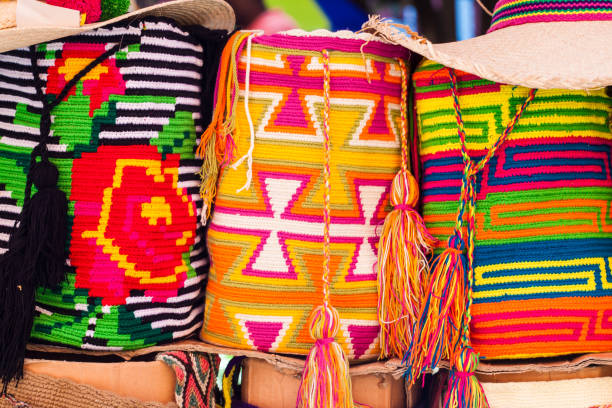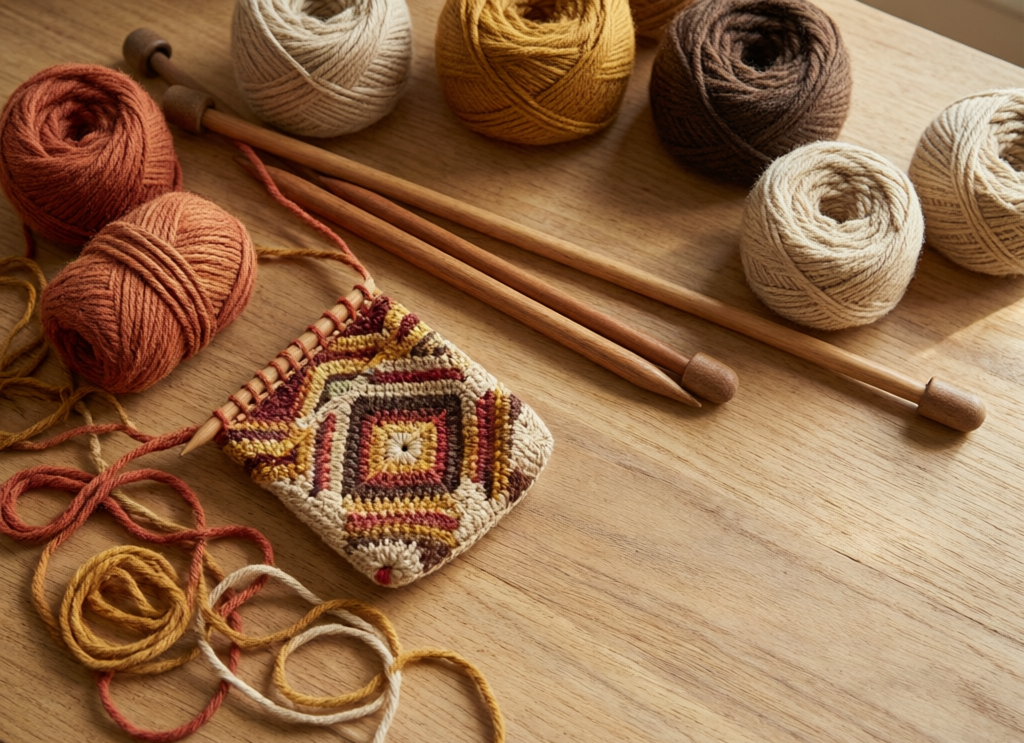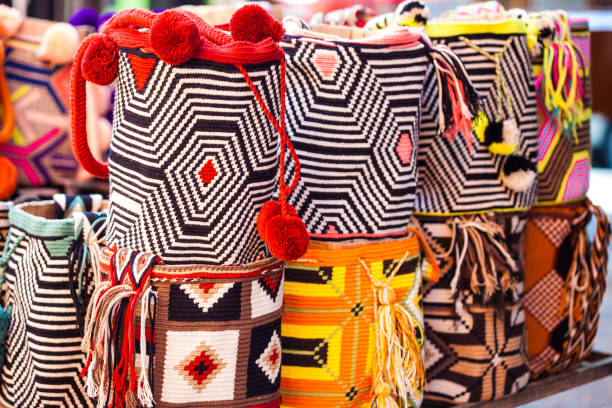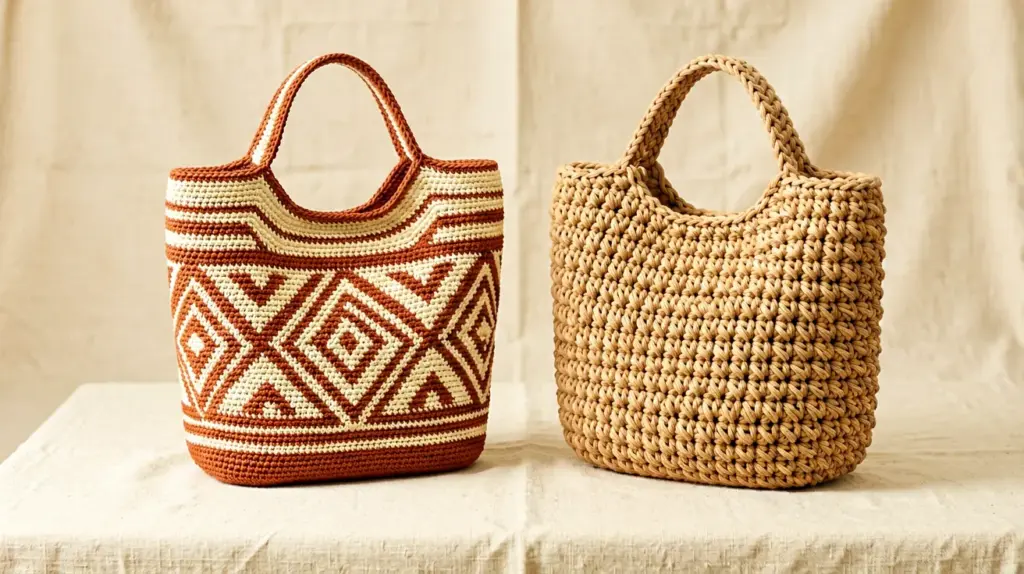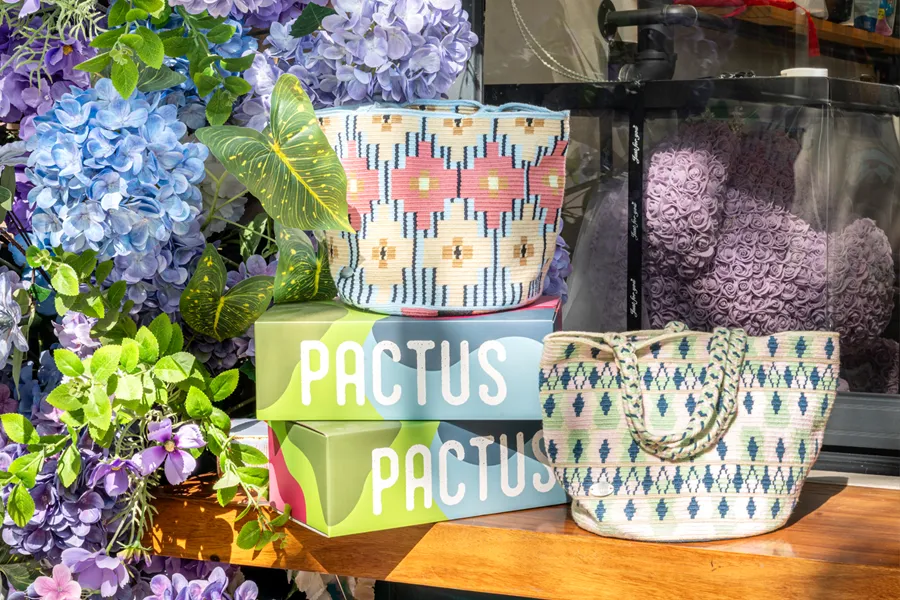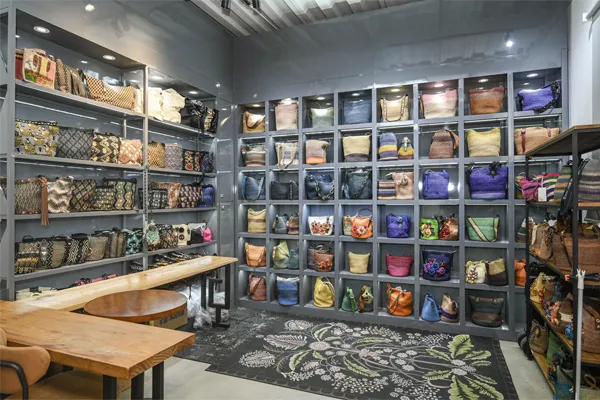
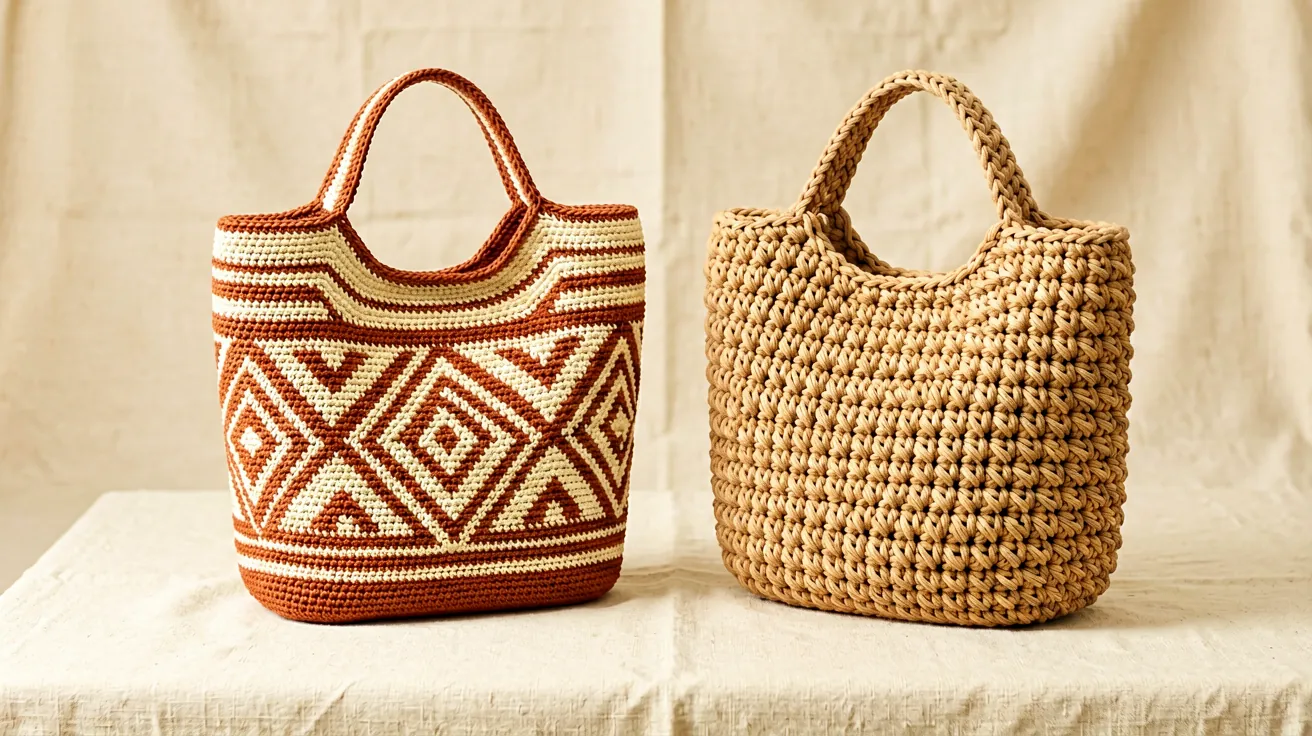
A mochila bag is not sewn from cut fabric. It is built stitch by stitch from a single continuous thread, starting at a point in the center of the base and growing outward in spirals until the bag is finished. Every structural element, including the base, walls, and strap anchors, comes from the same technique.
The breakdown below covers how that construction actually works. It also covers the two thread disciplines, the spiral base method, stitch mechanics, tension control, and the measurable specifications that separate ordinary mochilas from elite-tier work.
Key Takeaways
- Mochilas are crochet-built from one continuous thread, never cut and sewn.
- Single-thread density runs 120 Zu 150 knots per square centimeter.
- Double-thread density runs 60 Zu 80 knots per square centimeter.
- The inner face of a tight single-thread weave reverses with no loose loops.
- Weight variation above 5 percent signals inconsistent tension control.
What Mochila Bag Weaving Techniques Are
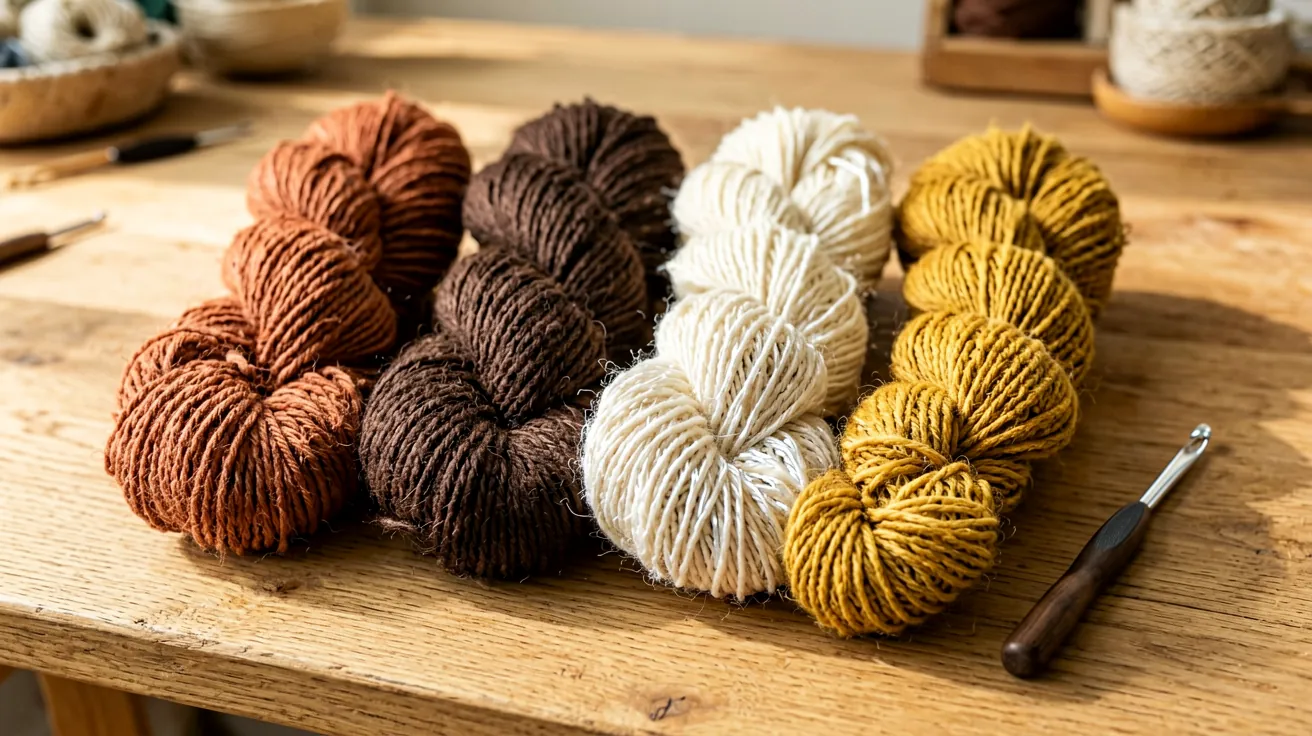
The mochila is engineered at the stitch level, not assembled at the seam level.
Mochila weaving is a crochet-based construction method practiced by the Wayuu people of La Guajira, Kolumbien. The weaver works with a single hook and thread, building a solid textile with no seams to fail. Read what Wayuu bags are for the cultural context around this craft.
Continuous Thread Construction
Because the entire bag comes from one continuous thread, the load path runs unbroken from the base center to the strap anchor. There is no sewn joint where stress concentrates. This is the structural reason a well-made mochila carries heavy loads for years without splitting, because there is no seam to split. Load testing confirms the geometry, with strap anchors releasing thread along the wall instead of tearing at a stitched joint.
Tools and Materials Involved
The toolkit is minimal, which is a hook, scissors, and yarn. Traditional bags use cotton thread, while contemporary production also uses acrylic for color fastness and cost. The yarn specification changes the hand feel and the price but not the technique itself. Hook size is matched to yarn weight by the weaver, and a mismatch shows up immediately as loose gauge. Compare cotton vs acrylic yarn for the material trade-offs.
Why Technique Determines Value
Two bags can use identical yarn and still differ enormously in density, tension, and durability. The difference is purely technique, which is the weaver’s control over stitch size and thread tension. That is why technical specifications, not materials, set the ceiling on mochila pricing.
Single-Thread and Double-Thread Weaving Explained
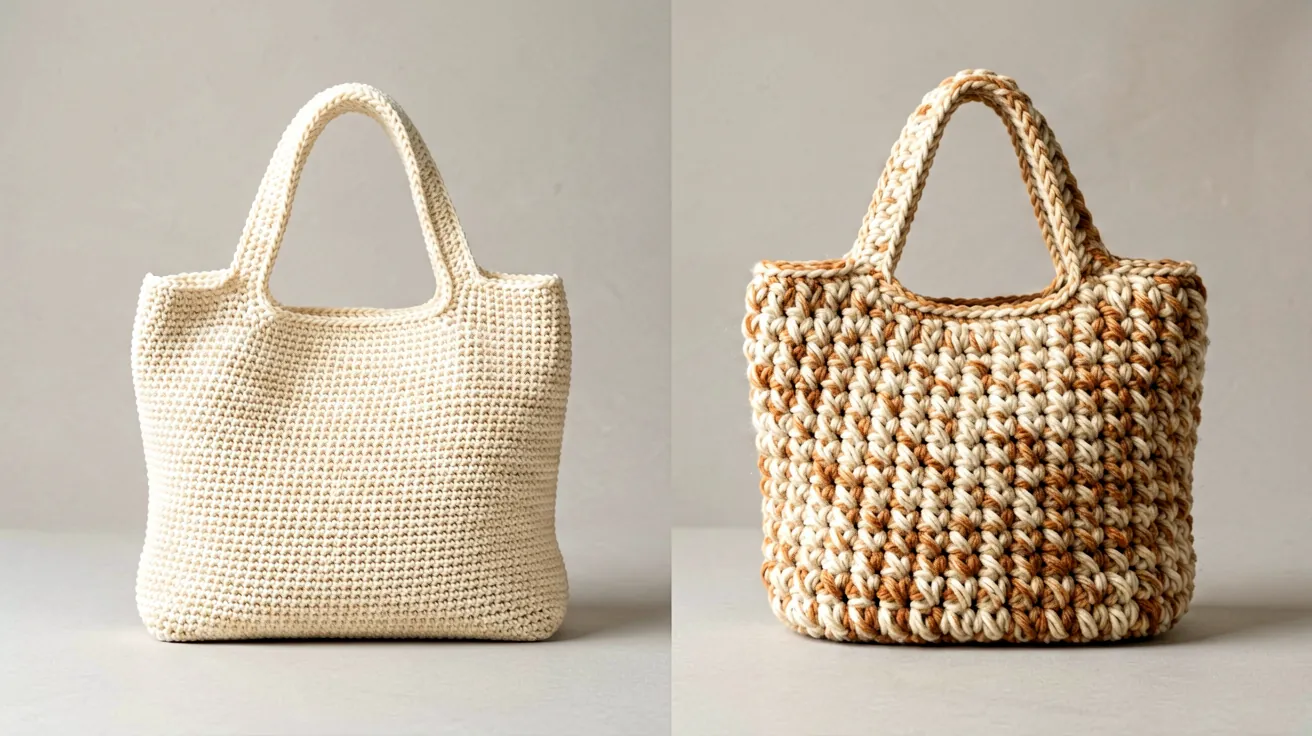
One thread or two. The choice doubles the density range and doubles the calendar.
The mochila world runs on two thread disciplines. Single-thread work passes one strand through each stitch loop. Double-thread work passes two strands together. The difference sounds minor and changes everything, from density and weight to production time and price.
| Spezifikation | Single-Thread | Doppelfaden |
|---|---|---|
| Density | 120 Zu 150 knots per square centimeter | 60 Zu 80 knots per square centimeter |
| Production time | 20 Zu 30 days per mochila | About 10 days per mochila |
| Surface texture | Bußgeld, compact, fabric-like | Textured, visible stitch definition |
| Pattern resolution | High, supports dense kaana motifs | Medium, geometric patterns |
| Price tier | Premium | Mid-range |
Tactile Differences by Thread Type
Single-thread fabric reads almost like woven cloth, with a tight surface and a subtle sheen. Double-thread fabric has stronger stitch definition and a slightly springier hand. Neither is fake or wrong, and both are authentic Wayuu technique. They simply serve different use cases and price tiers. Weight per square centimeter tracks density, so a single-thread bag of the same size feels noticeably denser in the hand.
Density as the Primary Specification
Density is the number every serious buyer should request. Unser single and double thread Wayuu bag patterns guide walks through the visual identification cues. On the inner face, a true single-thread weave at spec shows uniform interlocking loops with no gaps and no loose strands anywhere.
How Weavers Build the Spiral Base Structure
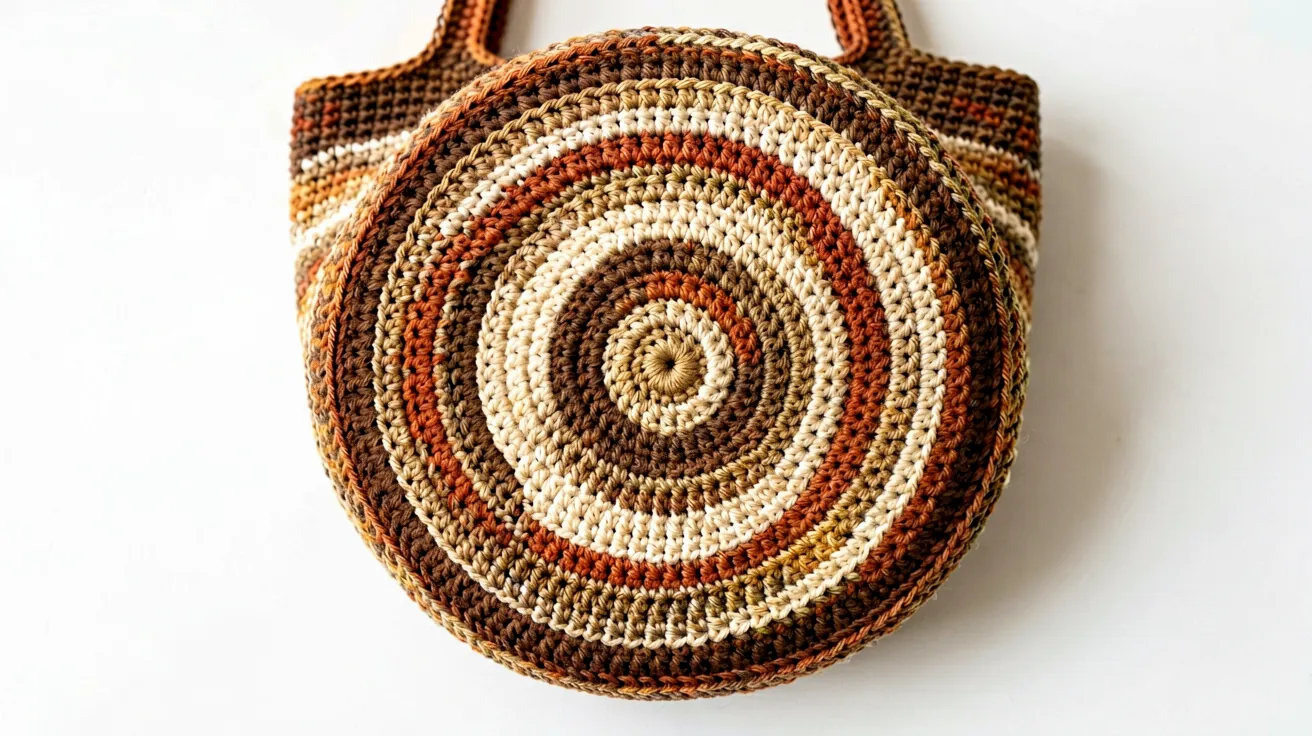
The base starts as a single ring and grows outward like a whirlpool.
Every mochila begins at the center of what will become its base. The weaver forms a small ring of chain stitches, then works in continuous rounds, increasing at a calculated rate so the base stays flat. When the base reaches its target diameter, the increase stops and the walls rise vertically.
The Center Ring and Increase Logic
The shape of a spiral base depends on how stitches are added as the work grows. A low increase count can pull the center upward, while excess increases cause the edges to wave. Weavers monitor the base as they work and adjust stitch placement to keep it flat. These small corrections help maintain an even shape as the base expands.
From Base Plane to Vertical Wall
The transition point where increases stop is the structural hinge of the bag. A clean transition produces a sharp corner line and a base that sits flat under load. A rushed transition produces rounding, which shifts shape as the bag is used. Inspect this corner from inside the bag where the geometry is exposed. A bag that stands square on a table with nothing inside is announcing a disciplined transition round.
Why Base Construction Predicts Lifespan
Base failure is the most common terminal fault in poorly made mochilas, showing up as thinning, holing, or deformation under weight. Quality base construction spreads load across thousands of interlocked stitches. See what makes handmade bags durable for how this compares across construction methods.
How Stitch Patterns Form Mochila Fabric
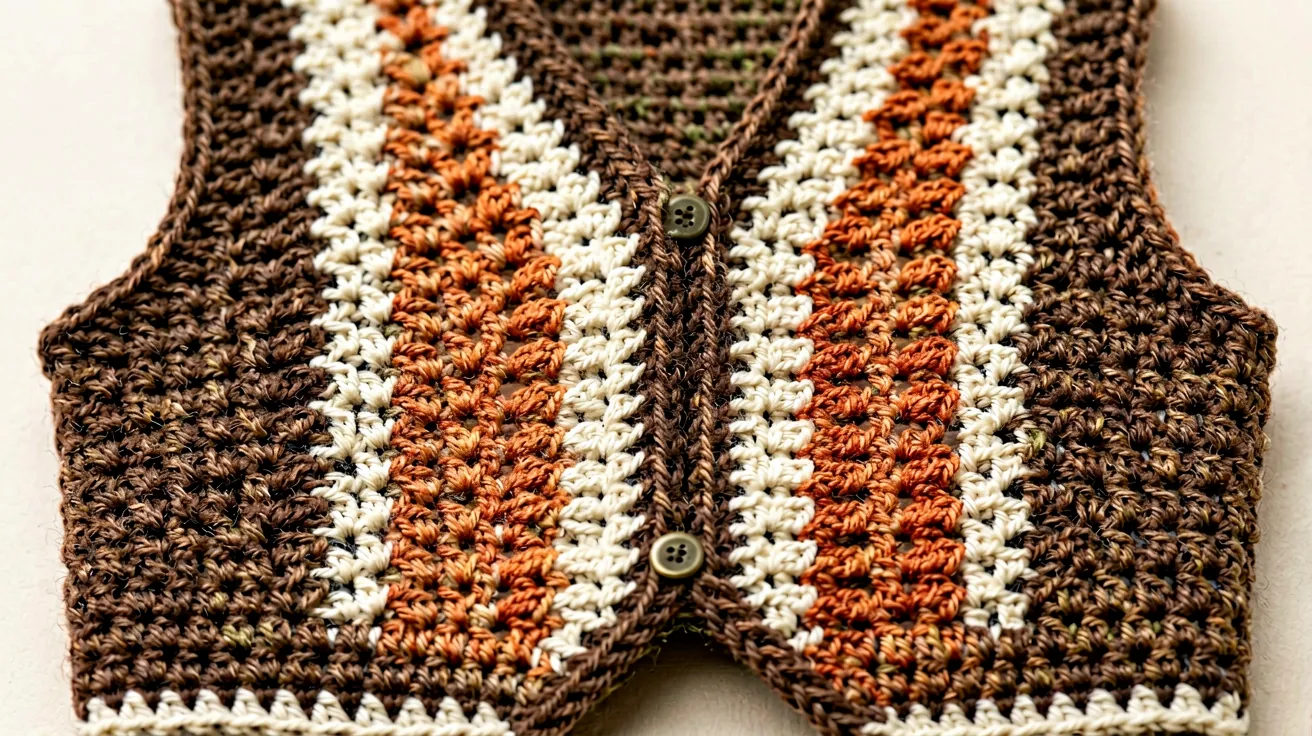
Pattern is not printed on the fabric. The fabric is the pattern.
Mochila patterns emerge from counted stitch sequences, where the weaver changes thread color at exact positions in each round. There is no printing, Stickerei, or overlay. The graphic you see is the structure itself, which is why patterns cannot peel or misalign with the weave.
Counted Rounds and Color Changes
The weaver carries the pattern in memory or counts it from an existing piece. Complex figures require color changes several times per round, and each change must anchor to the same column position. In single-thread work, the resolution is fine enough to render curves and pictorial figures cleanly. Carried strands on the reverse side tuck into the stitches, so the inner face stays as clean as the outer face in well-managed work.
Reading Pattern Symmetry as a Quality Signal
Symmetry errors reveal themselves at the line where each spiral round closes. In elite work, the pattern closes with no visible jog. Minor jogs are acceptable handmade variation, but broken or missing figures are defects. Buyers can use pattern closure as a fast quality check on any bag. Photographing the closure line straight-on makes any jog obvious, which is why inspectors document this angle on every batch.
How Tension and Density Are Controlled in Weaving
Tension is the invisible spec. Weight variation makes it measurable.
Thread tension is held entirely in the weaver’s fingers across tens of thousands of stitches. Consistent tension produces uniform loops and a fabric that behaves predictably. The production tolerance used by professional suppliers is a weight variation of 5 percent maximum between same-spec bags.
How Density Is Measured
Density is checked by counting knots inside a marked square centimeter at several positions, including the base, the wall center, and below the strap anchors. Elite single-thread work holds its density specification across all positions. Localized thin patches below specification are rework flags, not character. Three positions are the practical minimum, since thin patches cluster where weavers rest their support hand.
The Inner Canvas Test
The single most reliable quality indicator hides on the inner face of the bag. A perfectly tight single-thread weave is completely reversible, meaning the inner face shows the same clean interlocked loops as the outer face with no loose loops anywhere. Loose loops on the inside mean the outer face will relax and deform with use.
What Happens When Tension Drifts
Tension drift shows up as wavy walls, uneven density patches, and a bag that twists off its vertical axis. Weight beyond the 5 percent tolerance confirms the drift objectively. Professional suppliers catch this at inspection and route the piece to rework or regrading rather than export. Drift usually concentrates in the final third of a piece, where fatigue sets in and deadline pressure builds.
How Traditional Techniques Shape the Final Bag Form
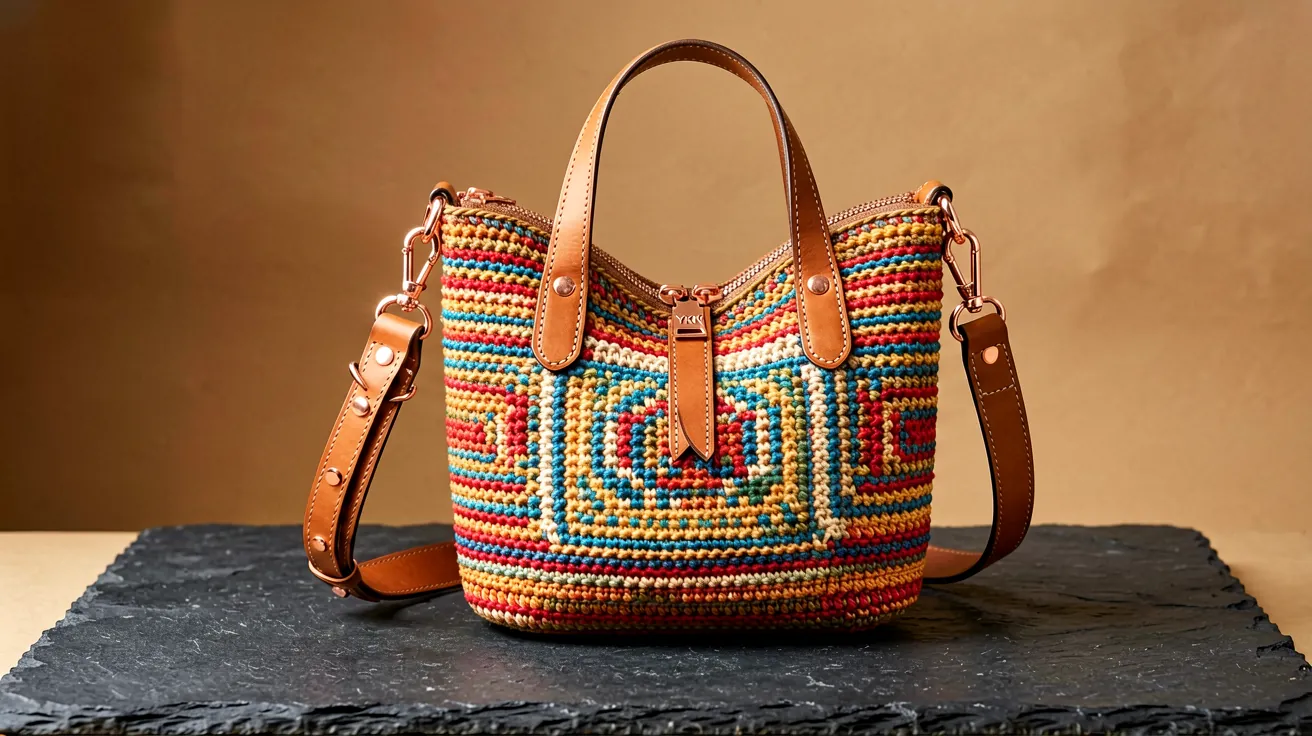
The technique does not just decorate the bag. It decides what the bag can be.
Construction method sets the physical limits of the finished object. Continuous-thread construction allows one-piece shapes, integrated strap anchoring, and structural elasticity that cut-and-sew methods cannot reproduce. This is why mochilas stretch slightly to hold a load and return to shape afterward. Cut-and-sew equivalents rely on seam allowance for that recovery, which is precisely where they eventually fail.
Strap and Closure Construction
Straps are braided or crocheted separately and anchored into the wall structure with reinforcement rounds. Closures range from drawstring tunnels to zipper insets, and the inset quality is a common weak point in low-grade work. Elite pieces integrate hardware without breaking the thread architecture. Pull each strap anchor outward and watch the wall react, because the deformation should distribute, not concentrate.
How Craftsmanship Influences Bag Pricing
Once buyers can read density, closure quality, and inner-face cleanliness, mochila pricing stops being mysterious. The craft hours are the product, and the specifications make those hours visible. Our guide on why handmade bags cost more connects these technical markers to honest price tiers.
Adapting Traditional Techniques for Modern Designs
The same structural reading applies when traditional bases are upgraded with leather and hardware in Remake bespoke customization programs. The weave still carries the load path, so the original technique remains the engineering core. Decoration changes, structure does not.
FAQs
What is the difference between single and double thread Wayuu bags?
Single-thread bags pass one strand per stitch and reach 120 Zu 150 knots per square centimeter, taking 20 Zu 30 days to weave. Double-thread bags pass two strands, run 60 Zu 80 knots per square centimeter, and finish in about 10 days. Single-thread work is finer, denser, and more expensive.
How can you tell if a Mochila bag is high quality?
Check the inner face first, because a tight weave reverses cleanly with no loose loops. Then verify density at several positions, confirm the base sits flat, and inspect pattern closure at the round seam. Weight outside a 5 percent tolerance band signals uneven tension.
What stitches are used to make a Mochila bag?
Wayuu mochilas use a crochet-based technique worked in continuous spiral rounds. The base starts from a center ring with calculated increases, and the walls rise once the target diameter is reached. Patterns form through counted color changes rather than any printed or embroidered overlay.
Why are single thread Wayuu bags more expensive?
Single-thread work roughly doubles the knot count per square centimeter, which multiplies the hours required per bag. A 20 Zu 30 day production window per piece limits supply. The finer surface also supports high-resolution kaana patterns that command premium positioning.
How many days does it take to make a double thread Mochila?
A double-thread mochila typically takes about 10 days of dedicated weaving time, depending on pattern complexity and bag size. Simpler geometric patterns finish faster, while dense figurative kaana work extends the calendar even at double-thread density.
What quality control checks does Pactus use for its weaves?
Pactus verifies density against the 120 Zu 150 Und 60 Zu 80 knots per square centimeter specifications and checks weight within a 5 percent tolerance. Inspectors examine the inner face for loose loops and run one-on-one video inspection so buyers approve weave quality before dispatch.
What Makes a Mochila Bag Truly Well-Crafted
A mochila is a textile engineered at the level of the individual stitch. Thread discipline sets the density, the base method sets the geometry, tension control sets the tolerance, and pattern work sets the identity. Read together, these are the specifications of a structural object, not a decoration. Nothing about the finished bag can be understood without the technique that built it.
Whether you are evaluating a first sample or verifying ultra-premium pricing, the method stays the same, which is measure, inspect the inner face, and trust the numbers. Erkunden Wayuu mochila bags wholesale at Vereinbarung to see these specifications applied across a production catalog.