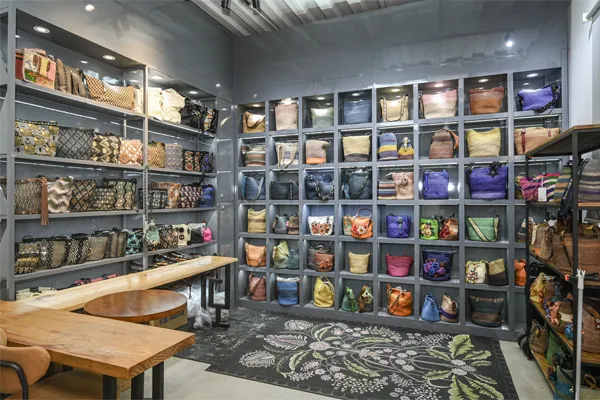
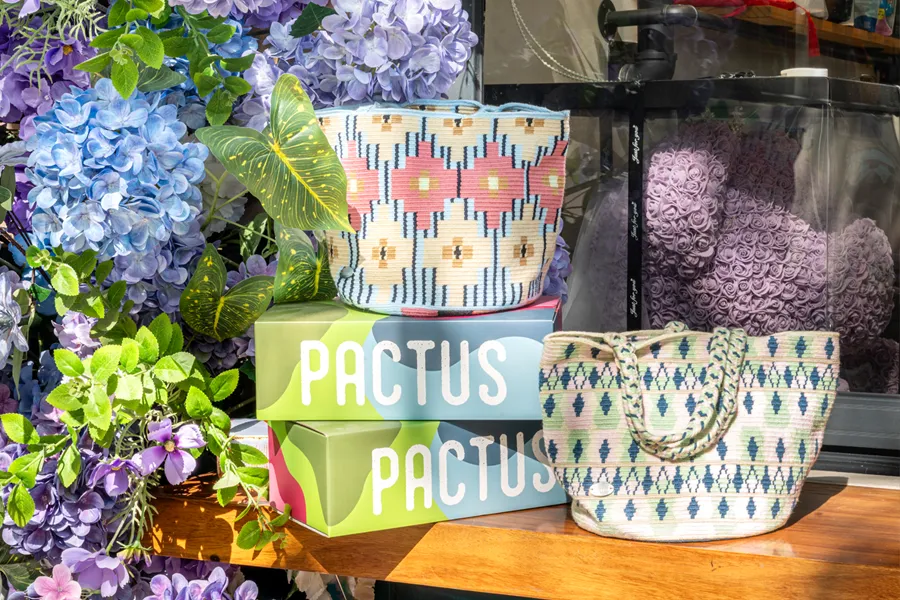
Minimum order quantity, or MOQ, is the first number a boutique buyer meets when sourcing handmade bags wholesale. It decides whether a first order fits your budget, your shelf space, and your cash flow. It also decides how much risk you carry if a style does not sell.
This guide explains what MOQ actually means in a handmade supply chain, why the numbers differ so much between suppliers, and how to structure an order that tests the market without over-committing.
Key Takeaways
- Ready-stock and remake orders can have different MOQ structures depending on the supplier.
- Some Wayuu suppliers offer flexible quantities for ready stock and remake orders.
- Ask whether MOQ applies per style, per order, or not at all before discussing price.
What Does MOQ Mean for Handmade Bags
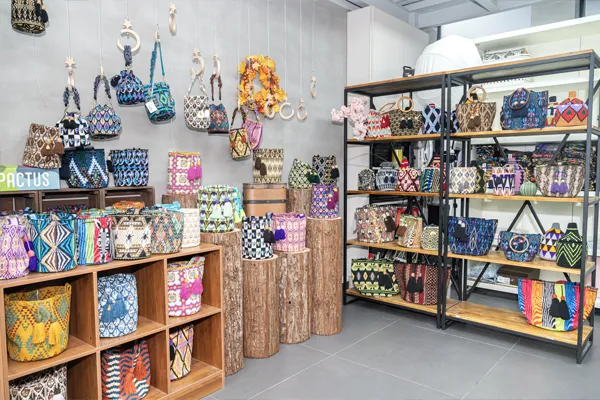
MOQ is the minimum quantity a supplier requires for a particular order or product arrangement.
MOQ stands for minimum order quantity. It is the smallest number of units a supplier is willing to sell in one transaction, at the quoted wholesale price. Below that number, the economics of production, packaging, control de calidad, and export do not work for either side.
The Basic Definition and How It Applies
For handmade bags, MOQ usually refers to pieces, not dollars. A supplier might quote 30 pieces mixed across styles, or 50 pieces of a single design. Some suppliers set a minimum order value instead, como 500 USD, which lets you build a smaller test batch as long as the total clears the threshold.
Why MOQ Exists in Wholesale Sourcing
Every wholesale order carries fixed costs: sampling, artisan scheduling, quality inspection, export documentation, packaging, and freight handling. If an order is too small, these costs can significantly reduce the supplier’s profit margin. MOQ exists to spread them across enough units that both the supplier and the buyer make sense of the deal.
How MOQ Differs Across Product Categories
Factory-made accessories often start at 500 a 1,000 pieces per style because molds and setup runs are expensive. Hecho a mano Wayuu mochila bags can go much lower because the “setup” is yarn and artisan time, both of which scale linearly. That is why boutique-friendly MOQs of 10 a 50 pieces are common in this category.
Why Handmade Products Have Different MOQs
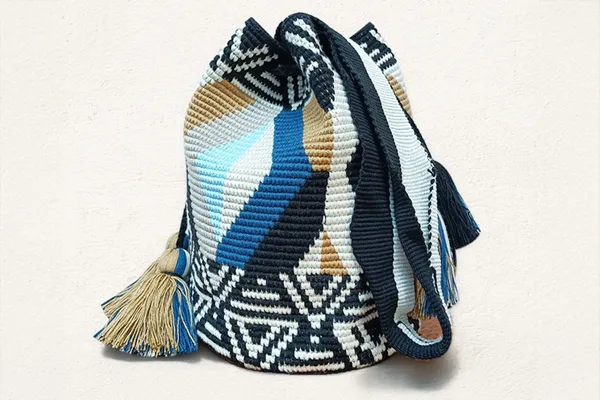
Handmade MOQ is driven by artisan capacity, not by machine setup.
Factory MOQ is set by tooling and line changeover. Handmade MOQ is set by human capacity. That single difference changes how suppliers structure minimums, and it explains why two vendors selling similar products can quote wildly different numbers.
Artisan Capacity as the Real Constraint
A single artisan produces one bag at a time, typically 4 a 8 hours a day. To hit 100 pieces in 30 days, a supplier needs 20 a 30 weavers working in parallel. That coordination cost, not raw materials, is what drives the minimum. Small batches from a wide network are easier than large batches from a single workshop.
Natural Variation and Inventory Depth
No two handmade bags are identical. Color lots, yarn tension, and motif placement all shift slightly between pieces. Suppliers holding ready stock already absorbed that variation into their inventory. Made-to-order suppliers have to schedule it in, which raises the practical minimum for custom runs.
Supply Chain Coordination Costs
Every order, no matter how small, requires quality inspection, export paperwork, packaging, and freight booking. These are largely fixed costs. A 20-piece order and a 200-piece order both need a commercial invoice, a packing list, and a customs entry. Spreading that overhead across more units is why larger MOQs deliver better pricing.
Typical MOQ Models for Boutique Buyers
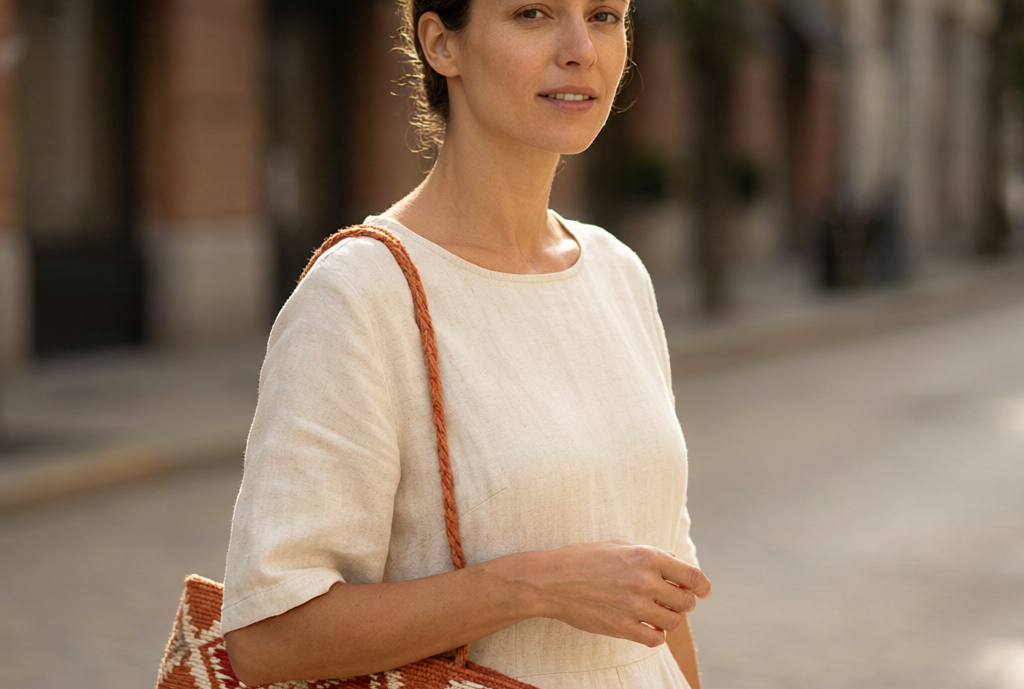
Three MOQ models cover most boutique orders. Pick by risk tolerance.
Suppliers structure MOQ in three main ways. Each fits a different buyer profile, cash flow situation, and product strategy. Understanding which one you are being quoted is half the negotiation.
| MOQ model | Typical range | Best for |
|---|---|---|
| Per-style minimum | 10 a 30 pieces per design | Boutiques testing a single hero style |
| Mixed-style total | 30 a 100 pieces across designs | Stores building a varied first collection |
| Minimum order value | 500 a 2,000 USD | Buyers prioritizing flexibility over unit count |
Note: The figures above are general reference ranges, not fixed industry standards. Actual MOQ requirements vary by supplier, product type, and order structure.
Per-Style Minimum Structure
The supplier sets a floor for each design, usually 10 a 30 pieces. This works well when you have a clear hero product and enough shelf space to display depth. It is riskier for first-time buyers because unsold stock of a single design ties up cash and space.
Mixed-Style or Assortment Minimum
The supplier sets a total order minimum, and you split it across as many designs as you like. For handmade goods this is almost always the better structure. Every piece is visually unique, so a varied assortment gives your customers more to choose from and reduces the risk of any single style underperforming.
Minimum Order Value Threshold
Some suppliers skip unit counts entirely and set a dollar floor. This gives you total freedom to mix ready stock, custom pieces, and accessories in one shipment. It is common among larger exporters who care more about shipment economics than SKU mix.
Ready Stock vs Made-to-Order MOQ
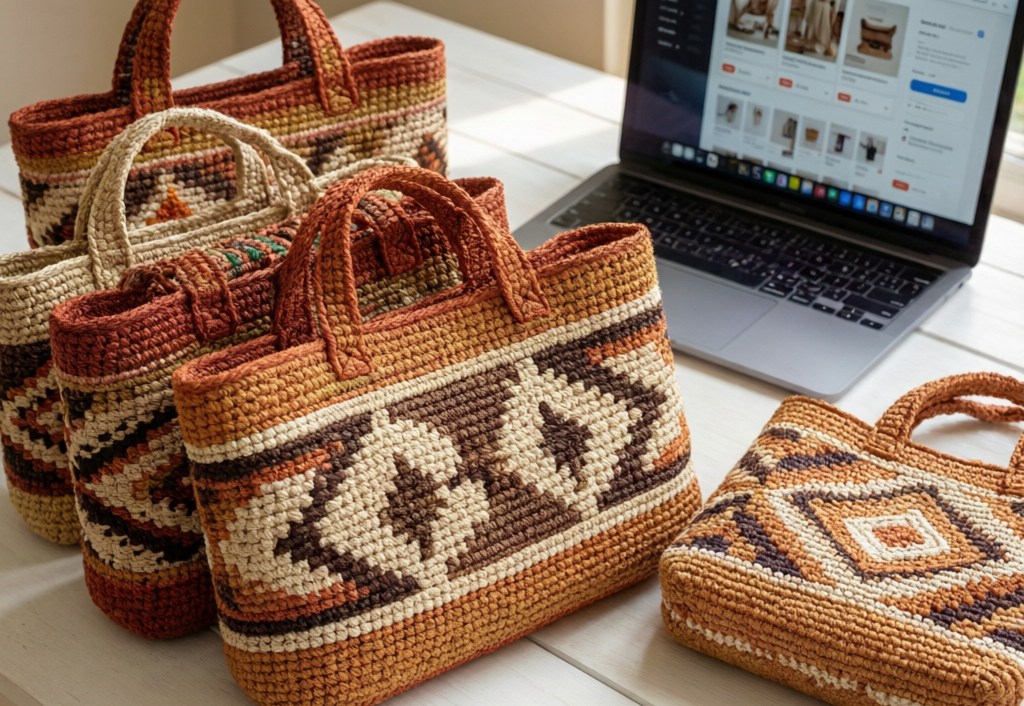
Ready stock MOQ is a shelf decision. Made-to-order MOQ is a schedule decision.
The single biggest driver of MOQ is whether you are buying finished inventory or commissioning production. Ready stock behaves like retail wholesale. Made-to-order behaves like manufacturing. The rules are different for each.
Ready Stock Minimums and Immediate Fulfillment
Because the bags already exist, suppliers can release them in very small quantities. Minimums of 5 a 20 pieces per style are common, and total orders under 500 USD are often accepted. Shipment moves in 3 a 7 days. This is the fastest, lowest-risk entry point for a new boutique. Read our breakdown of ready stock vs custom handmade bags for the full comparison.
Made-to-Order Minimums and Production Scheduling
Custom production enters the artisan queue and has to justify the scheduling overhead. Minimums typically start at 30 pieces per design and can rise to 100 or more for complex patterns. Lead times run 20 a 45 days. Our guide on handmade bag trends for 2027 explains how buyers are adjusting their sourcing calendars around these windows.
Hybrid Sourcing for Boutique Cash Flow
Smart buyers combine both. Ready stock covers the immediate opening order and any mid-season replenishment. Made-to-order carries the exclusive designs that set your store apart. This split lowers upfront risk while still building a distinctive assortment your competitors cannot copy.
MOQ and Product Customization
Every layer of customization raises the MOQ floor.
Customization is where MOQ climbs fastest. Each added layer, from a simple logo tag to a fully bespoke design, introduces new setup steps that need to be amortized across enough units to make sense.
Logo Tags and Light Private Labeling
Adding a woven brand label or a leather logo patch is the lightest form of customization. Setup is minimal, so MOQ usually rises only 10 a 20 pieces above the standard minimum. Most suppliers quote 30 a 50 pieces per design for private label programs.
Custom Colors and Pattern Development
Custom colorways require yarn dyeing, sampling, and approval before bulk production begins. That sampling cost has to be recovered. Typical MOQ for custom colors sits at 50 a 100 pieces per design, and the sampling fee is often credited back against the bulk order.
Full OEM and Bespoke Design Programs
A fully custom design, especially one integrating leather, hardware, or non-standard shapes, moves into OEM territory. MOQ typically starts at 100 a 300 pieces per style. Timelines run 8 a 12 weeks. See our remake and bespoke customization service for what a full OEM program covers.
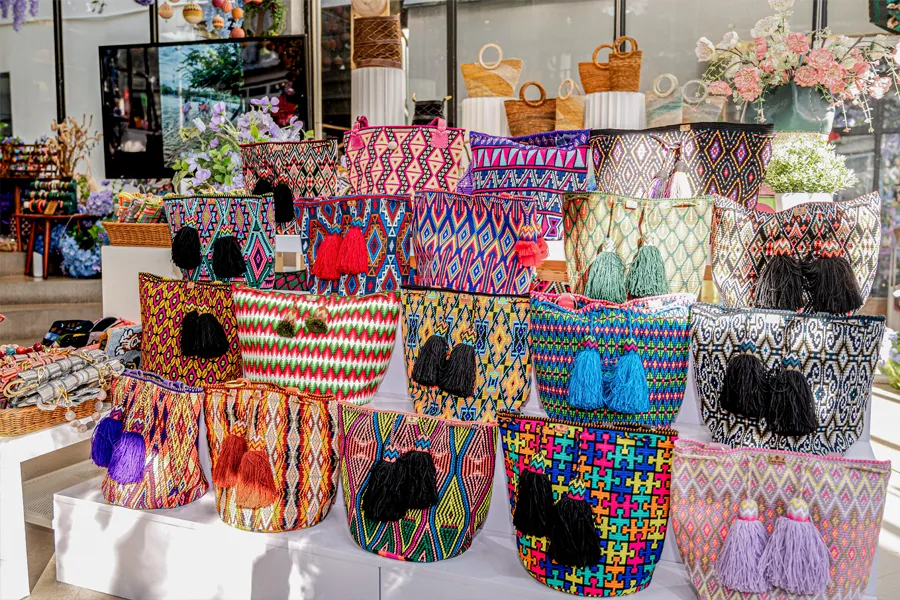
Looking for boutique-friendly MOQs on handmade bags?
Pactus Group offers flexible ready-stock and remake options for Wayuu bags, with no fixed MOQ for ready-stock orders.
How MOQ Affects Pricing
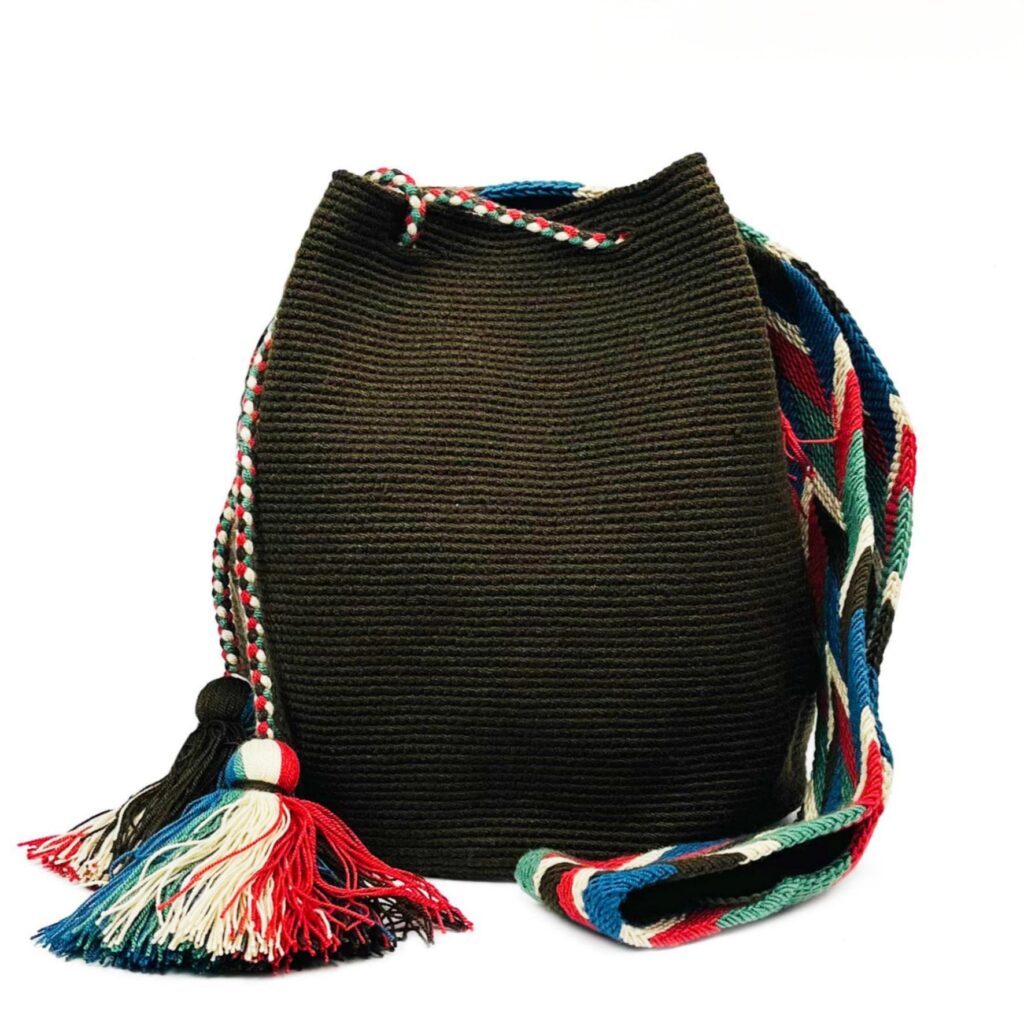
MOQ and unit price move together. Higher minimums open the door to lower per-piece costs.
Order quantity can affect both the unit price and the overall cost of a wholesale order. Suppliers build volume discounts into their tier structure, and understanding the tiers helps you decide whether the discount is worth the extra inventory risk.
Volume Discount Tier Structures
Some suppliers offer lower unit prices at higher order quantities, but the price breaks vary by product, personalización, and order structure. Buyers should compare the quoted unit price at different quantities rather than assume a standard discount tier.
Unit Cost vs Total Order Value Trade-off
A lower unit price does not always mean a lower overall cost. Before increasing the order quantity, consider your expected sales, inventory capacity, and the cost of holding or discounting unsold stock. Read our guide on how to price handmade bags for the full margin math.
Shipping Economics at Different MOQ Levels
Shipping cost per unit can decrease as order volume increases, but the actual rate depends on destination, package dimensions, weight, and shipping method. Buyers should compare the total shipping cost for the available options rather than rely on a fixed per-unit estimate.
Strategies for Small Boutique Orders
Small orders work when you plan them as a test, not as a full collection.
A small MOQ is not a limitation if you use it correctly. The right framing is a market test with a defined reorder path, not a scaled-down version of a full collection. Three strategies make small orders profitable.
Mixed-SKU Ordering to Spread Risk
Instead of 30 pieces of one design, order 10 pieces across three designs. You get the same total unit count, three times the assortment breadth, and much better data on what your customers actually want. El U.S. Small Business Administration recommends this approach for first-time retail buyers across categories.
Pilot Orders Before Scaling
Place a small pilot order at list price, sell through, then reorder the winners at a better tier. You pay slightly more per unit on the first batch but avoid the much larger cost of unsold inventory. Most suppliers welcome this pattern because it builds a longer relationship.
Rolling Replenishment vs One-Time Buys
Instead of one large seasonal order, run monthly replenishments based on actual sell-through. Cash flow stays smoother, markdowns drop, and your assortment adapts to what customers respond to. This model only works with suppliers who hold ready stock and can ship small batches quickly.
Questions to Ask Before Placing an Order
The right questions reveal supplier flexibility faster than any price quote.
MOQ quotes are the starting point of a negotiation, not the end. Before committing, run through the questions below. The answers tell you whether the supplier can grow with you or will become a bottleneck.
Questions on MOQ Flexibility and Mixing
- Can I mix styles, bandera, or sizes to reach the MOQ?
- Is the MOQ per style or per total order?
- Do you accept a minimum order value instead of a unit count?
- Can I add ready-stock items to a custom order to hit the MOQ?
Questions on Reorder and Scaling
- Can I reorder the same style at the same MOQ later?
- Do price tiers stay locked for returning buyers?
- How fast can you replenish a best-selling style?
- What is the exchange policy if a style does not sell?
For a fuller list of supplier questions across all sourcing categories, read our guide on how to source Wayuu bags wholesale. It covers authenticity, materiales, and shipping in addition to MOQ.
MOQ Planning Checklist
Match the MOQ to your shelf space, cash flow, and reorder speed.
Before you sign the purchase order, work through this checklist. Every item ties the MOQ number back to your actual store operations, so you are not buying pieces you cannot sell or storing inventory you cannot hold.
Shelf Space and Inventory Turnover
Count your linear display feet and estimate how many bags you can show at once. Consider how much inventory your store can display and how quickly similar products normally sell. Ordering a large quantity of one design can tie up cash and storage space, while a broader assortment can make a first order easier to test.
Cash Flow and Reorder Cadence
Consider how much working capital you are comfortable allocating to the first order. If a supplier’s MOQ requires more inventory than you can reasonably manage, ask about mixed styles, stock listo, or a smaller initial order. Faster reorder cadence beats deeper first orders for most small retailers.
Style Assortment Balance
A healthy first order covers three price tiers and two to three silhouettes. That gives every customer a way in. Read our guide on why handmade bags cost more to understand how price tiers map to production effort.
Frequently asked questions
What is MOQ for handmade bags?
MOQ for handmade bags varies by supplier and order type. At Pactus, ready-stock Wayuu bags have no fixed MOQ, while remake orders can also be placed without a fixed MOQ. Catalog orders typically require a 30% deposit and take around 60 a 90 days to complete, depending on the order.
Can I mix different Wayuu bag styles in one order?
Sí. Most boutique-friendly suppliers support mixed-style MOQs where the minimum applies to the total order rather than each design. Mixed-SKU orders reduce inventory risk and give your customers more variety on the shelf.
What MOQ is best for first-time buyers?
A mixed-SKU order of 30 a 50 pieces across three to five designs is the sweet spot for a first wholesale buy. It fits most boutique shelf space, spreads risk, and gives you sell-through data before a larger reorder.
Does MOQ affect wholesale pricing?
Sí. Suppliers structure volume discount tiers around MOQ, with price breaks typically at 100 y 300 pieces. Higher minimums also reduce per-unit freight cost, which can matter as much as the discount itself.
Are ready-stock products available below MOQ?
Often yes. Suppliers holding finished inventory can release small quantities, sometimes as low as 5 a 10 pieces per style, because no new production is required. Minimum order value thresholds may still apply.
Treating MOQ as a starting point, not a barrier
MOQ numbers look rigid on a quote sheet, but almost every supplier has flexibility if you ask the right questions. Mixed-style orders, minimum order value thresholds, and hybrid ready-stock-plus-custom structures all let a small boutique enter the market without over-committing cash or shelf space.
The boutiques that succeed with handmade bags treat MOQ as a supply-chain tool, not a production limit. Start small, test the market with variety, reorder the winners, and grow the relationship over multiple seasons. That path builds both a distinctive assortment and a supplier who knows your business well enough to protect your dates.