What Defines Traditional Wayuu Culture
Matrilineal Identity and Social Structure
The Wayuu people trace descent and cultural identity exclusively through the mother’s line. This matrilineal framework organizes society around large, close-knit extended family networks living in traditional settlements known as rancherías.
Rather than operating as isolated individuals, family groups share collective responsibilities. They handle community obligations together and rely on the broader family network to resolve major disputes and support one another.
The Wayuunaiki Language and Homeland
The Wayuu inhabit the arid Guajira Peninsula, spanning northern Colombia and northwest Venezuela. They adapt their daily routines and livelihoods to survive in this harsh desert and coastal landscape.
They speak Wayuunaiki, a distinct language belonging to the Arawakan family. Maintaining this language serves as a core marker of their indigenous identity, allowing them to transmit oral history and ensure cultural continuity across generations.
Nature-Centered Spirituality and Ceremonies
Wayuu culture relies on a harmonious alliance with the natural world. They integrate sacred meanings into everyday life, heavily weighing dreams, ancestral guidance, and spiritual messages when making community decisions.
Traditional rites of passage mark all major life transitions, with particular emphasis on female coming-of-age rituals. During community celebrations and ceremonies, the Yonna dance acts as a central cultural expression of social cohesion and spiritual vitality.
Weaving as Cultural Heritage
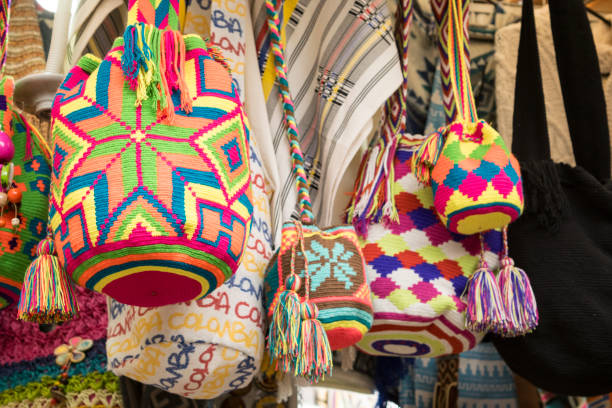
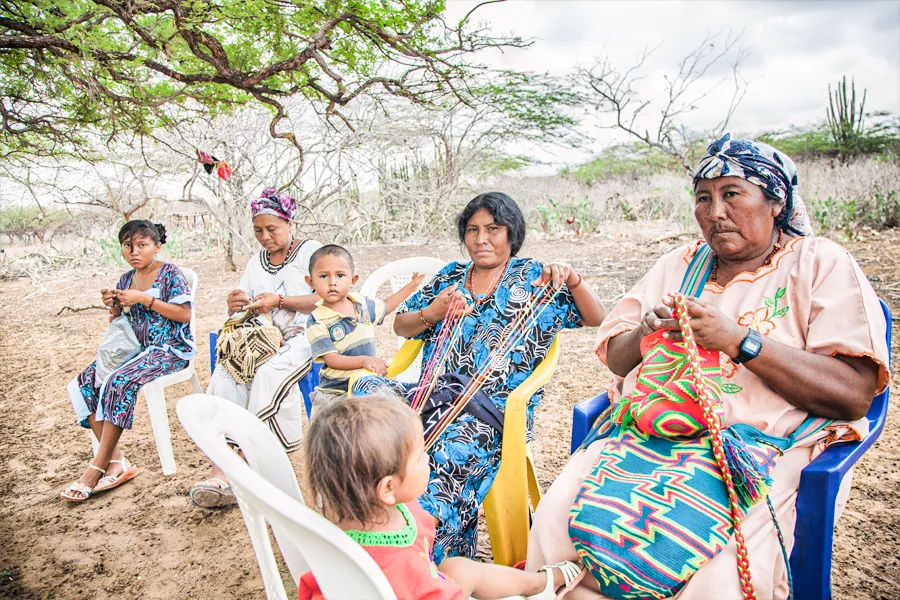
Weaving operates as a foundational cultural practice passed directly from mothers to daughters. Artisans utilize highly complex textile and crochet techniques to produce intricate handcrafted bags and textiles.
This artisanal production goes far beyond aesthetics. It anchors their cultural identity while acting as an economic engine, directly supporting household economies and local trade networks.
Community-Based Justice System
The Wayuu manage internal conflicts through a community-based justice system focused on reparations. Instead of strictly punishing individual offenders, traditional mediators work to restore social balance after harm, theft, or major disputes.
Compensation involves the broader family network rather than placing the burden on a single individual. Customary reparation payments include:
- Livestock: Goats and donkeys.
- Valuables: Necklaces and ancestral jewelry.
- Currency: Money in contemporary dispute resolutions.
How Wayuu Culture Is Reflected in Handwoven Bags
| Cultural Aspect | Expression in the Bag |
|---|---|
| Geography & Environment | Warm palettes and desert-inspired geometric motifs |
| Social Structure | A physical marker of female economic authority |
| Personal Identity | Unique clan patterns and individual design signatures |
| Ancestral Heritage | Oral transmission of complex single-thread crochet techniques |
| Community Economics | A critical trade commodity that ensures family survival |
Geographic Roots and Natural Symbolism
The La Guajira Peninsula shapes the visual language of these bags. Known for its harsh desert environment of sun, sand, and wind, this region directly influences the weavers’ choices. The structural designs and color palettes directly translate the Wayuu cosmological worldview and natural surroundings into visual art.
The woven motifs operate as symbolic codes. Artisans map specific environmental elements into the fabric, including:
- Animals: Representing local fauna and clan totems.
- Plants: Reflecting the resilient desert flora.
- Celestial bodies: Mirroring the sun, stars, and cosmological cycles.
Women’s Roles and Social Status
In Wayuu society, weaving is tightly linked to female socialization. Mothers teach the craft to young girls from a very early age, often during traditional rites of passage. Handcrafting bags forms the core of female economic activity and embeds traditional gender roles directly into the physical object.
The community does not view weaving as a simple chore. Mastery of the craft is highly respected and regarded as a sign of:
- Intelligence: The capacity to memorize and execute complex pattern structures.
- Creativity: Blending personal vision with strict traditional guidelines.
- Wisdom: Understanding the spiritual meanings behind the craft.
- Cultural competence: Earning status within the matrilineal social structure.
Personal Expression and Uniqueness
Standardization does not exist in authentic Wayuu crafting. No two bags are identical, ensuring every piece remains a unique individual visual narrative. The final product acts as an artistic signature of the specific artisan rather than a mass-produced, factory-made item.
Each weaver builds a custom aesthetic profile into her work. She integrates several distinct elements into the Wayuu bag patterns:
- Experiences: Translating daily life events into the weave.
- Aspirations: Embedding dreams and spiritual goals.
- Family clan symbolism: Using specific geometric markers to identify her lineage.
Ancestral Techniques and Time Investment
Artisans build these bags using traditional crochet and loom weaving techniques passed down orally through generations. Producing a single bag demands roughly three weeks of concentrated, intensive handwork by one woman. This slow production cycle completely rejects the modern fast-fashion approach.
The complex process requires intense focus and physical endurance. It reflects deep cultural values embedded in the community, such as:
- Patience: Committing weeks to a single, continuous thread.
- Dedication: Honoring the teachings of ancestors.
- Perfectionism: Executing tight, flawless stitches for extreme durability.
Economic Lifeline and Cultural Resilience
Selling handwoven bags serves as the primary source of income for the Wayuu community. The global demand for these textiles provides a critical financial foundation. Purchases directly support family survival mechanisms in a highly marginalized desert region where other economic opportunities remain scarce.
Beyond immediate financial relief, every bag functions as a cultural preservation tool. The steady market demand supports the continued practice of ancestral skills. When artisans earn a living through traditional crafting, they pass those methods down to the next generation rather than abandoning them for outside labor.
Elevate Your Brand with Authentic Wayuu Wholesale Craftsmanship
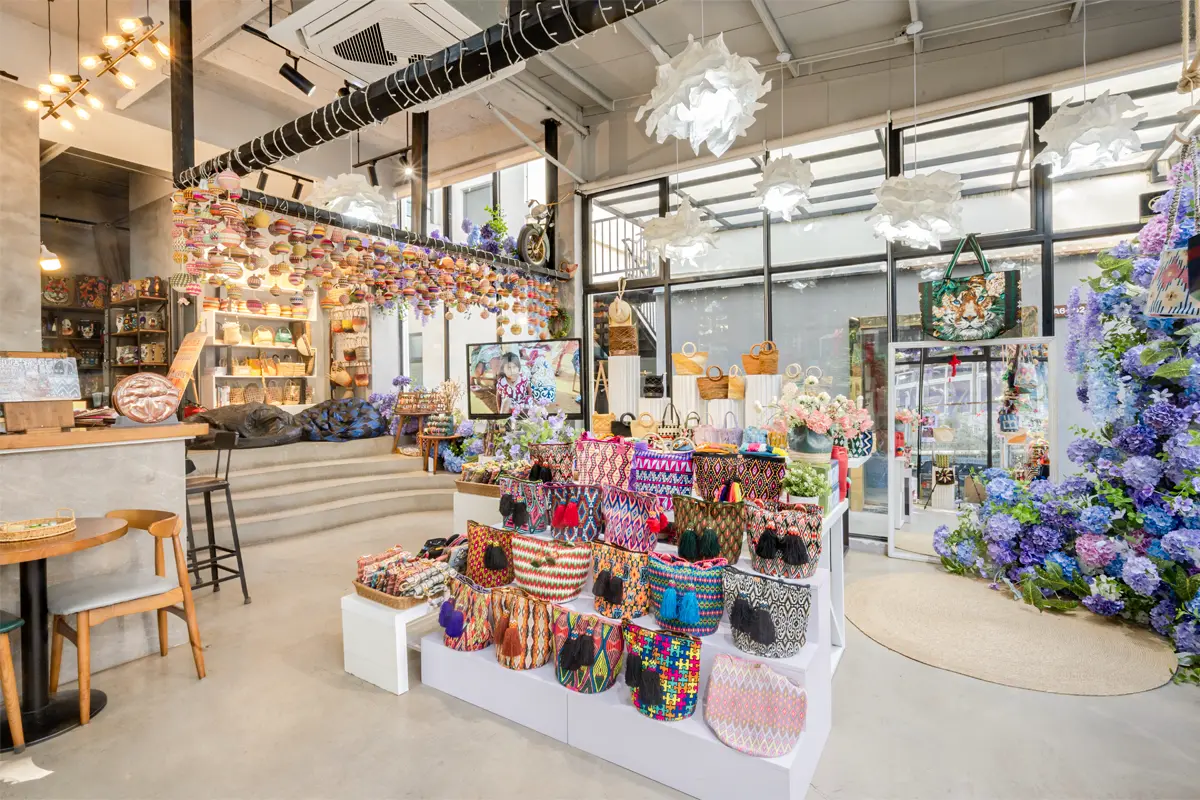
The Meaning Behind Traditional Wayuu Patterns and Colors
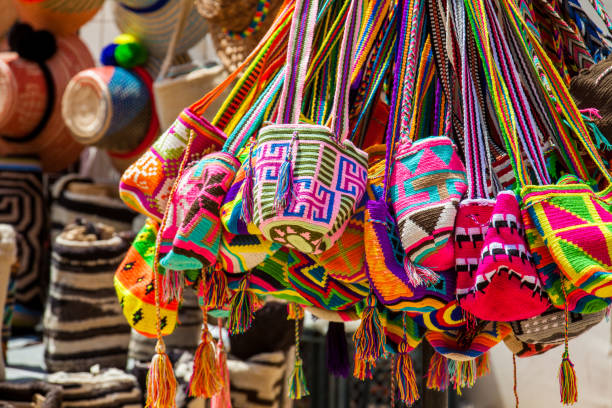
Kanaas: The Visual Language of Wayuu Weaving
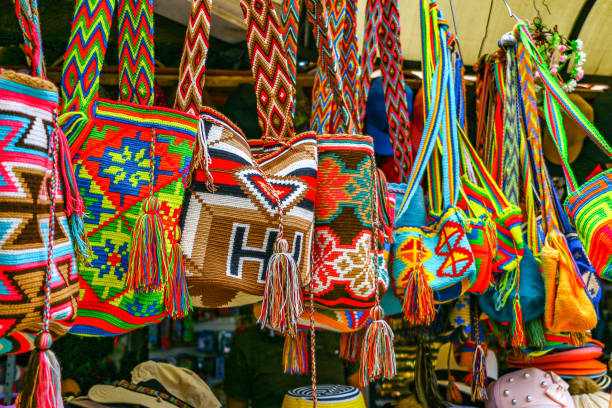
Woven geometric designs function as a codified visual alphabet communicating beliefs, myths, and social belonging. These motifs, known as kanaas, organize cultural memory without relying on written text. Compositional knowledge passes directly through maternal lines, typically taught to young women during the encierro seclusion period. Mothers and grandmothers ensure this technical and symbolic education remains unbroken across generations.
Sacred geometry forms the foundation of the designs, mapping out cultural narratives through distinct shapes:
- Diamonds: Act as guardian figures and interpret the protective gaze of ancestral spirits.
- Zigzags: Map the physical movement of water courses and the dynamic nature of life.
- Stepped forms: Represent structural balance, mountains, and layered life transitions.
Core Traditional Motifs and Their Narratives
Weavers assign specific names to individual kanaas, linking each shape directly to elements of the physical and spiritual world. Recognizing these motifs reveals the primary story embedded in the textile.
- मोलोकोनौटाया: Modeled after animal footprints, this pattern evokes protection and guidance across the harsh desert environment.
- Marüliunaya: Representing the eye of the jaguar, it communicates strength, courage, and heightened spiritual perception.
- Pasatalo’oya and Antirajauyagua: These winding shapes symbolize complex life paths, personal choices, and essential water courses required for survival.
- Jime’yaa: A diagonal cross that actively bridges the visible earthly reality with the invisible spiritual realm.
Color Symbolism Rooted in the La Guajira Environment
Wayuu color choices reflect a tight bond with the La Guajira landscape. Artisans select specific contrasting hues to communicate precise environmental and philosophical concepts.
- Red and Orange: Reflect the intense heat of the desert sun, embodying energy, passion, and resilience.
- Blue and Green: Celebrate the sea and rare vegetation, signifying clear hopes for rain, prosperity, and abundance.
- Black and White: Illustrate the Wayuu philosophy of duality, establishing visual equilibrium between day and night or life and death.
- Earthy Brown: Connect the wearer directly to the territory, representing soil stability and the rocky desert terrain.
Clan Markers and Personal Storytelling
Specific patterns and animal motifs function as ancestral identifiers unique to particular clans and lineages. Families maintain exclusive designs across generations, operating much like heraldic emblems. When a Wayuu member carries a bag with clan-specific geometry, they immediately signal their territorial origin and social loyalties.
Beyond displaying clan affiliation, weavers select combinations to document personal experiences. They translate dreams, spiritual guidance, and significant life events into tangible art. The careful execution of these intricate patterns over 10 to 25 days solidifies each piece as a permanent carrier of ancestral memory and female-driven knowledge.
Why Handweaving Remains Important to Wayuu Communities
Cultural Continuity and Symbolic Meaning
For the Wayuu, a woven bag acts as a mobile archive. Generation after generation, grandmothers and mothers pass down ancestral knowledge through the tension of threads rather than written text. This practice preserves the community’s visual language, known as kanaas.
These intricate geometric patterns do heavy lifting for the culture, encoding several critical elements:
- Cosmology: Representations of the universe, balance, and the spiritual realm.
- Clan Lineage: Specific motifs that act as family crests and territorial markers.
- Natural Elements: Interpretations of stars, animal tracks, and desert flora.
By maintaining this visual storytelling, the Wayuu actively resist cultural homogenization and keep their specific history intact.
Economic Sustainability and Livelihoods
Life in the La Guajira desert is unforgiving. While subsistence activities like fishing, herding, and small-scale agriculture provide a baseline of survival, handweaving serves as the primary source of cash income. Selling mochilas and textiles bridges the gap between what the land provides and what the community needs to buy.
This income directly funds essentials that cannot be grown or herded:
- Food and Clean Water: Vital supplies during extreme drought seasons.
- Medical Care: Access to treatments and medicines outside traditional practices.
- Education: School supplies and fees for the younger generation.
Because women control the weaving process from start to finish, they hold the economic power. This structure grants them absolute financial autonomy without relying on external corporate employers or formal labor markets.
Social Structure and Gender Identity
Wayuu society operates on a strict matrilineal system, and weaving sits at the very core of what it means to be a woman in this culture. The community operates by a simple proverb: “To be a woman is to know how to weave.” It serves as a non-negotiable marker of adulthood and respect.
This identity forms during a mandatory rite of passage. After her first menstruation, a young girl enters a period of seclusion. During this time, elder women teach her the technical demands of the loom alongside her social responsibilities. This shared labor strengthens clan cohesion, forging an unbreakable bond between grandmothers, mothers, and daughters.
Spiritual and Cosmological Connections
The craft extends beyond physical labor; the Wayuu view weaving as a direct gift from the spiritual world. It represents a sacred relationship with nature, governed by unseen forces and ancestral guidance.
Artisans rarely pull designs out of thin air. Instead, dream imagery and spiritual insights heavily influence their creative choices. When a weaver wakes, she translates these visions directly into the yarn. The patterns also mirror the extreme La Guajira environment, interpreting organic forms like the desert sun, sand dunes, and animal movements into permanent, wearable records.
Contemporary Market Presence and Cultural Representation
Wayuu textiles have crossed global borders, transforming the mochila into an internationally recognized symbol of their culture in modern fashion spaces. This visibility gives the community a powerful platform.
By maintaining strict control over the authentic handweaving process, the Wayuu assert authorship and fight back against cultural misappropriation and factory-made counterfeit goods. The true craft cannot be replicated by a machine. This genuine market presence also serves as the foundation for social enterprises and NGOs, which partner with local weavers to launch broader community development and women’s empowerment initiatives.
How Modern Fashion Embraces Wayuu Craftsmanship
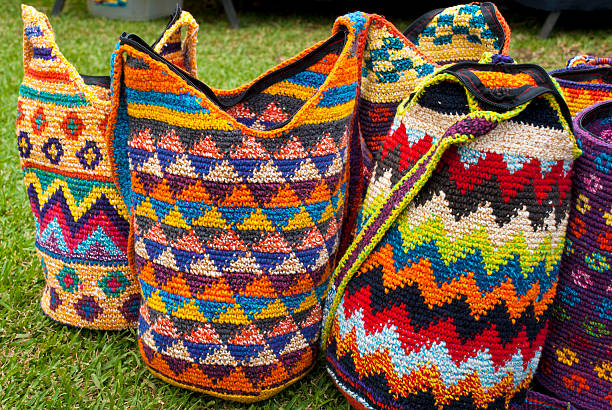
Transitioning to Handcrafted Luxury and Slow Fashion
The fashion industry now positions the everyday Wayuu mochila as globally recognized wearable art. Labels highlight the time-intensive, single-thread crochet technique as a clear marker of premium quality and exclusivity. A single authentic bag requires weeks of dedicated handwork to complete. This production cycle fits naturally into the slow fashion movement. By prioritizing artisan-made, small-batch accessories over industrial manufacturing, modern brands offer buyers a direct alternative to mass-market goods.
Merging Ancestral Symbolism With Contemporary Aesthetics
Designers incorporate traditional Wayuu motifs into their collections as active visual storytelling. These patterns map geographic features and cosmological beliefs directly onto the fabric. Brands leverage the weavers’ vibrant color palettes and bold geometric contrasts to build modern resort, beach, and travel assortments. To match shifting consumer tastes, fashion houses also balance authentic Wayuu pattern logic with current trend cycles. Weavers adapt their traditional designs to include monochrome or neutral colorways tailored for specific seasonal releases.
Adapting Traditional Weaves for Urban and Resort Lifestyles
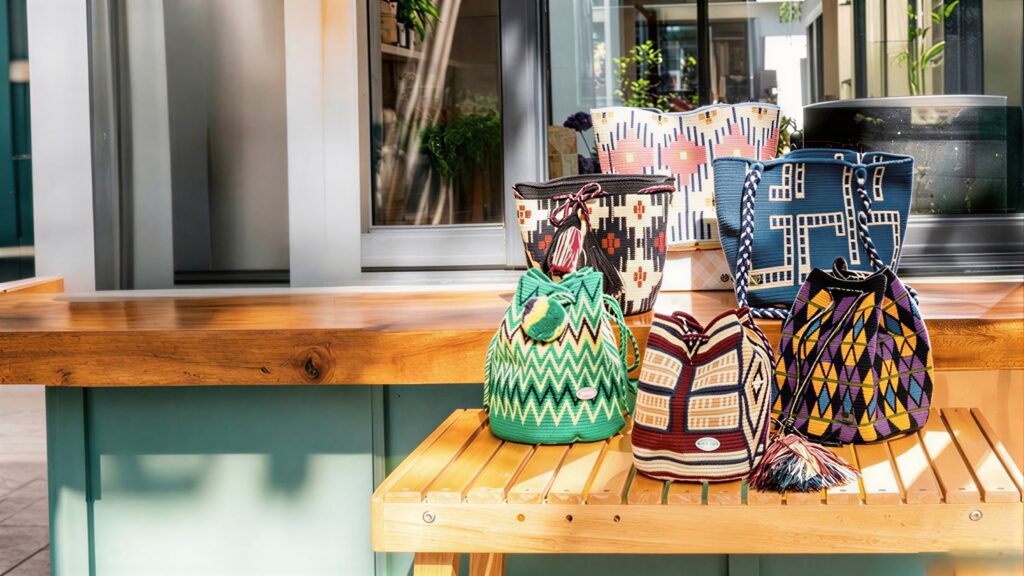
Traditional Wayuu bags feature a classic cylindrical bucket shape. Today, artisans and brands evolve these core designs into versatile mini-bags, clutches, and structured crossbodies suited for urban environments. Product developers integrate functional modern details, adding premium hardware, leather accents, and internal pockets without compromising the woven body. This adaptation extends beyond fashion accessories. Interior designers now reimagine Wayuu hammocks and large textiles as high-end decor, connecting the craft to premium lifestyle markets.
Building Narratives Around Cultural Heritage and Ethical Production
Consumers want to know exactly where their products originate. Fashion labels meet this demand by framing collections around the preservation of the Wayuu language, stories, and intergenerational weaving traditions. Campaigns highlight how direct trade provides economic independence for Wayuu women artisans in the La Guajira region. This narrative reframes the transaction. It positions the buyer as a patron of sustainable, low-impact artistry rather than a passive purchaser of seasonal items.
Why Authentic Wayuu Culture Still Matters Today
Matrilineal Social Organization and Restorative Justice
Wayuu society operates on a matrilineal system where women directly transmit kinship, land ties, and cultural continuity. This framework bypasses traditional patriarchal models, placing female leadership at the center of community survival.
Their conflict resolution system relies heavily on the Pütchipü’üi, or Palabrero, recognized globally by UNESCO as an Intangible Cultural Heritage of Humanity. This customary justice system prioritizes direct compensation and social repair over traditional punishment. By focusing on resolving harm through measurable reparations, the Wayuu provide a working, sustainable model for restorative justice.
Economic Empowerment Through Artisan Weaving
Authentic Wayuu weaving anchors one of Colombia’s largest handicraft export sectors. This global demand provides essential cash income for Indigenous families living in the arid Guajira region, supplementing traditional subsistence farming and herding.
The craft places Wayuu women squarely in the role of central income generators and community leaders. Because the tradition mandates that weaving skills pass from mother to daughter, women maintain complete control over this economic engine. Preserving genuine Kaanás geometric designs ensures these communities retain their intellectual property. Defending authenticity protects artisans from mass-produced counterfeits that extract market value without sending a single dollar back to the creators.
Environmental Stewardship in the Guajira Peninsula
Wayuu cosmology directly links collective memory and world harmony to the physical land. When the land degrades, the culture loses a piece of its spiritual and historical archive. This belief system creates an absolute ethical mandate for conservation.
Communities across the Guajira Peninsula use this mandate to lead active territorial defense efforts against resource extraction, coastal erosion, and climate-driven displacement. Their ancestral ecological knowledge proves vital for maintaining biodiversity in a highly fragile desert-coastal ecosystem. Wayuu land ethics provide a practical blueprint for survival, intertwining spiritual obligation with concrete ecological management.
Ethical Branding and Cultural Resilience
Maintaining authentic Wayuu culture provides the moral and legal grounding required to protect Indigenous intellectual property from fast fashion and globalization. Brands that engage respectfully with this culture establish frameworks that treat artisans as co-creators rather than anonymous, low-cost labor.
By emphasizing true cultural narratives, ethical partnerships shift consumer focus away from generic tribal aesthetics. Buyers engage directly with the meaning behind the materials. This approach drives meaningful financial support for Indigenous survival, ensuring the community can continue defending their territory and preserving their ancestral way of life.
अक्सर पूछे जाने वाले प्रश्नों
What is the legend of the Wale’kerü spider?
Wale’kerü is a mythic weaving spider and feminine spirit who taught Wayuu women the art of weaving. According to oral tradition, she taught a young girl how to weave intricate patterns over a period of several moons. When the spider disappeared, the girl shared this knowledge with her community. This legend forms the spiritual foundation of Wayuu textile art, positioning weaving as an ancestral gift.
Why are Wayuu bags culturally significant?
Wayuu bags, or mochilas, function as mobile cultural archives. They encode the community’s history, clan identity, cosmology, and social values through specific materials and techniques. Creating a first mochila is a vital rite of passage for young girls. This process marks their transition to womanhood and ensures the mother-to-daughter transmission of ancestral knowledge.
What do the geometric shapes on Wayuu bags mean?
The geometric shapes, known as kanaas, operate as a visual language rather than mere decoration. त्रिकोण, diamonds, and zigzags represent the interconnectedness of life, elements of the harsh desert environment, and specific clan lineages. While meanings vary among different families and artisans, they universally reflect the Wayuu relationship with nature and their heritage.
How does weaving support Wayuu women?
Weaving provides essential economic security in the arid La Guajira region where livelihood options remain scarce. Beyond generating income, the practice grants women social status, respect, and a central role as guardians of community history. Global demand for authentic textiles allows these artisans to support their families while maintaining their autonomy and cultural distinctiveness.
Is Wayuu weaving an endangered art form?
While the craft remains highly visible and economically active on a global scale, it faces deep cultural vulnerabilities. The primary risk involves the potential loss of complex techniques, symbolic meanings, and ritual contexts due to market pressures demanding faster, cheaper production. Preserving the art requires supporting models that protect the time-intensive methods and intergenerational mentorship essential for authentic weaving.
How can brands respect Wayuu intellectual property?
Brands need to treat Wayuu designs and patterns as collective cultural heritage rather than free design inspiration. This involves securing prior informed consent from legitimate community representatives, paying fair compensation, and providing accurate attribution. Avoiding generic tribal labels and ensuring the Wayuu people retain control over their narratives prevents cultural misappropriation.
अंतिम विचार
When you evaluate Wayuu handwoven bags, you are making a decision that goes beyond product cost. Mass-produced replicas may look similar at first glance, but they weaken brand storytelling and reduce long-term pricing power. Authentic craftsmanship helps you build stronger differentiation and a more credible premium position in the 2026 fashion market.
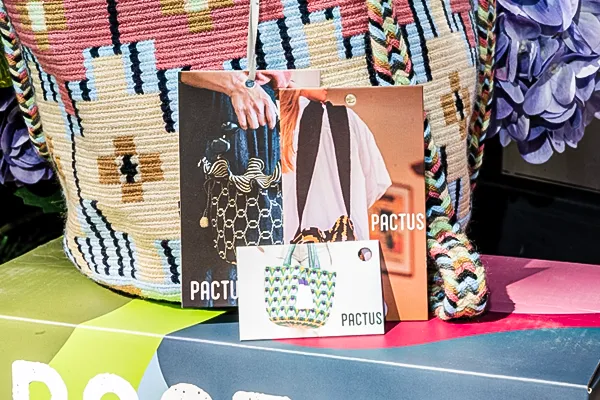
At समझौता, we work directly with Wayuu artisan communities in Colombia to help you source authentic handwoven Wayuu bags in a more structured and reliable way. Instead of treating each piece as an isolated craft item, we connect you to a coordinated supply network that supports consistent quality, अनुकूलन विकल्प, और ethical production standards. You can learn more about our approach at Pactus and how we combine cultural preservation with scalable sourcing solutions.
If you are planning your next collection, start with a curated sample order to evaluate weaving quality and pattern authenticity firsthand. Contact our team to build a sourcing plan that aligns with your brand direction and ethical positioning.