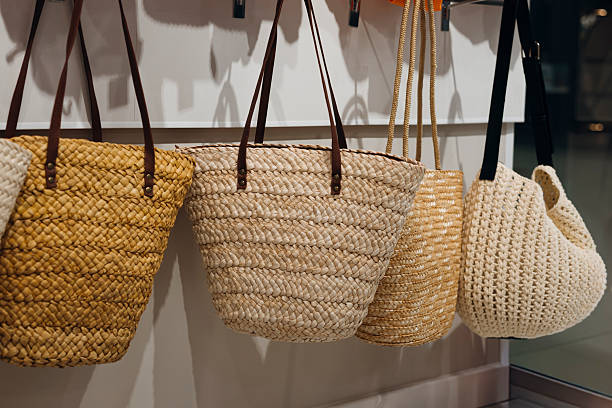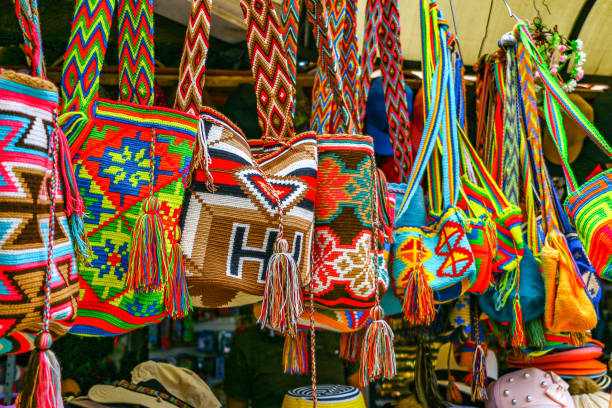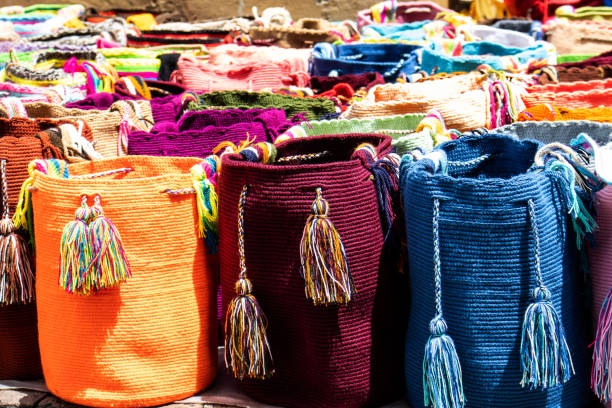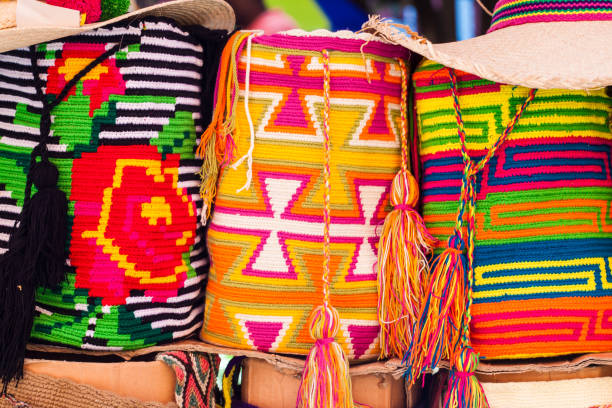
Integrating the Wayuu language into your merchandising strategy is the only way to bypass the trap of generic commoditization and authenticate Guajira crafts. Relying on standard Spanish terms to describe complex indigenous weaving strips textiles of their cultural weight. Without an accurate framework of native terminology, training retail staff to represent these products becomes a reputational liability rather than a cultural asset.
This analysis benchmarks native linguistic applications against the industry standard for cultural retail authenticity. We evaluate the regional dialects uniting over 400,000 active speakers and the exact vocabulary required for items like the kattoʼui. These socio-linguistic markers give you the precise data needed to train your team and accurately position your inventory.
What Is Wayuunaiki and Where Is It Spoken
Wayuunaiki is the dominant Arawakan language of the Guajira Peninsula, uniting over 400,000 speakers across Colombia and Venezuela despite low formal literacy and porous geographical borders.
Linguistic Classification and Speaker Population
Wayuunaiki anchors the Arawakan (Maipurean) language family. Many related Indigenous languages are poorly documented or extinct, positioning Wayuunaiki as a critical linguistic reference point.
- Speaker Base: Roughly 400,000 to 420,000 active speakers.
- Regional Status: The most widely spoken Indigenous language in both Colombia and Venezuela.
- Literacy Rate: Under 1% in formal Wayuunaiki, even though schools teach the Latin alphabet in bilingual programs.
Geographic Distribution Across Colombia and Venezuela
The language centers on the Guajira Peninsula (Woumainpaʼa). This arid desert region acts as a natural bridge on the Caribbean coast. The border between the two countries remains highly porous. Wayuunaiki operates as a transnational community language, directly connecting families, pastoralists, and trade networks across the divide.
- Venezuela: Approximately 300,000 speakers, primarily residing in the state of Zulia.
- Colombia: Roughly 120,000 speakers, located in the department of La Guajira.
Regional Dialects: Wüinpümüin and Wopumüin
Geography dictates the two primary dialects of the language. Speakers in the northeast use Wüinpümüin, while those in the southwest speak Wopumüin.
These regional differences isolate strictly to specific vocabulary and grammar rules rather than structural divides. Both dialects maintain high mutual intelligibility. A speaker from the northeast can communicate with a southwestern local without difficulty, keeping cultural and economic networks unified across the peninsula.
Why Wayuunaiki Is Important to Wayuu Culture
Wayuunaiki acts as the living framework of Wayuu identity, organizing ancestral territories, clan structures, spiritual rituals, and customary law across the Guajira Peninsula.
Core Identity and Social Organization
To understand the Wayuu people, you have to look at how they speak. Wayuunaiki explicitly defines ethnic belonging and connects individuals to their ancestral territories. The language maps out the matrilineal clan divisions, known as e’irukuus, providing kinship terms and social categories that simply do not translate into Spanish.
This linguistic structure also underpins their governance and legal systems. Customary law, conflict resolution, and the specific vocabulary used by traditional mediators (pütchipü’üi) rely entirely on the nuances of Wayuunaiki. Using the native language in these settings reinforces the legitimacy of Wayuu law independent of national state systems.
Spiritual Worldview and Life-Cycle Rituals
Wayuunaiki houses an exact vocabulary for spiritual beings, omens, and the cosmos. The Wayuu interpret dreams and communicate with ancestors using ritual speech that depends on this specific terminology. This framework shapes how the community understands illness, healing practices, and the journey of the soul after death.
The language also drives the execution of critical life-cycle rituals. Key ceremonial practices require songs, blessings, and instructions delivered in Wayuunaiki to retain their meaning.
- Majaauyuu: The traditional celebration marking female adulthood relies on specific spoken teachings.
- Yoona: This sacred dance operates alongside specific musical and verbal cues.
- Healing rituals: Spiritual treatments require precise ritual formulas native to the language.
Oral Tradition and Artistic Heritage
Before written texts, the Wayuu preserved their history orally. Wayuunaiki remains the primary medium for passing down myths, legends, and collective memory from elders to youth. This storytelling tradition uses chants and music to connect contemporary communities directly to their pre-colonial past, maintaining a long historical record of resilience.
The language also provides the interpretive key for Wayuu physical art. Artisans use a specialized symbolic vocabulary to explain the geometric patterns and motifs woven into traditional Wayuu mochilas. Without Wayuunaiki, the stories and meanings encoded in these globally recognized textiles would quickly fade into generic designs.
Education, Autonomy, and Modern Continuity
Both Colombia and Venezuela recognize Wayuunaiki as an official language, which strengthens the political and cultural rights of the Wayuu people. This status supports intercultural bilingual education in regional schools. Learning Wayuunaiki alongside Spanish ensures youth absorb deep cultural knowledge embedded in the language, rather than just basic conversational skills.
To combat language loss and urban migration, the community actively pushes Wayuunaiki into digital spaces. Projects like the Wayuunaiki Wikipedia edition (Wikipeetia süka wayuunaiki) document cultural heritage online. Adapting the language for internet platforms proves that Wayuunaiki can function in modern, technological contexts while preserving its traditional worldview.
Maximize ROI With Luxury Remake Wayuu Bags
Unique Sounds and Expressions in Wayuunaiki
Wayuunaiki encodes the Wayuu people’s matrilineal culture, desert environment, and ritual life into a distinct, consonant-rich acoustic profile that persists through modern digital adaptations.
| Category | Wayuunaiki Expression | Cultural Context |
|---|---|---|
| Time-Specific Greeting | Wattamat / Anas alika | Strict morning and afternoon social acknowledgments. |
| Ritual Action | Oyonnajaa | Specifically dancing the traditional yonna ceremony. |
| Sensory Lexicon | Püsia | Describes naturally sweet, pleasant local food or drink. |
Distinctive Phonetics and Sound Systems
Wayuunaiki stands apart from Spanish through a dense, consonant-heavy soundscape. Speakers utilize a broad range of stops, fricatives, and laterals to create a textured acoustic profile. Vowels remain stable and clear even in unstressed positions. This phonetic stability generates a steady, predictable rhythmic flow during everyday conversations.
When elders or leaders speak in public or ritual contexts, they shift away from standard conversational tones. They employ melodic and emphatic intonation patterns to command attention and convey the cultural weight of the ceremonial speech.
Everyday Greetings and Social Formulas
Wayuu social formulas reveal a highly tuned awareness of context and community. Greetings change immediately depending on the exact time of day. Morning exchanges begin with Wattamat, while afternoon arrivals require Anas alika. The language also enforces strict grammar rules for polite address based on the audience.
- Singular male welcome: Antashi pia addresses one man directly.
- Plural welcome: Antashii jaya properly greets a group.
True politeness in Wayuu culture relies on interactional sequences rather than single transactional words. Speakers prioritize extended inquiries about a visitor’s family and personal wellbeing before discussing any main topics.
Culturally Specific Vocabulary
The Wayuunaiki lexicon tightly packs complex cultural actions into single words. You cannot translate these directly into Spanish without losing critical meaning. Take the word Oyonnajaa. It does not mean generic dancing; it specifically dictates the act of dancing the traditional yonna ritual. Sensory descriptions demand similar precision.
Püsia describes the pleasant, naturally sweet tastes found in local fruits and corn drinks. The broader vocabulary categorizes the exact realities of the Guajira Peninsula. The language contains a highly developed native lexicon specifically built to detail kinship structures, arid desert landscapes, and active pastoral duties.
Worldview, Rituals, and Musical Expressions
Language structures mirror the Wayuu matrilineal society. Everyday vocabulary constantly reinforces maternal clan (eirukuu) affiliation to track identity and social boundaries. Oral storytellers rely on deep poetic metaphors to map their harsh environment, using specific language to categorize desert winds, animals, and star patterns.
This oral tradition bleeds directly into musical expression. Chants pair traditional instruments with distinct vocables and onomatopoeic sounds. This allows performers to accurately mimic the natural environment of the peninsula directly through their music.
Modern Adaptations and Digital Expressions
Wayuunaiki actively adapts to the digital age. Speakers build new terminology for the internet and social media directly from existing native roots. Bilingual younger generations regularly code-switch in urban and educational settings to navigate both worlds.
They create hybrid sentence structures, inserting Spanish nouns for modern objects into rigid Wayuunaiki syntax and kinship frameworks. Even with this heavy Spanish influence, speakers fiercely preserve their core traditional greetings and ritual expressions in daily life.
How Wayuunaiki Reflects Wayuu Oral Traditions
Wayuunaiki operates as the living archive of Wayuu culture, transmitting cosmological narratives, matrilineal clan histories, and desert survival strategies entirely through speech rather than written texts.
Transmission of Myths, Proverbs, and Songs
Wayuunaiki functions as the primary vessel for mythic and historical narratives. Elders use the language to explain clan origins, outline landscape features, and establish moral norms without relying on written documents. They condense complex social rules and conflict resolution strategies into highly repeatable proverbs. These short, memorable phrases ensure everyday ethics survive across generations. The community also channels its cultural identity through songs and humor, packing emotional histories and cosmological themes into active, spoken performances.
Clan Memory and Oral Governance
The language acts as the central engine for clan-based governance. Traditional leaders preserve customary law and execute negotiation strategies entirely through the spoken word. Women and elders take on the role of vital knowledge keepers within this system. They verbally instruct younger generations on strict kinship obligations and proper conduct. This constant oral transmission sustains the Wayuu’s strong matrilineal social structure, mapping out physical territory and ancestral descent lines through daily speech.
Linguistic Features Tailored for Orality
Wayuunaiki relies on specific structural characteristics to support and sustain its oral tradition.
- Narrative-rich lexicon: Features an Arawakan vocabulary specialized for pastoral life, arid desert environments, and precise descriptions of spiritual beings.
- Recurrent formulas: Utilizes fixed phrases and repeated imagery to aid memory and facilitate intergenerational storytelling.
- Performative style: Employs a dialogic structure involving call-and-response and dramatized dialogue to keep listeners actively engaged.
The Intersection of Weaving and Verbal Art
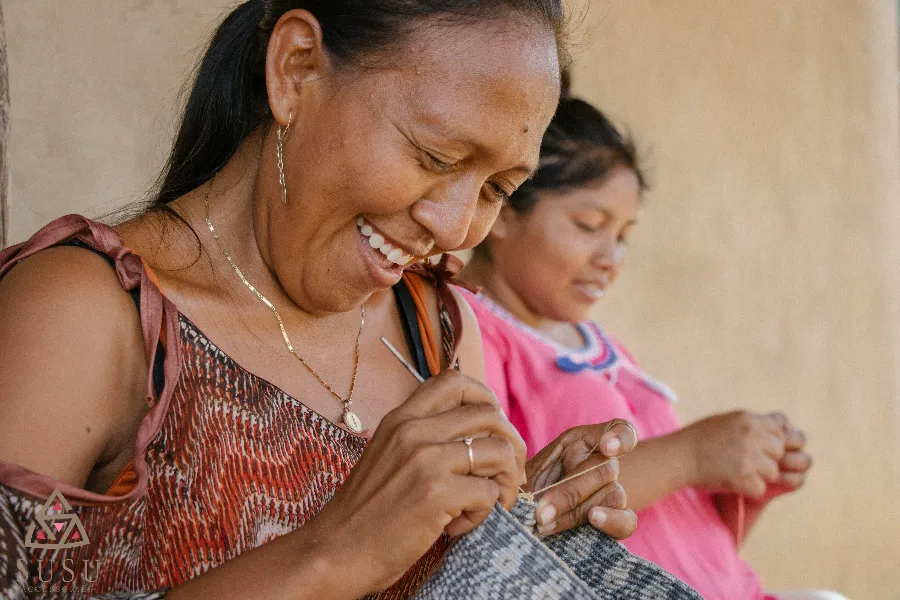
Physical craftsmanship directly connects to spoken narratives in Wayuu society. When artisans weave bags and hammocks, they rely on oral storytelling in Wayuunaiki to explain the deeper meaning behind traditional geometric motifs. The visual patterns on textiles act as a direct extension of the oral tradition. This creates a dual system where the physical woven object and the spoken cultural ethic reinforce each other during the teaching process.
Everyday Speech as Cultural Resilience
Casual conversations, small talk, and jokes seamlessly integrate historical references and clan memories into daily life. This everyday speech preserves highly practical ecological knowledge, from specialized herding techniques to desert survival strategies, using an intricate pastoral vocabulary. Beyond practical survival, the spoken language acts as a tool of political resistance. Speaking Wayuunaiki allows communities to clearly articulate land rights and demand autonomy in their native ancestral tongue.
How Wayuunaiki Continues Across Generations
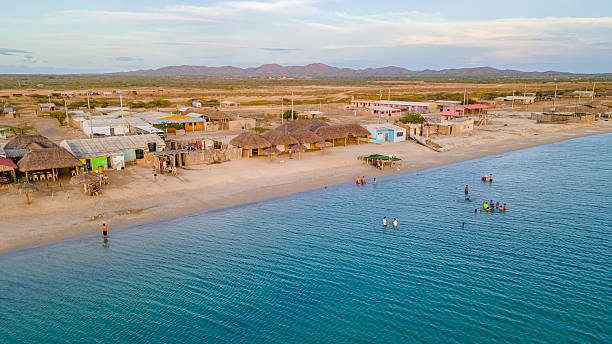
The survival of Wayuunaiki relies on a dual strategy: preserving traditional oral storytelling in rural rancherías while embracing modern digital adaptation to engage younger generations.
Oral Transmission in Family and Daily Life
Families in rural rancherías serve as the primary incubator for Wayuunaiki. The language operates as the main household medium rather than a secondary subject. Elders and grandparents embed cultural knowledge directly into daily interactions. They share storytelling, ritual speech, and customary laws naturally.
This oral transmission extends beyond the home. Speakers actively maintain the language in community assemblies, local markets, and through the traditional teaching of clan names and maternal lineages.
Bilingual Education and School-Based Programs
Colombia and Venezuela now implement bilingual and intercultural education models that use Wayuunaiki as a language of instruction alongside Spanish. Community-driven initiatives take this a step further. Projects led by groups like the Wayuu Taya Foundation integrate traditional crafts, music, and oral narratives directly into formal language learning.
To support this, teacher training programs focus heavily on standardizing orthography. Educators also incorporate local ecological history into the curriculum, making the language highly relevant to students’ everyday environment.
Digital Identity and Online Community Engagement
Younger generations are cultivating a distinct Wayuu digital identity. They adapt their native language to modern communication tools, proving its relevance in the 21st century. The Wikipeetia süka wayuunaiki project operates as a crucial cultural repository. It provides encyclopedic content, myths, and customary law entirely in the native language.
Youth also actively normalize Wayuunaiki online. They create and share multimedia content, including videos, social media posts, and memes, directly in their mother tongue.
AI Tools and Technological Preservation
Technology plays a growing role in documenting the language. Researchers apply transfer learning to build functional bilingual corpora from limited text data, advancing low-resource machine translation for Wayuunaiki. Developers and linguists are actively building practical resources:
- Digital dictionaries: Mobile apps help semi-speakers access and learn vocabulary.
- Subtitling projects: Automatic translation bridges the gap between Wayuunaiki and Spanish media content.
- Archival systems: Databases allow youth to search and retrieve recorded speech from elders, preserving specific dialects and ritual vocabulary.
Institutional Support and Cultural Leadership
Sustainable language transmission requires strong organizational backing. Local authorities and NGOs frequently sponsor cultural festivals that place Wayuunaiki songs, oral poetry, and storytelling at center stage. Intergenerational workshops facilitate collaborative documentation of oral histories by bringing elders and youth together. At the policy level, Wayuu organizations advocate for several structural pillars:
- Official recognition: Formal language status within regional and national institutions.
- Inclusive media policies: Guaranteed indigenous representation in broadcasting networks.
- Infrastructure funding: Financial support to maintain digital networks and physical transmission channels.
Часто задаваемые вопросы
What language do the Wayuu people speak?
The Wayuu people primarily speak Wayuunaiki, also known simply as Wayuu or Guajiro. This native tongue belongs to the Arawakan language family. Spanish acts as a common second language in the region, but Wayuunaiki remains the core expression of Wayuu cultural identity. The community actively uses it for daily communication, traditional rituals, and oral storytelling across the Guajira Peninsula.
Is Wayuunaiki a written language?
Yes, Wayuunaiki operates as a written language using a standardized Latin-based alphabet. Linguists and community leaders have established official orthographic norms, complete with dictionaries and grammar manuals. While Wayuunaiki has historically relied on oral tradition—and native literacy rates remain low—its written form is gaining traction. You will find written Wayuunaiki increasingly used in bilingual education programs, cultural blogs, and digital platforms.
What does “Mochila” mean in Wayuunaiki?
The Wayuunaiki word for a traditional bag or backpack is kattoʼui (sometimes spelled kattowi). For the Wayuu, this is far more than a simple carrying bag. The Wayuu mochila stands as a deeply significant cultural symbol. Wayuu women weave these bags to visually record clan stories, elements of nature, and ancestral beliefs, encoding this knowledge directly into specific geometric patterns.
How do you say thank you in Wayuu language?
To say “thank you” in Wayuunaiki, you use the word Anayaawatsuje (which you might also see spelled as Anayaawatsü or Anaayawatchi). The culturally appropriate response is Anasü, which translates to “you’re welcome.” Learning and using these basic expressions shows immediate respect for Wayuu culture, especially when you interact with local artisans and guides in the Guajira region.
Why is language important to Wayuu weaving?
Wayuunaiki supplies the foundational concepts, names, and stories that give Wayuu weaving its actual meaning. Every geometric pattern woven into a textile carries a specific Wayuunaiki name directly linked to Wayuu cosmology. The language also acts as the primary medium through which elder women pass down complex weaving techniques and ancestral ethics to the next generation. Without the language, the symbols lose their original context.
How does Pactus manage communication with non-Spanish speaking tribes?
Pactus relies heavily on community-driven interpretation by partnering with local bilingual mediators chosen directly by the communities themselves. The communication strategies prioritize non-verbal methods, visual aids, and local oral traditions delivered in the native language. When dealing with highly isolated groups, Pactus adheres strictly to contact-risk management protocols. This approach ensures all interactions respect territorial rights, community autonomy, and the standard of free, prior, and informed consent.
Final Thoughts
Relying on generic Spanish terms to sell indigenous crafts dilutes your brand value and risks alienating conscious consumers. Training your retail staff with authentic Wayuunaiki terminology—and sourcing through our Quality Factory Standard—protects your inventory’s cultural integrity. This linguistic precision transforms a basic retail commodity into a premium, verified piece of artistic heritage.
We recommend aligning your retail strategy with true cultural accuracy before expanding your inventory. Review our wholesale catalog to see how authentic Wayuu craftsmanship integrates directly into your market position. Contact our sourcing team to discuss proper sales training materials and custom requirements for your next shipment.