Every bag in your catalog begins with a single decision: what material it is made from. That one choice drives your cost, your durability story, your target customer, and the margin you can hold — yet too many buyers default to whatever their supplier happens to offer.
This guide gives retailers a systematic way to choose bag materials: a complete taxonomy of leather, vegan, and synthetic options, how to match material to market and bag type, and how to calculate the true total cost of a material decision before you commit.
The Material Decision Is Your Most Important Sourcing Decision
Every bag in your catalog begins with a single choice: what material will it be made from? That choice determines your cost structure, your retail price point, your target customer, your return rate, and even which retail channels will accept your product. It is the one sourcing decision that cascades through every other aspect of your business.
Yet most wholesale buyers make this decision reactively. They inherit materials from previous suppliers, follow what competitors are doing, or default to whatever the factory recommends. This approach leads to three predictable problems: quality complaints that erode retailer trust, margin compression from over-specifying materials your market doesn’t value, and dead inventory from products that don’t match buyer expectations.
This guide is your material selection decision framework. It covers every commercially available bag material category — from Italian leather to plant-based alternatives, recycled synthetics, and hardware — with pricing, performance data, and clear recommendations by target market and bag type. Each material category links to a detailed deep-dive article where you can explore specifics before making final sourcing decisions.
The Complete Bag Material Taxonomy
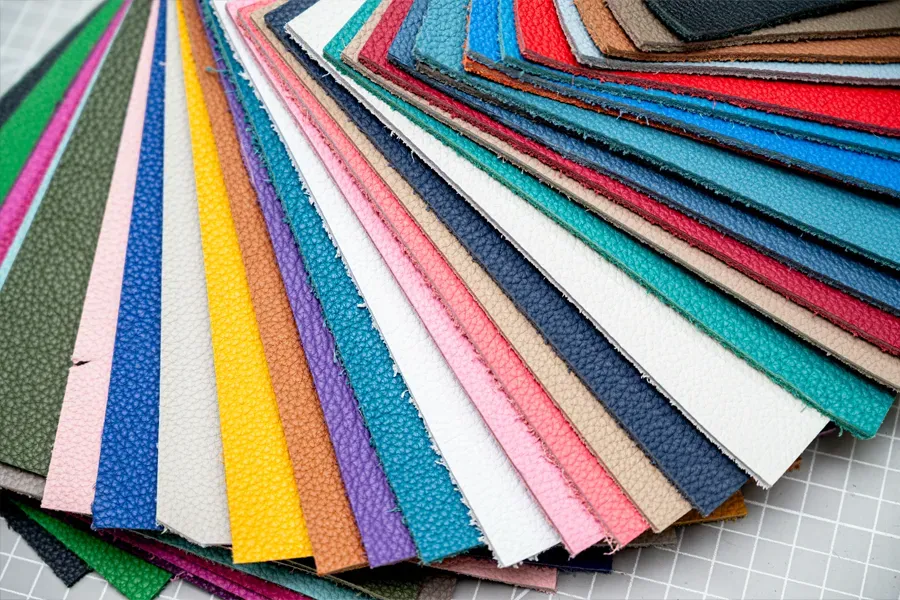
Before choosing materials, you need to understand what’s available. Here is the complete taxonomy of bag materials organized by category, with price ranges, best-use applications, and links to in-depth guides.
| Category | Sub-Types | Price Range | Best Bag Types |
|---|---|---|---|
| Italian Leather | Full Grain, Top Grain, Genuine, Bonded | $8–$20+/sqft | Premium handbags, briefcases, luxury goods |
| Vegan / Synthetic Leather | PU, PVC, Microfiber PU | $2.50–$5.00/yd | Fashion bags, mid-tier handbags, backpacks |
| Plant-Based Leather | Cactus, Mushroom, Apple, Pineapple, Corn | $4.50–$25.00/yd | Eco-premium lines, vegan luxury |
| Recycled Synthetics | RPET, ECONYL, Ocean Plastic | $3.00–$8.00/yd | Durable bags, linings, travel gear |
| Organic Natural Fibers | Organic Cotton, Hemp, Cork, Jute | $2.00–$6.00/yd | Canvas bags, totes, accents |
| Nylon / Polyester | Ballistic Nylon, Oxford, Ripstop | $1.20–$4.00/yd | Travel, sport, laptop bags |
| Bag Hardware | Solid Brass, Zinc Alloy, Stainless Steel | Per-piece pricing | All bag types (structural + decorative) |
How to Read This Taxonomy
Materials are not interchangeable substitutes — they occupy different positions in the market. Italian leather and RPET don’t compete with each other; they serve different product tiers, different customer expectations, and different retail channels. The right material is the one that aligns with your target market’s willingness to pay and your product’s functional requirements.
Material Selection by Target Market
The most effective way to choose materials is to start with your target market segment and work backward. Each market tier has a material specification range that balances quality expectations with cost constraints.
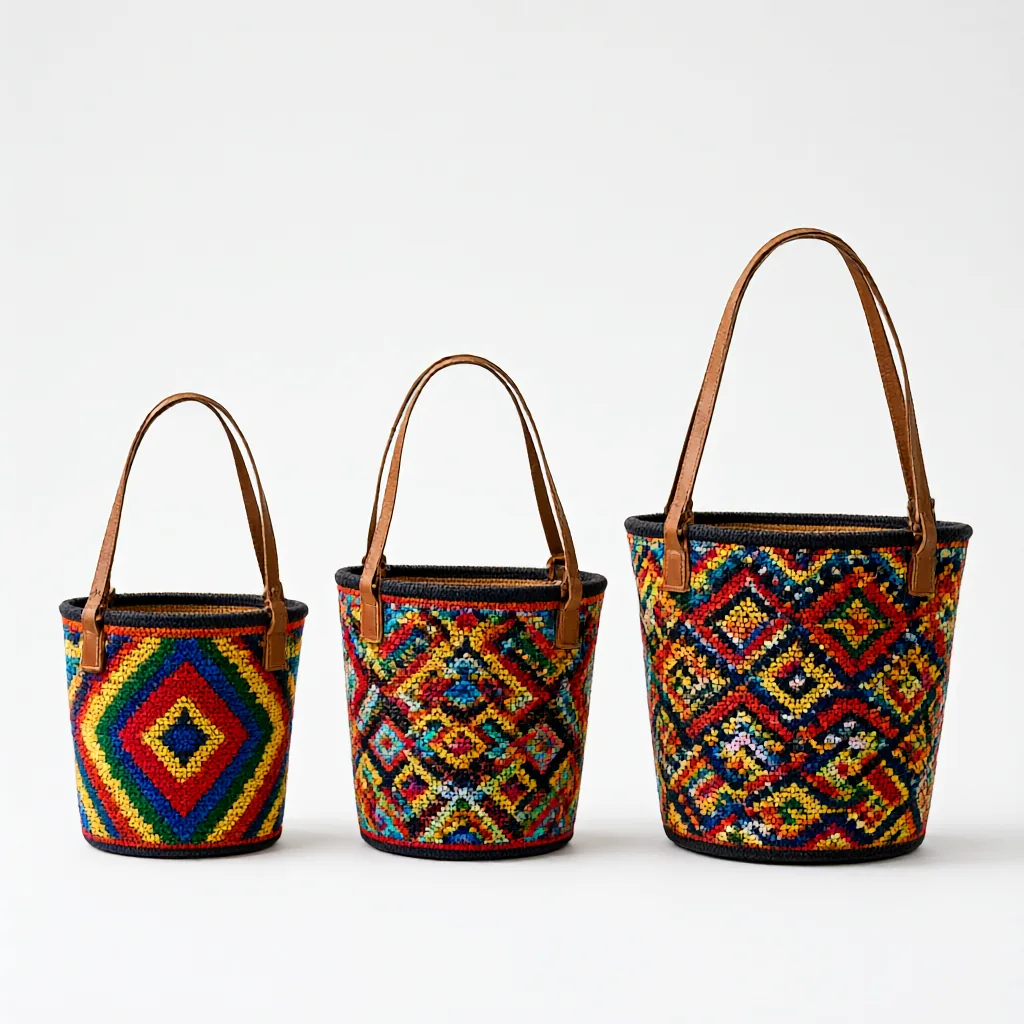
| Market Segment | Shell Material | Lining | الأجهزة | Retail Price | Wholesale Cost |
|---|---|---|---|---|---|
| Luxury / غالي | Full-grain Italian leather | Microfiber suede / Silk | Solid brass, YKK Excella zippers | $200+ | $40–$80 |
| Mid-Range | Top-grain leather / Cactus leather | RPET / Cotton blend | Zinc alloy w/ anti-tarnish, YKK standard | $80–$200 | $18–$40 |
| Fashion / Fast | PU leather / Vegan leather | Polyester | Zinc alloy, standard zippers | $30–$80 | $6–$18 |
| Eco-Conscious | Plant-based / Recycled materials | RPET / Organic cotton | Eco-plated brass, recycled alloy | $60–$150 | $15–$35 |
Why Market-First Selection Works
Starting with materials and hoping to find a market leads to products that are over-engineered for budget channels or under-specified for premium retail. Market-first selection ensures your cost structure supports the margins required by your chosen distribution channel. Luxury retailers expect 55–65% gross margins. Fast-fashion retailers operate on 40–50%. Your material cost must support the retailer’s margin requirements while leaving you 30–40% wholesale margin.
For a detailed breakdown of Italian leather grades and how to specify them correctly, see our complete Italian leather grades guide.
Material Selection by Bag Type
Different bag formats have different functional requirements. A structured handbag needs shape retention. A travel duffel needs water resistance. A laptop bag needs impact protection. Here is the recommended material pairing for each major bag type.
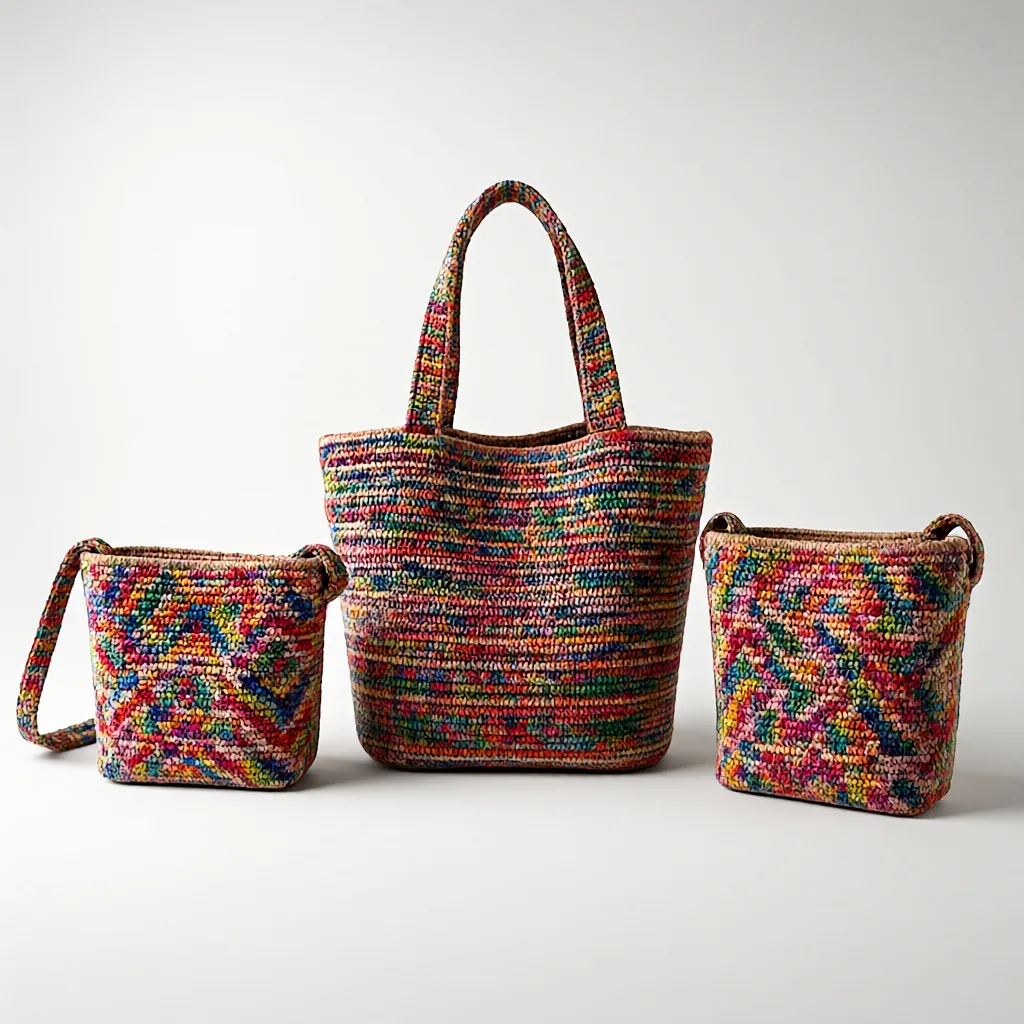
| Bag Type | Recommended Shell | Why This Material | Lining Suggestion |
|---|---|---|---|
| Structured Handbag | Full-grain / Top-grain leather | Shape retention, premium drape, aging patina | Microfiber suede |
| Tote Bag | Canvas / Cork / Cactus leather | Light weight, high capacity, daily durability | RPET / Cotton |
| كروس / Sling | PU leather / Nylon | Weight reduction, cost efficiency, color variety | Polyester |
| Backpack | Ballistic nylon / Hemp blend | Abrasion resistance, load-bearing strength | Ripstop nylon |
| Travel Duffel | Recycled nylon / Oxford | Water resistance, packability, durability | RPET |
| القابض / Evening Bag | Patent PU / Exotic-embossed leather | Visual impact, formal aesthetic | Silk / Satin |
| Laptop / Work Bag | Ballistic nylon / Waxed canvas | Protection, professional appearance | Foam + Polyester |
The Shell + Lining + Hardware System
Every bag is a material system, not a single material choice. The shell provides structure and aesthetics. The lining protects contents and adds durability. The hardware connects components and serves as a quality signal. Specifying one without the others creates imbalanced products — a full-grain leather shell with cheap polyester lining and zinc alloy hardware will fail at retail because the weakest component defines the customer’s quality perception.
Leather Deep Dive: What Every Buyer Needs to Know
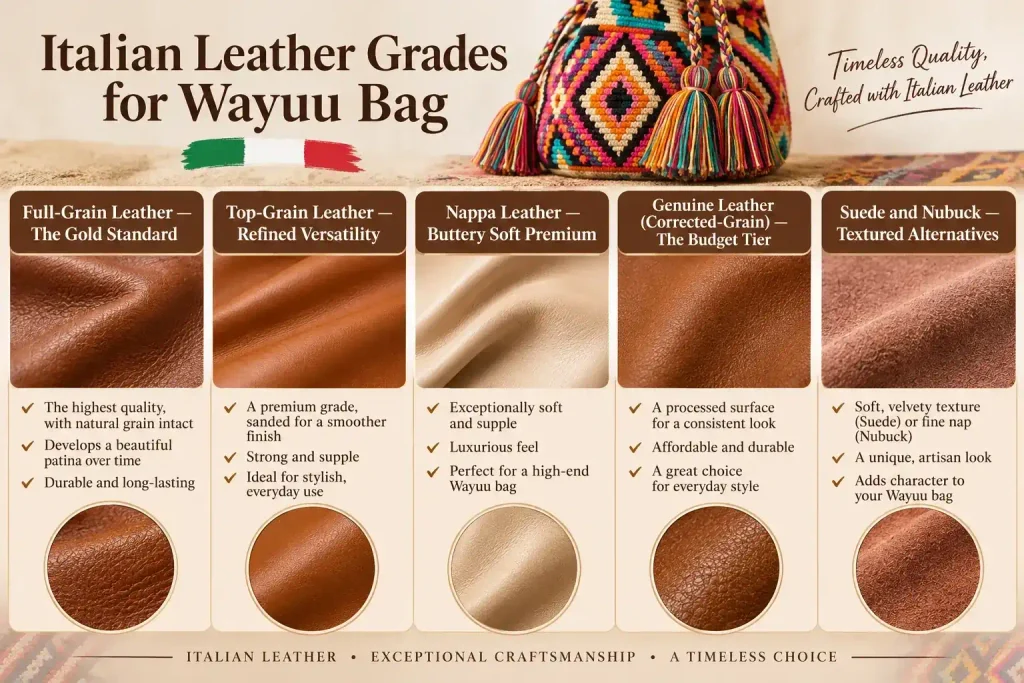
Italian leather remains the benchmark material for premium bag lines. But “Italian leather” is not a single specification — it covers a range of grades with dramatically different performance characteristics and pricing.
The Four Grades of Italian Leather
Full-Grain Leather is the top tier — the outermost layer of the hide with natural grain intact. It develops a patina over time, lasts 20+ years with proper care, and commands $15–$20+ per square foot. This is the material for luxury product lines and heritage brand positioning.
Top-Grain Leather has the surface lightly sanded to remove imperfections, then embossed with a uniform grain pattern. It’s more consistent in appearance than full-grain, slightly less durable, and priced at $10–$15 per square foot. This is the sweet spot for mid-range to premium product lines that need both quality and production consistency.
Genuine Leather is made from the lower layers of the hide, split away from the grain. It’s thinner, less durable, and typically coated with a surface finish. Priced at $5–$10 per square foot, it serves budget leather product lines. Important: “Genuine Leather” as a label does not guarantee premium quality — it simply means the material contains real leather.
Bonded Leather is manufactured from leather scraps bonded together with adhesives and coated with a polyurethane surface. It contains leather content but performs like a synthetic material. Priced at $3–$5 per square foot, it’s the lowest tier and should be specified only for promotional or entry-level products.
Deep Dive: Before you commit to a leather supplier, learn how to verify Italian leather authenticity with our complete identification and verification checklist — including a 6-point field testing protocol and lab testing guide.
Vegan Leather vs Genuine Leather: Making the Right Choice
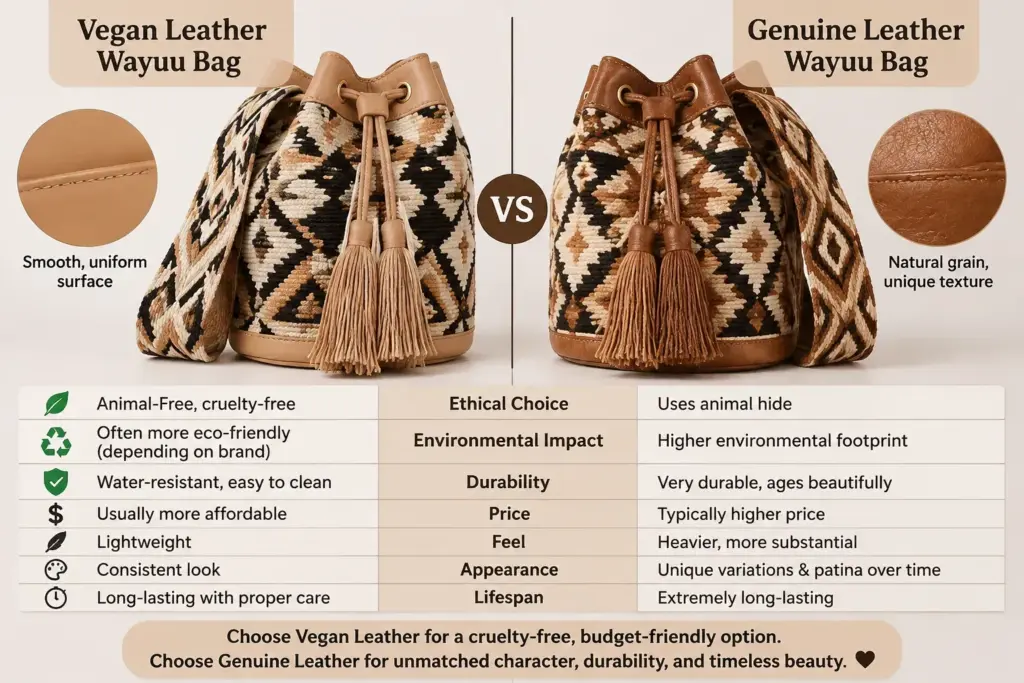
The vegan leather market has grown rapidly, driven by consumer demand for animal-free products and tightening EU regulations on leather labeling. But the choice between vegan and genuine leather is not simply ethical versus traditional — it’s a business decision with implications for pricing, durability, and target market.
The Key Tradeoffs
Cost: Vegan leather costs 60–70% less than genuine leather per yard, enabling lower retail prices or higher margins. This is the primary driver for brands choosing vegan materials.
Durability: Genuine leather lasts 10–20 years with care. Standard PU vegan leather lasts 2–5 years before cracking or peeling. Newer plant-based alternatives (cactus, mushroom) are closing this gap with 50,000+ abrasion cycle ratings.
Market Perception: Premium retail channels still favor genuine leather for handbags and briefcases. Vegan leather performs better in fashion-forward, younger-demographic channels and eco-conscious retail environments.
Regulatory Environment: The EU restricts the use of the word “leather” for non-animal materials. Some US states have similar labeling requirements. If you’re selling vegan products, you must label them correctly — calling PU “leather” can create compliance issues.
Deep Dive Article: For a complete comparison with pricing data, durability testing results, and market-specific recommendations, يقرأ Vegan Leather vs Genuine Leather Bags.
Looking for reliable handmade bags at wholesale?
Browse the PACTUS collection and request catalog & pricing for your boutique.
Get Wholesale Catalog & Pricing →الأجهزة: The Invisible Quality Signal
Hardware is the single most underestimated component in bag sourcing. Customers assess hardware quality before they touch the leather, examine the stitching, or evaluate the lining. A bag with premium materials but cheap hardware will be perceived as cheap. A bag with mid-range materials but excellent hardware will be perceived as higher quality than it is.
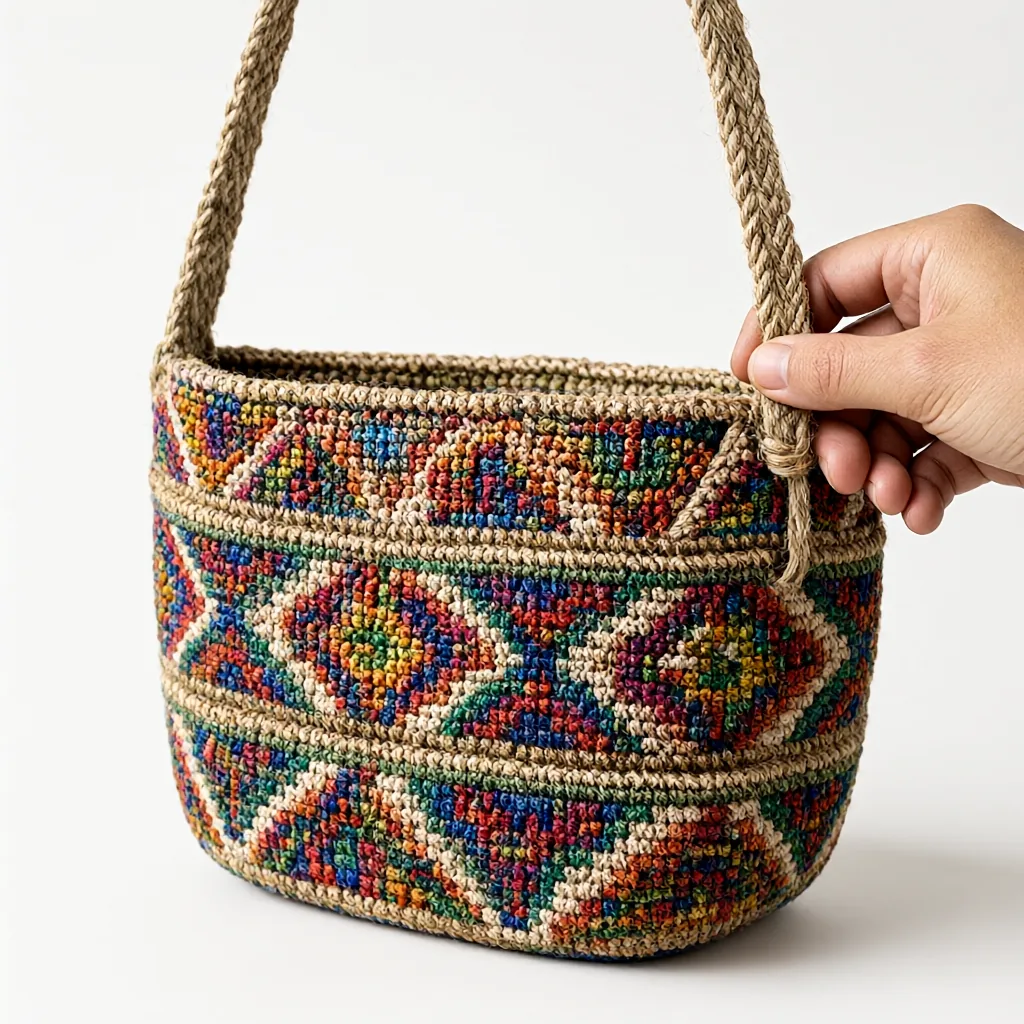
Two Hardware Dimensions You Must Evaluate
Zipper Quality: Zippers are the most failure-prone hardware component on any bag. YKK zippers are the industry standard for reliability, with product lines ranging from budget (standard coil) to luxury (Excella polished metal). A zipper failure is a bag failure — there is no repair short of full replacement. ملكنا YKK zippers quality guide covers the complete YKK product range, sizing specifications, and authentication checklist.
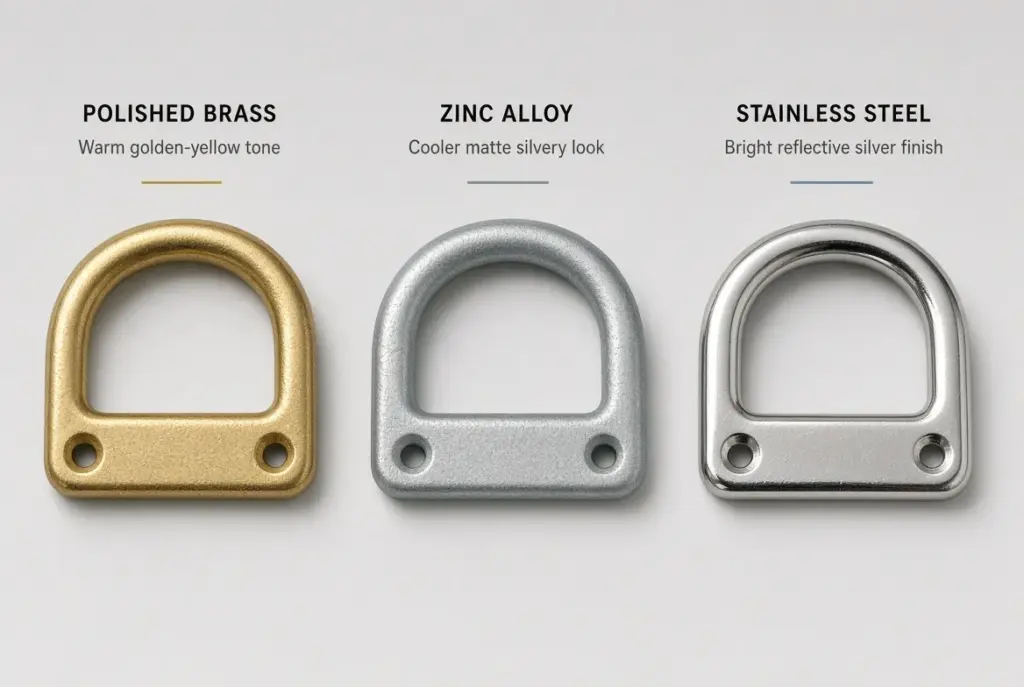
Hardware Material: The three main materials are solid brass (premium, ages beautifully, $0.80–$2.00 per piece), zinc alloy (mid-range, versatile, $0.30–$0.80 per piece), and stainless steel (specialty applications, $0.50–$1.50 per piece). Each has different plating requirements, tarnish resistance, and weight characteristics. ملكنا bag hardware quality guide provides the complete comparison with field testing protocols.
Sustainability: From Bonus to Baseline
In 2025, sustainable materials are no longer a niche differentiation strategy — they’re becoming a baseline requirement for access to premium retail channels, EU markets, and eco-conscious consumer segments. The sustainable bag materials segment is growing at 6.5% CAGR, outpacing the broader handbag market growth of 5.25%.
The Three-Phase Implementation Framework
Phase 1 — Quick Wins (0–3 months): Replace virgin polyester linings with RPET. Cost increase: 5–10%. Benefit: immediate “made with recycled materials” claim across your entire catalog. No redesign required.
Phase 2 — Core Products (3–12 months): Launch 2–3 SKUs using plant-based leather (cactus is the safest entry point at $4.50–$9.80/yd). Test pricing at a 15–25% premium over conventional equivalents and track sell-through data.
Phase 3 — Full Integration (12–24 months): Develop a dedicated sustainable collection with its own branding and certification story. Apply for brand-level certifications (PETA-Approved Vegan, GRS) that carry weight with retailers beyond supplier certificates.
Certification Is Non-Negotiable
Suppliers routinely claim “eco-friendly” or “sustainable” without third-party verification. Require GRS (Global Recycled Standard) for recycled content claims, GOTS for organic fibers, OEKO-TEX Standard 100 for chemical safety, and EN 13432 for biodegradability claims. A material without the relevant certification is not sustainable — it’s just marketing.
Deep Dive Article: For the complete sustainable materials landscape — including plant-based leather comparisons, recycled synthetic options, certification checklists, and a detailed implementation action plan — read Sustainable Bag Materials 2026: The Complete Trend Guide.
The Total Cost Calculator: Material + الأجهزة + Labor + Logistics
Material cost alone tells only part of the story. The total landed cost of a bag includes six major cost components, and understanding the proportion each represents helps you make informed tradeoffs during the specification process.
| Cost Component | % of Total BOM | Key Variables | Cost Reduction Lever |
|---|---|---|---|
| Shell Material | 35–50% | Leather grade / synthetic type / source country | Specify top-grain instead of full-grain; use PU for fashion lines |
| Lining | 5–10% | RPET vs polyester vs cotton | Standard polyester is cheapest; RPET adds minimal cost |
| الأجهزة (zippers + fittings) | 8–15% | YKK vs generic, brass vs alloy | YKK standard line + zinc alloy is the cost-quality sweet spot |
| Labor (cutting + sewing) | 15–25% | Country of manufacture, bag complexity | Simplify construction; minimize panel count |
| Packaging + Labels | 3–5% | Sustainable packaging premium, compliance labels | Standard packaging for wholesale; premium only for DTC |
| Shipping + Duties | 5–12% | FOB vs CIF, destination market, order volume | Consolidate shipments; optimize carton dimensions |
Real Cost Example: Mid-Range Tote Bag
| Component | Specification | Cost |
|---|---|---|
| Shell | Top-grain leather, ~3 sqft per bag | $8.50 |
| Lining | RPET 210T, ~1.5 yd per bag | $1.20 |
| Zipper | YKK standard #5, 40cm | $0.85 |
| الأجهزة (fittings) | Zinc alloy w/ anti-tarnish plating | $2.40 |
| Labor | Vietnam / India factory, medium complexity | $4.50 |
| Packaging | Recycled paper dust bag + poly bag | $0.60 |
| Shipping (FOB) | Sea freight to EU, per-unit allocation | $1.80 |
| Total Landed Cost | $19.85 | |
| Wholesale Price (40% margin) | $33.08 | |
| Suggested Retail (2.2× markup) | $72.78 |
This cost model shows why material selection matters: upgrading the shell from top-grain to full-grain leather adds $6–$8 per bag, pushing the wholesale price to $43+ and retail to $95+. That single material decision moves your product from mid-range to premium positioning — which may or may not match your target market.
For guidance on protecting your material investment through proper care, our leather care guide helps you build customer education materials that reduce returns and extend product lifecycle.
Putting It All Together: Your Material Selection Workflow
Here is the decision sequence that turns this guide into action:
Step 1: Define Your Market Segment
Identify which tier your target retailers serve — luxury, mid-range, fashion, or eco-conscious. This determines your material specification range and cost structure.
Step 2: Identify Your Primary Bag Types
List the bag formats in your product line and cross-reference the bag type × material matrix above. Each format has functional requirements that narrow your material options.
Step 3: Read the Deep-Dive Articles
For each material category in your specification range, read the corresponding cluster article. These provide the detailed data you need to write accurate material specifications and evaluate supplier samples.
Step 4: Build Your Total Cost Model
Use the cost breakdown framework above to model your per-bag cost at different material specification levels. Identify where material upgrades create disproportionate value versus where they add cost without market-justified return.
Step 5: Request Samples and Verify
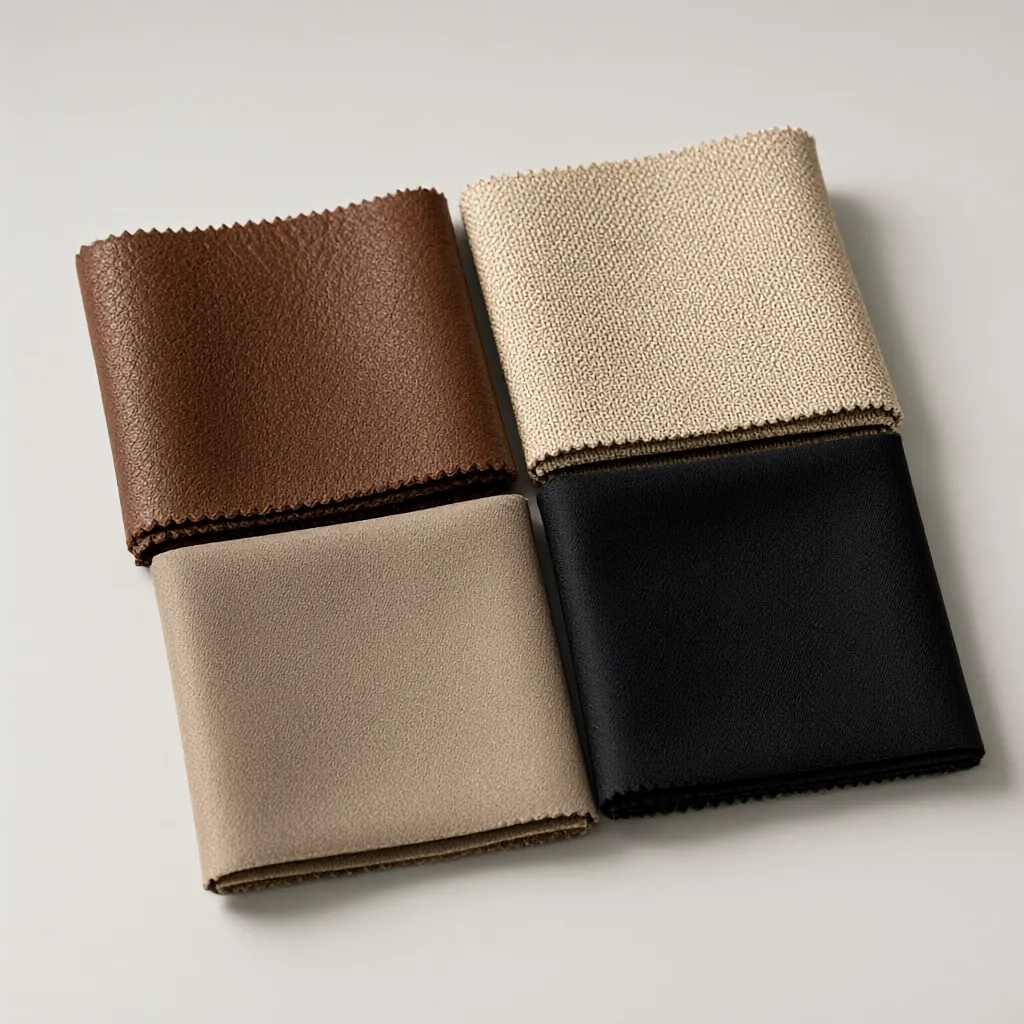
Request material samples from 3–5 suppliers per category. Use the testing protocols described in each deep-dive article to verify quality claims before placing production orders.
FAQ — Bag Material Selection for Retailers
What is the best material for a mid-range handbag line?
Top-grain Italian leather is the most versatile choice for mid-range handbags ($80–$200 retail). It provides premium appearance and durability at 40–50% lower cost than full-grain leather. Pair it with RPET lining, YKK standard zippers, and zinc alloy hardware with anti-tarnish plating for a balanced specification that supports 35–40% wholesale margins.
How do I balance cost and quality when choosing bag materials?
Start with your target retail price and work backward: subtract the retailer’s required margin (55–65% for premium, 40–50% for mass) and your required wholesale margin (30–40%). The remaining amount is your total BOM budget. Allocate 35–50% to shell material, then specify the highest-grade material that fits within that allocation. Never sacrifice hardware quality — it’s the most visible quality signal and costs only 8–15% of BOM.
What certifications should I require from material suppliers?
Require OEKO-TEX Standard 100 for all materials (chemical safety). Add GRS for recycled content claims, GOTS for organic fibers, EN 13432 for biodegradability claims, and PETA-Approved Vegan for animal-free materials. For leather, require a tannery certificate specifying grade, origin, and chrome-free processing if applicable. Never accept sustainability claims without third-party certification.
Should I use one material across all SKUs or diversify?
Diversify by product tier, standardize within each tier. A healthy catalog typically runs 2–3 material specifications: one premium spec for hero products, one mid-range spec for volume SKUs, and one sustainable spec for eco-conscious lines. Too many material variations increase MOQ requirements and complicate inventory management. Too few limit your ability to serve different market segments.
How do sustainable materials affect my profit margins?
Sustainable materials typically add 30–65% to per-bag material costs, but they support a 15–25% retail price premium and reduce return rates by 10–15% (eco-conscious customers are more satisfied with their purchases). The net margin impact is neutral to positive when you price correctly. The key is communicating the sustainability value clearly through certifications and transparent supply chain storytelling — not absorbing the cost without adjusting pricing.