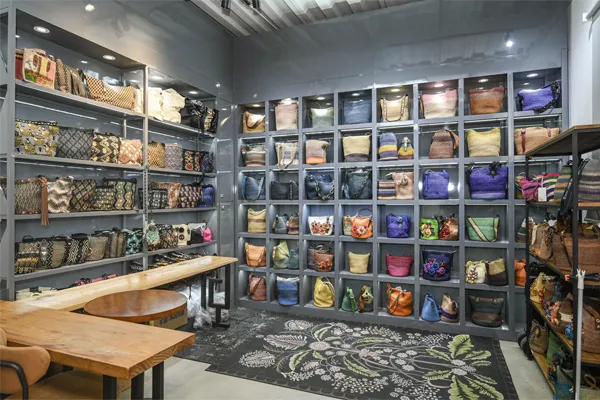

A handmade bag leaves the artisan’s loom looking finished. That is not the end of the quality journey. Before it reaches a boutique shelf or a warehouse pallet, it passes through inspections designed to catch what the eye misses. Those checks protect the buyer and the maker.
The process below walks through the export quality control used by professional handmade bag suppliers. It covers material checks, craftsmanship standards, dimensional verification, functional testing, and the video inspection step that lets buyers approve an order before it ships.
Key Takeaways
- Export QC runs across six stages, not one final check.
- Material inspection catches flaws before a single bag is woven.
- Handmade variation is not the same thing as a defect.
- AQL sampling gives buyers statistical confidence on every batch.
- Video inspection lets you approve your own order before dispatch.
Why Export Quality Control Matters
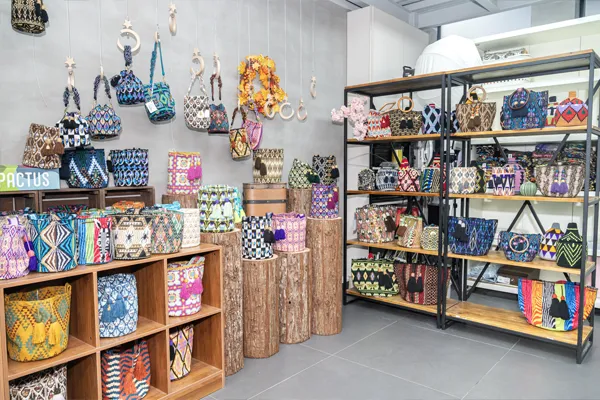
A problem found at export costs a fraction of what it costs at retail.
Wholesale buyers may face returns and customer complaints when defects go unnoticed before shipment. Pre-shipment quality checks help suppliers identify and correct problems before goods reach the buyer.
The Cost Curve of Late Defect Detection
Fixing a loose strap at the inspection table costs a few minutes of labor. Fixing it after delivery costs return freight, a replacement unit, service time, and often the relationship. Quality economics always favor the earliest checkpoint, which is why professional suppliers inspect at every stage rather than only at the end.
Protecting the Artisan Relationship
QC is not only about protecting the buyer. Clear written standards tell artisans exactly what passes and what does not. That removes guesswork and keeps income stable for the Wayuu weaver families who produce the bags. Read our guide to what Wayuu bags are for the craft background.
Raw Material Inspection
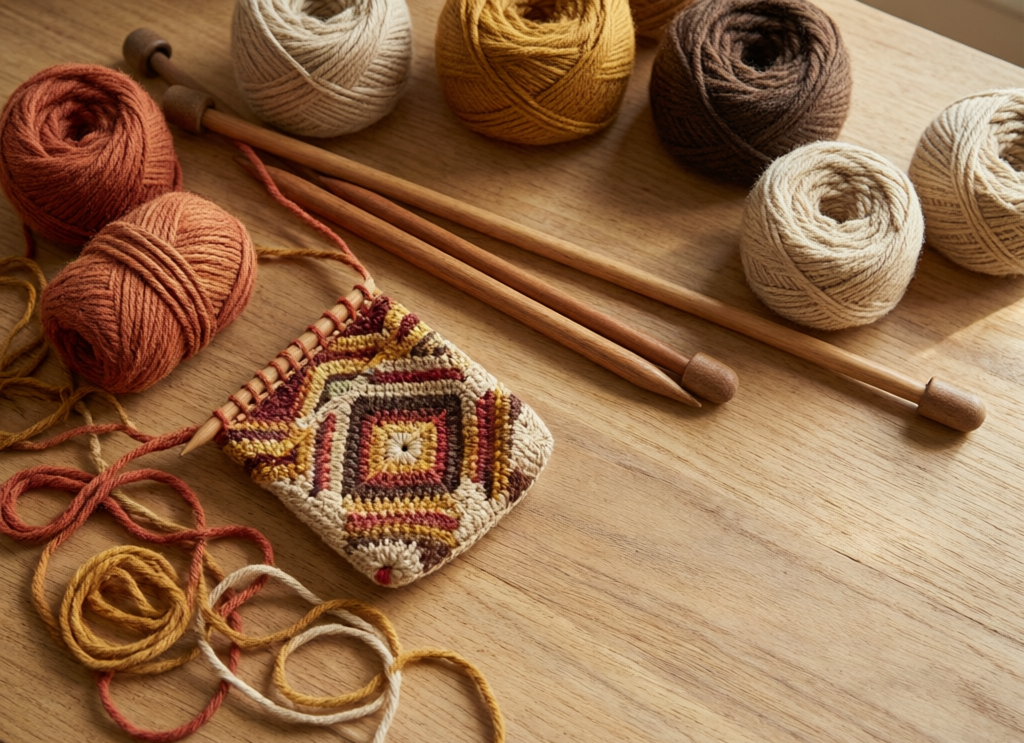
Material quality is locked in before weaving starts. Nothing downstream can fix it.
Every inspection sequence starts with what goes into the bag. Yarn, lining, leather, hardware, and straps arrive from different sources. Each batch behaves slightly differently. Inspecting materials on arrival stops a whole production run from inheriting a flaw nobody noticed.
Yarn Fiber and Color Fastness Checks
Yarn is checked for fiber composition, twist consistency, and color lot matching. A rub test on white cloth reveals whether dye will bleed. Cotton and acrylic behave very differently under load and after washing. Nuestro cotton vs acrylic yarn comparison shows how fiber choice changes both price and inspection criteria.
Hardware, Zippers and Lining Verification
Zippers run through 50 open-close cycles on a sample from each batch. Metal hardware inspections cover plating thickness and corrosion resistance. Lining fabric checks include weight per square meter and seam slippage resistance. These small parts fail loudly in customer reviews, so they get the same attention as the weaving.
Craftsmanship Inspection Standards
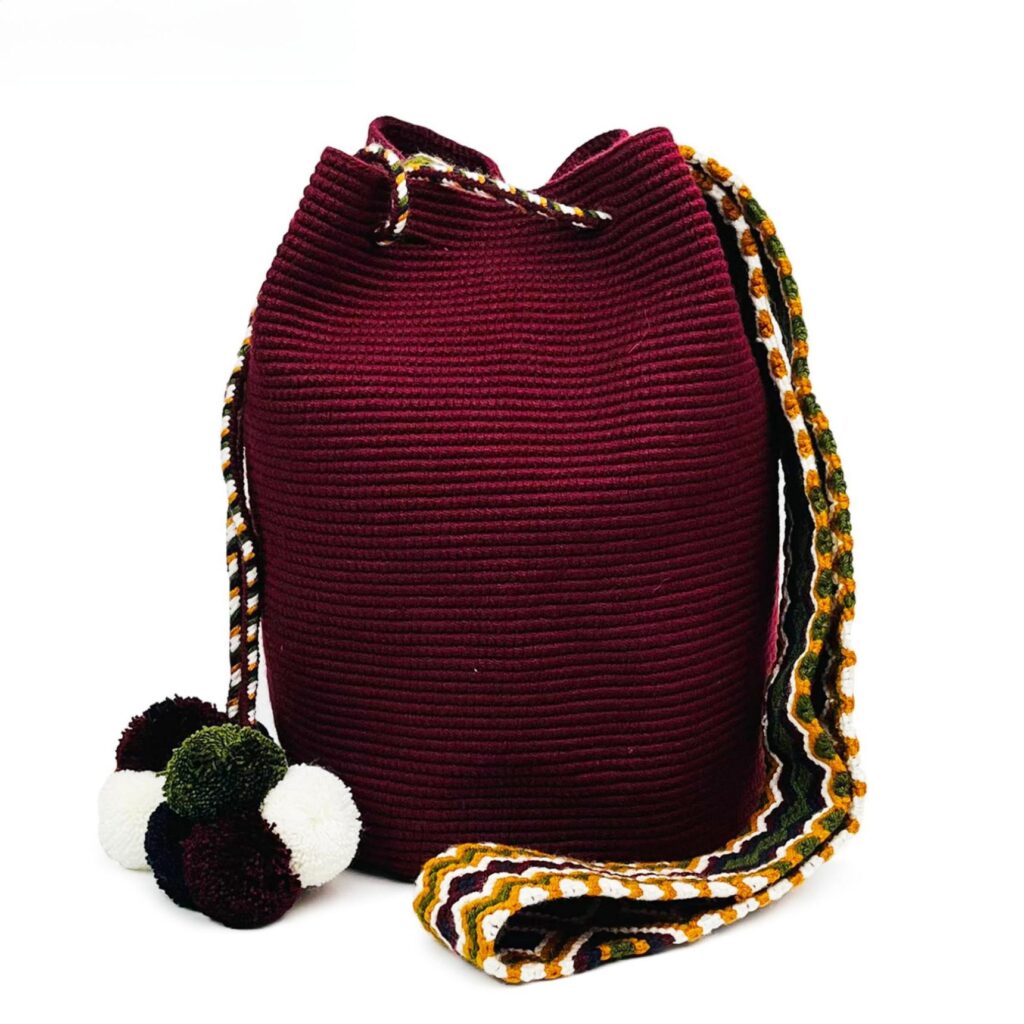
Craftsmanship standards turn subjective beauty into measurable checkpoints.
Once production starts, inspectors work against written standards rather than personal taste. Each standard names a measurable attribute, a tolerance, and a pass-fail rule. That is what makes quality repeatable across hundreds of pieces made by different artisans in different villages.
| Inspection point | What is measured | Typical tolerance |
|---|---|---|
| Weave density | Knots per square centimeter | Dentro 5 percent of spec |
| Stitch spacing | Millimeters between stitch centers | Plus or minus 2 mm |
| Seam allowance | Fabric folded into the seam | Minimum 8 mm |
| Strap anchor | Anchor points and stitch count | All anchors fully stitched |
| Edge finish | Loose threads and raw edges | No loose ends over 5 mm |
Weave Density and Tension Consistency
Weave density is the strongest single indicator of handmade bag quality. Inspectors count knots inside a fixed area and compare the result against the spec for that technique. Single-thread work runs far denser than double-thread. Our guide to single vs double thread weaving explains the numbers behind each method.
Stitch Uniformity and Surface Finish
Inspectors examine stitches under consistent lighting, looking for skipped stitches, uneven spacing, loose loops, and thread tails. A gentle pull along each seam helps reveal loose thread locks. Seams that open under light hand pressure fail inspection. Surface checks come last to avoid marks caused by earlier handling.
Pattern, Size and Color Verification
A beautiful bag that does not match the approved sample still fails inspection.
Buyers approve a sample before bulk production. That sample becomes the reference for every piece in the order. Verification checks three things against it, which are motif placement, physical dimensions, and color accuracy under standard lighting.
Measuring Against the Approved Spec Sheet
Inspectors measure each bag’s height, width, depth, strap length, and drop with a flat tape on a level surface. Measurements are taken with the bag empty and unstuffed. Typical tolerances are ±2 cm for body dimensions and ±3 cm for straps. Bags that fall outside these limits require rework or reclassification.
Color Matching Under Standard Light
Color is judged under a daylight-balanced lamp, usually D65, never under warm office lighting. Inspectors compare the finished piece against the approved swatch and against others in the same batch. Shade drift between dye lots is the most common reason a batch looks inconsistent once it reaches a retail shelf.
Functional Testing for Straps and Stitching
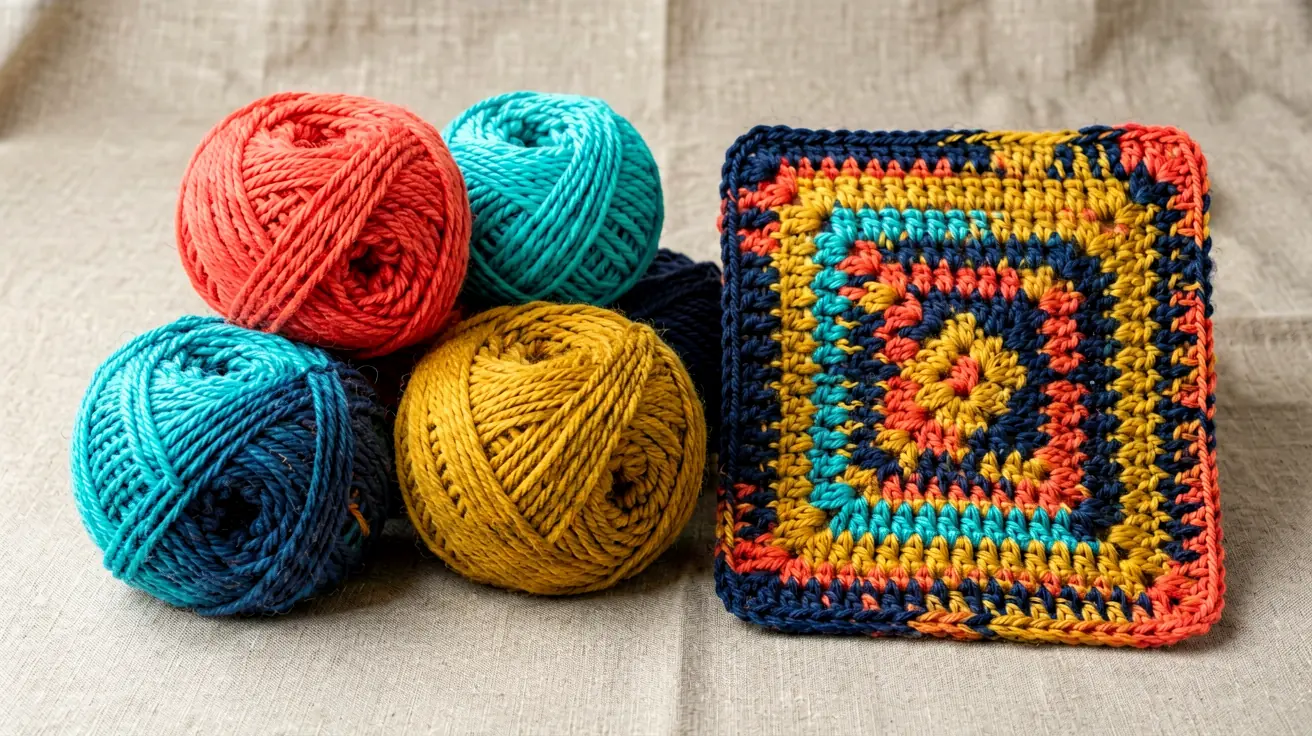
Straps carry the load, so they get tested like the load-bearing part they are.
A bag can look perfect and still fail in daily use. Functional testing simulates six months of carrying, and it runs on samples pulled from the batch rather than on one golden piece kept aside for photos.
Load and Pull Testing on Straps
Straps are loaded to roughly twice the intended carrying weight and held for a set period. Anchor stitches are pulled perpendicular to the seam. Any deformation, thread stretch, or anchor shift is recorded. A strap that survives this test in the lab survives a laptop and a water bottle in real life. See what makes handmade bags durable for how materials age under load.
Cremallera, Closure and Hardware Cycling
Zippers, snaps, buckles, and rings should withstand repeated use during sample testing. Closure alignment also needs checking under load, as a zipper that runs smoothly on an empty bag may jam when the bag is full. Plating should remain intact, since chips can expose the underlying metal to moisture and corrosion.
Handmade Variations vs Actual Defects
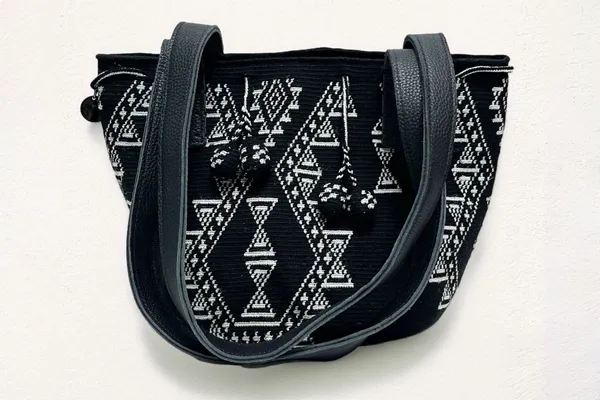
Variation is the fingerprint of hand work. A defect is a failure of function.
This is the section that prevents most disputes. Handmade goods are not identical, and expecting machine uniformity sets both sides up for conflict. A professional supplier documents the line between acceptable variation and real defect, then shares it with the buyer before the order is placed.
| Characteristic | Acceptable variation | Actual defect |
|---|---|---|
| Motif placement | Shifts up to 3 mm off center | Motif is missing or unrecognizable |
| Color shade | Slight tone shift inside one dye lot | Visible mismatch against the swatch |
| Weave tension | Minor density change across a panel | Holes or gaps showing the lining |
| Shape | Gentle asymmetry that settles with use | Distortion affecting closing or carrying |
Documenting Tolerance in the Purchase Order
Tolerance should live in the contract, not in an email thread. Specify measurement ranges, acceptable shade deviation, and what counts as a structural fault. Suppliers who resist written tolerance usually plan to argue about it later. Our piece on wholesale handmade bag mistakes covers the disputes this one clause prevents.
How Grading Works on Handmade Batches
Many suppliers grade finished pieces into three tiers. Products that meet all quality standards qualify as Grade A and ship at full price. Grade B includes visible variations within the accepted tolerance and may be sold at a discount. Grade C items require rework or must be withheld from shipment. Always ask which grades your order includes and whether they ship mixed.
Final Export Inspection Process
Final inspection samples the batch. AQL tells you how confident that sample is.
By the time goods reach final inspection, every piece has already passed material, artesanía, dimensional, and functional checks. The last step is a statistical sample of the finished and packed batch. Its job is to confirm the whole shipment, not to re-examine every bag.
Understanding AQL Sampling Levels
AQL, or acceptance quality limit, sets how many units get inspected and how many defects are allowed before a batch is rejected. A common setting for accessories is AQL 2.5 for major defects and 4.0 for minor ones. Inspectors draw a random sample based on total carton count, then apply the accept number from the standard table.
Major, Minor and Critical Defect Categories
Critical defects make a product unsafe or unusable, and the accept number is zero. Major defects affect function or appearance enough that a customer would return the item. Minor defects are small cosmetic issues a typical shopper would not notice. Classifying correctly matters more than the sample size itself. If a batch fails, rework is followed by a fresh sampling round rather than a re-check of only the faulty pieces.
Packaging and Carton Inspection

Packaging survives a container, three handlers, and customs. Test it before it ships.
Export packaging gets inspected as seriously as the product. Bags travel stacked under weight, through humidity changes, and across weeks in transit. Weak packaging turns good product into damaged product before it ever reaches your store.
Individual Bag Protection Standards
Each bag is shaped with tissue, packed in a poly bag, and labeled with a barcode. Hardware needs separate wrapping to prevent metal parts from rubbing against the fabric. Dust bags can be added for products in price tiers that include them. Barcode labels must match the SKU list to prevent identification errors and inventory issues at the buyer’s warehouse.
Carton Spec, Weight and Shipping Marks
Cartons are checked for board grade, tape coverage, gross weight, and dimensions against the packing list. Shipping marks carry the consignee, carton number, total count, and country of origin. Moisture absorbers go into cartons bound for humid destinations. A carton count mismatch remains the most common single cause of customs delay.
Video Inspection Before Shipment
A one-on-one video call beats a supplier photo album every time.
Live video inspection is the most useful development in handmade sourcing over the past few years. Instead of trusting a photo album, the buyer walks through their own order in real time and approves it before dispatch.
How a One-on-One Video Inspection Runs
The supplier sets up a call and lays out the actual pieces from your order, not display samples. They show the front, back, interior, base, strap anchors, and hardware on each unit you ask to see. Dimensions get measured on camera. The call ends with an approval or a hold, and anything flagged goes back for rework.
Approval Documentation Steps
The interior weave can reveal tension inconsistencies that may not be visible on the outside. A loaded strap pull, close-up photos of the zipper teeth, and carton labels provide additional evidence of product quality and packing details. Randomly selected pieces offer a more representative view of the batch than samples chosen by the supplier. After the inspection call, a written record should list the approved SKUs and the quantities verified.
Export QC Checklist for Buyers
Run this list before the deposit moves, not after the container lands.
The checklist below is the short version of everything above. Run it against any supplier quote and the difference between a real QC process and a described one becomes obvious within a few emails.
- Written material specs covering fiber content, weight, and color lot.
- Named craftsmanship standards with measurable tolerances.
- Approved sample signed off before bulk production starts.
- Variation versus defect table attached to the purchase order.
- Functional test results for straps, zippers, and closures.
- AQL level and defect classification agreed in advance.
- Carton spec, gross weight, and shipping mark format.
- One-on-one video inspection scheduled before dispatch.
- Photo report of the packed cartons.
- Written exchange or rework policy for failed batches.
Where Third-Party Inspection Fits
For orders above a few thousand dollars, a third-party inspector adds an independent layer. They work for you, follow published standards, and issue a report with photos. Most professional suppliers accept third-party inspection without friction, and hesitation is itself a signal. Our guide on how to source Wayuu bags wholesale covers when the extra cost pays off.
Frequently asked questions
How are handmade bags inspected?
Handmade bags are inspected at six stages, which are raw material arrival, in-process craftsmanship checks, dimension verification, functional testing, final AQL sampling, and carton inspection. Each stage uses written standards with measurable tolerances rather than subjective judgment.
Are handmade variations considered defects?
No. Small shifts in motif placement, minor shade variation inside one dye lot, and gentle asymmetry are normal results of hand production. A defect is a fault affecting function, safety, or appearance beyond the tolerance written into the purchase order.
What is pre-shipment inspection?
Pre-shipment inspection is the final check on finished and packed goods before they leave the factory. Inspectors draw a random sample using AQL tables, verify quantities and carton marks, and confirm the batch matches the approved sample.
Can buyers approve products before shipping?
Sí. Professional suppliers offer one-on-one video inspection where the buyer reviews actual pieces from their own order on a live call. Approval is given on camera and confirmed in writing before dispatch, which removes most disputes over natural variation.
What quality standards should wholesale buyers expect?
Expect written material specs, measurable craftsmanship tolerances, strap and closure test results, AQL 2.5 for major defects, packaging specs, and a documented exchange policy. A supplier who cannot put these in writing is not running a real QC process.
Conclusion
Handmade bags carry a reputation problem that machine-made goods do not. Buyers worry that variation means inconsistency and that inconsistency means returns. A documented QC process closes that gap. It gives the artisan work a measurable frame and gives the buyer a defensible record.
Ask every supplier for their inspection standards before the first deposit moves. Compare what they document against the checklist above and the real professionals separate themselves quickly. Browse the Wayuu mochila bags wholesale collection at Acuerdo to see how a direct-source supplier runs QC and video approval on every order.