Placing a first wholesale order for handmade bags is equal parts excitement and risk. The right supplier becomes a long-term partner. The wrong one turns into returned inventory, missed seasons, and difficult conversations with your customers. The difference usually comes down to what you asked before signing the purchase order.
Below are the exact questions experienced buyers ask across eight categories, from authenticity to after-sales support. Work through them before you commit. The answers tell you more about a supplier than any price quote ever will.
Key Takeaways
- Experienced buyers evaluate suppliers, not prices.
- Ask about authenticity, materials, MOQ, lead time, QC, shipping, and returns.
- Get every answer in writing before the deposit moves.
- Video inspection and exchange policies separate professionals from middlemen.
- Long-term reliability beats a cheap first quote.
Why Asking the Right Questions Matters

Supplier evaluation predicts long-term success better than price negotiation.
First-time buyers tend to focus heavily on unit price and give far less attention to supplier vetting. Experienced buyers flip that priority. Price is a single number. Supplier reliability shows up across dozens of small decisions over multiple seasons.
Cost of a Bad Wholesale Decision
A failed first order costs more than the invoice. It ties up cash for a full season, occupies shelf space that could carry a working product, and damages customer trust when quality falls short. For a small boutique, one bad batch can wipe out the margin from three good ones.
What Questions Can Reveal Beyond a Quote
A quote tells you the unit price. Questions tell you whether that price will hold, whether the delivery date is real, and what happens when something goes wrong. Those are the answers that decide whether a supplier is worth working with twice.
Building Long-Term Supplier Relationships
The best wholesale partnerships run for years, not seasons. They start with a supplier who answers hard questions clearly and follows through on the answers. Asking those questions upfront filters out middlemen, resellers, and anyone who cannot back up their claims.
Questions About Product Authenticity
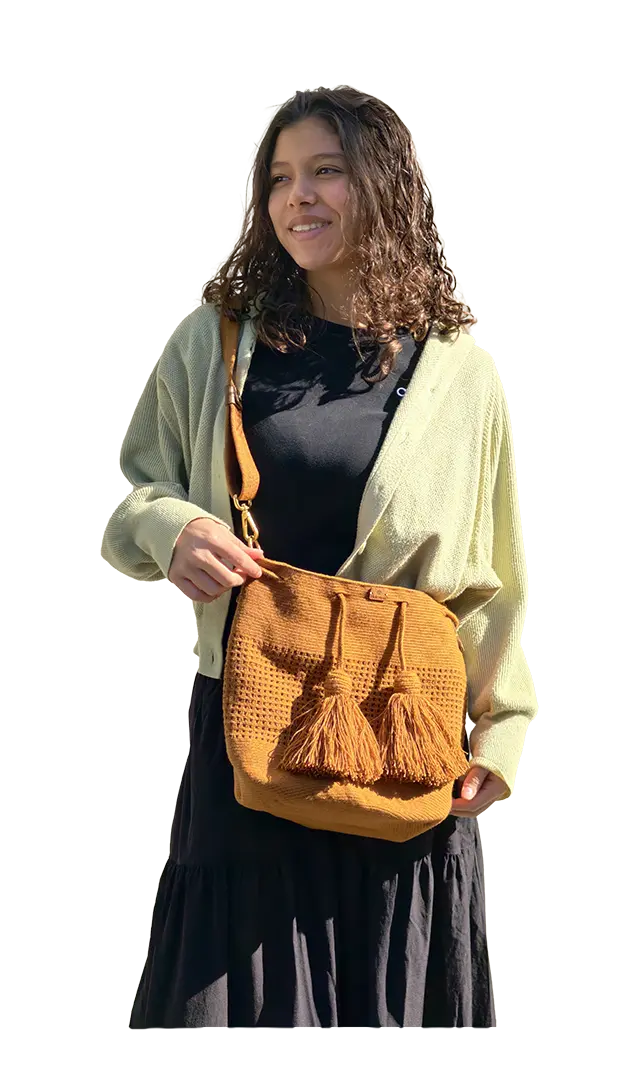
Authenticity questions separate direct sources from resellers.
The handmade bag market includes products with different sourcing arrangements, so knowing who makes the bags and where production takes place can help you evaluate a supplier’s origin claims. Supporting documentation can also help you communicate product provenance accurately to your customers. The following questions focus on the evidence a supplier can provide, rather than origin claims alone.
- Where are your bags made, and by which community?
- Do you work directly with artisans or through intermediaries?
- Can you share photos or video of the actual production site?
- Do you hold any origin certification or fair trade documentation?
- Can I speak with a reference buyer who has ordered for two seasons or more?
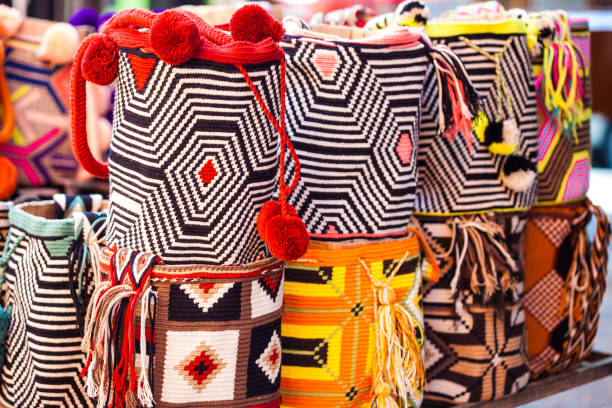
प्रामाणिक Wayuu mochila bags come from the Wayuu community in La Guajira, Colombia. Any supplier who cannot trace their sourcing back to that region is either reselling or substituting. Read our guide on wholesale handmade bag mistakes for the most common authenticity traps.
Tracing the Source Back to the Community
Direct sourcing means the supplier has a nameable relationship with the artisan families who weave the bags. Ask for the region, the number of families they work with, and how long those relationships have run. A supplier coordinating 5,000 families over a decade answers differently from one working through two or three intermediaries they met last year. The depth of that answer predicts how stable your supply will be across seasons.
Questions About Materials and Craftsmanship
Material specs decide durability, price tier, and customer satisfaction.
Two bags that look identical in a photo can differ in yarn quality, weave density, and hardware. These differences can affect the product’s appearance, durability, and retail value. To assess what you will actually receive, ask the supplier about the materials and construction behind each bag.
- What yarn fiber do you use, cotton or acrylic, and why?
- Are your bags single-thread or double-thread woven?
- What hardware do you use for zippers, straps, and closures?
- Can you provide material samples before bulk production?
- What is the expected product lifespan under normal retail use?
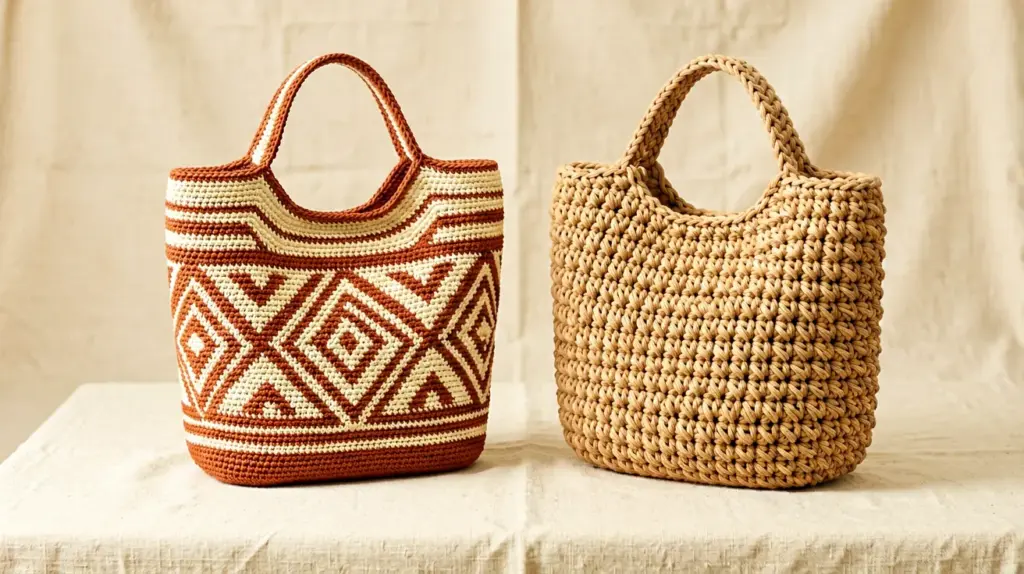
Fiber choice affects hand feel, color retention, and price. Read our comparison of cotton vs acrylic yarn for handmade bags to understand the trade-offs.
Questions About MOQ and Pricing
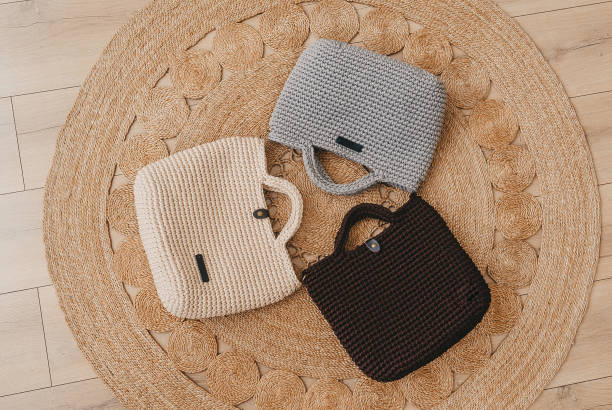
MOQ flexibility matters more than the lowest unit price.
Minimum order quantities affect your upfront investment and the range of styles you can offer. For boutiques and smaller retailers, mixed-style orders may make it easier to test demand without committing too heavily to one design. Before comparing quotes, clarify the following MOQ and pricing details.
- What is your MOQ per style and per total order?
- Can I mix styles, colors, or sizes to hit the minimum?
- What are the volume discount tiers and break points?
- Is pricing locked for returning buyers, or does it fluctuate?
- Do you offer a sample order before the first wholesale buy?
Read our guide on how to price handmade bags to work backwards from your retail target and confirm the wholesale tier still leaves a workable margin.
Understanding What a Wholesale Quote Includes
A cheap unit price usually hides somewhere else. It shows up as a rigid single-style MOQ, a long production queue, missing QC steps, or an exchange policy that does not exist. Compare quotes side by side across all eight categories, not just the price column. The supplier who answers every question clearly is usually the one whose numbers hold up across a full season.
Questions About Production and Lead Time
Verbal estimates can change. Get agreed delivery dates in writing.
Production lead time affects whether your stock arrives in time for a seasonal launch or planned promotion. A clear schedule also helps you identify potential delays before they disrupt your sales plans. Use these questions to check whether the supplier’s production schedule fits your timeline.
- Can you walk me through each milestone from confirmation to dispatch?
- Which production stages happen in-house and which are outsourced?
- How do you flag a delay before the agreed ship date passes?
- What is your capacity during peak season without stretching lead time?
- How far ahead should a seasonal reorder be placed to protect delivery?
For a full breakdown of the ready stock versus made-to-order calendar, read our comparison of ready stock vs custom handmade bags.
Written Dates vs. Verbal Promises
A supplier who quotes a completion date verbally but will not put it on the invoice is signaling that the date is flexible in only one direction. Insist on a written production start date, a written completion date, and a written remedy if the second date slips. That single clause turns a soft promise into a term you can actually enforce, and it filters out suppliers who plan to juggle your order behind larger ones.
Ready to source handmade bags with a supplier who answers every question?
Pactus Group works directly with 5,000+ Wayuu artisan families, offers one-on-one video inspection before shipment, and backs every first wholesale order with a 20% विनिमय नीति.
Questions About Quality Control
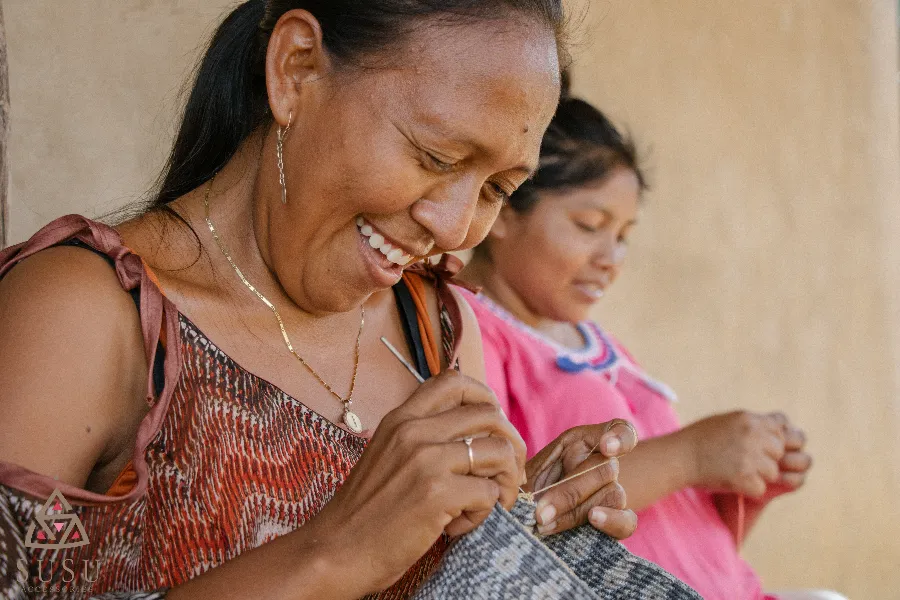
Ask what is inspected, when inspections take place, and who approves the results.
Quality control on handmade goods looks different from factory QC. Natural variation is expected. Actual defects are not. A professional supplier knows the difference and can explain it clearly.
- What QC checkpoints do you run before export?
- How do you distinguish acceptable artisan variation from real defects?
- Do you offer one-on-one video inspection before shipment?
- Can I approve the batch before it leaves the warehouse?
- What is your defect rate on recent wholesale orders?
Video inspection is one of the strongest trust signals a supplier can offer. It puts you in the room during QC without a plane ticket. Any supplier who refuses buyer approval before shipment is telling you something important.
Variation vs. Defect: Where Is the Line?
Handmade goods carry natural variation. A motif may sit two millimeters off center and a color lot may shift one shade between batches. These are marks of hand work, not defects. Real defects are structural: loose tension, dropped stitches, weak strap anchors, misaligned bases. Ask the supplier to define their tolerance in writing so both sides agree on what triggers a claim before the shipment arrives.
Questions About Packaging and Shipping
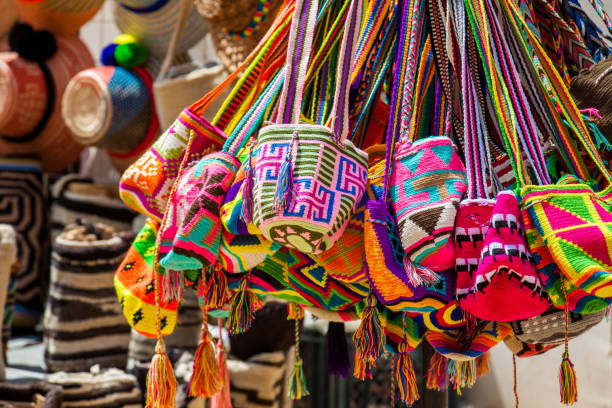
Freight terms determine when shipping risks transfer from the seller to the buyer.
Packaging protects the product, while shipping terms determine costs, responsibilities, and transit risks. Before confirming an order, clarify how the bags will be packed and which shipping arrangements the supplier can support. The following questions help you confirm the details before the goods leave the supplier.
- How are bags packed for export, individually or in bulk polybags?
- Do you offer retail-ready packaging or hangtags as an add-on?
- Which Incoterms do you quote, FOB, CIF, or DDP?
- Who handles customs documentation and HS code classification?
- What is the estimated transit time to my destination country?
For a fuller walkthrough of shipping options and documentation, read our guide on how to source Wayuu bags wholesale. The U.S. Small Business Administration also publishes clear primers on import documentation for first-time buyers.
Incoterms and Who Bears the Risk
Incoterms decide where supplier responsibility ends and buyer responsibility begins, and each term shifts cost and risk differently. FOB has the supplier deliver to the origin port. CIF extends that to freight and insurance to your destination port. DDP covers everything to your door including customs. Get the term in writing on the invoice so both sides know who owns the risk.
Questions About Returns and After-sales Support
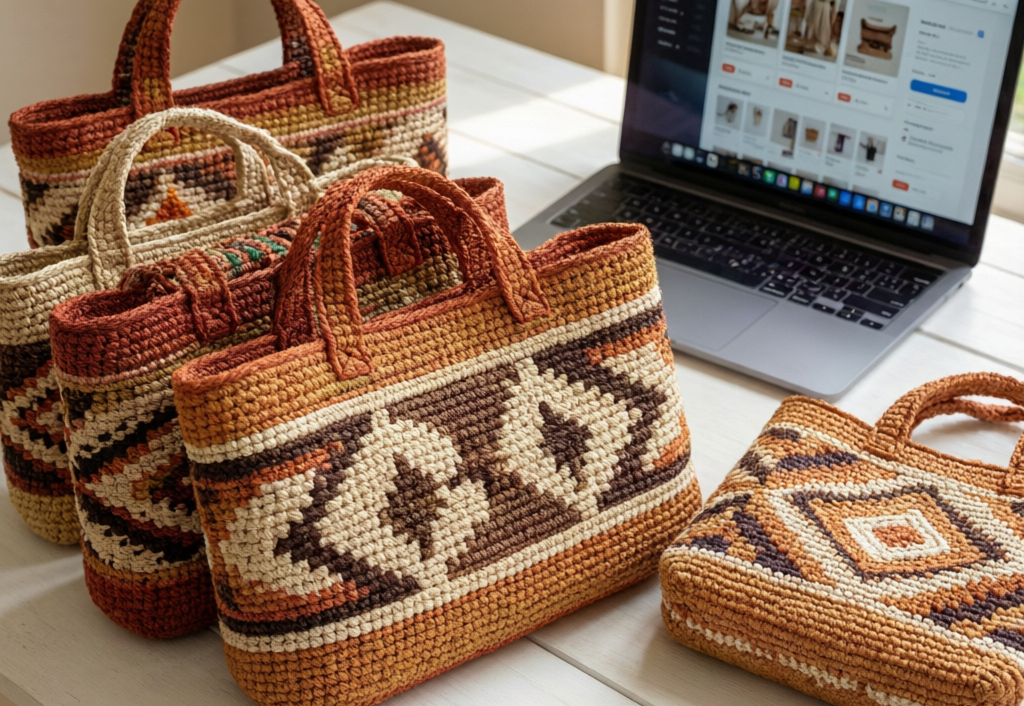
The exchange policy shows what support the supplier offers if a product does not meet expectations.
Even well-planned wholesale orders can run into problems, from transit damage to defective items or products that sell more slowly than expected. The supplier’s after-sales policy determines which issues qualify for a return, replacement, or credit and how quickly they can be resolved.
- What is your exchange or return policy on first orders?
- How do you handle units damaged in transit?
- Do you offer credit or replacement for defects found after delivery?
- What is the process and timeline for filing a claim?
- Who do I contact for reorder support and restock questions?
A 20 percent exchange policy on first orders is a strong trust signal. It tells you the supplier expects you to come back and is willing to absorb some risk to make that happen.
Claim Deadlines and Documentation Requirements
Most suppliers set a claim window of 7 to 30 days after delivery. Miss it and the shipment is considered accepted. Ask exactly what documentation triggers a claim: photos of the carton before opening, photos of each damaged unit, a written count, and the purchase order number. Suppliers who spell this out upfront are usually the same ones who process claims quickly.
Wholesale Order Checklist
Every answer should be documented, and every date and term should be clearly stated in the invoice and contract.
Before money moves, run through this final checklist. Anything not confirmed in writing is not confirmed at all.
| Category | Must confirm in writing |
|---|---|
| Product | Origin, materials, weave type, hardware specs |
| Commercials | Unit price, MOQ, discount tiers, payment terms |
| Production | Start date, completion date, remedies for delay |
| QC and shipping | Inspection protocol, Incoterms, packaging spec |
| After-sales | Exchange policy, claim window, reorder support |
Keep the finished checklist attached to the purchase order. If any term changes mid-project, you have a documented baseline to work from. That single habit prevents most wholesale disputes before they start.
Frequently asked questions
What questions should I ask before buying handmade bags wholesale?
Cover eight categories: authenticity, materials, MOQ and pricing, production lead time, quality control, packaging and shipping, returns, and long-term supplier reliability. Get every answer in writing before the deposit moves.
Can I mix styles in one wholesale order?
Most boutique-friendly suppliers support mixed-style orders where the MOQ applies to the total order rather than each design. Mixed-SKU orders reduce inventory risk and give your customers more variety on the shelf.
How do I verify product authenticity?
Ask for origin documentation, photos or video of the production site, and reference buyers who have ordered for two seasons or more. Authentic Wayuu bags trace back to the La Guajira region of Colombia.
What happens if products arrive damaged?
Document the damage with photos before unpacking further, notify the supplier within the claim window, and reference the agreed Incoterms. Professional suppliers offer credit, replacement, or refund based on the shipping terms and defect severity.
Do suppliers offer exchange policies?
Yes, boutique-focused suppliers often provide an exchange policy on first orders, typically 10 to 20 percent of the total units. The policy lets you swap slow-selling styles for faster movers within an agreed window.
Asking well is buying well
Every question here exists because a buyer somewhere skipped it and paid for that later. Authenticity, materials, MOQ, lead time, QC, shipping, returns. Each category reveals a different side of the supplier, and each answer becomes a term you can hold them to.
Take the extra week before the first order. Send the question list, wait for written answers, and cross-check anything that sounds too good. The suppliers who welcome the questions are the ones who will still be there in three seasons, and the ones worth building a business around.