When a boutique buyer places a wholesale order for handmade bags, the first practical question is timing. How long will production actually take, and when will the stock land on the shelf? The answer depends on more than weaving speed. It covers ready stock depth, artisan capacity, order type, seasonal load, and export handling.
The timeline below maps realistic lead times across four order types, from immediate ready stock replenishment to full OEM programs. It separates production lead time from business lead time, breaks down what moves the numbers, and gives you a planning framework so the season never starts without your inventory.
Key Takeaways
- Ready stock ships in 3 A 7 days; custom woven orders run 20 A 45 days.
- Single thread takes 20 A 30 days. Double thread takes about 10 days.
- OEM and private label programs typically run 8 A 12 settimane.
- Peak season can add 5 A 15 days to any timeline.
- Plan 60 A 90 days before the selling season for stable delivery.
Why Handmade Bag Production Takes Longer
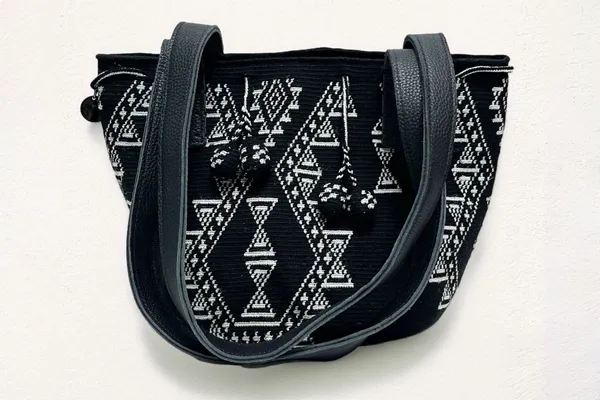
Handmade production follows artisan capacity, not factory throughput.
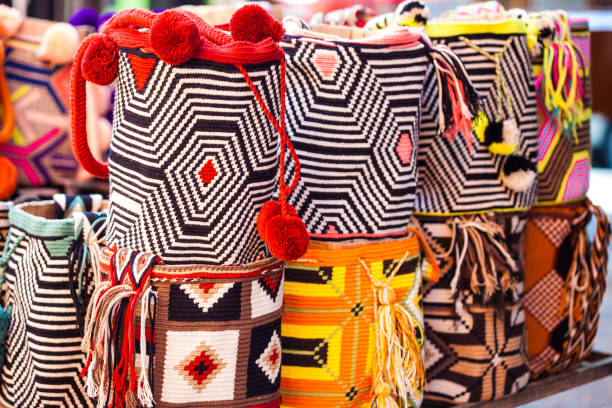
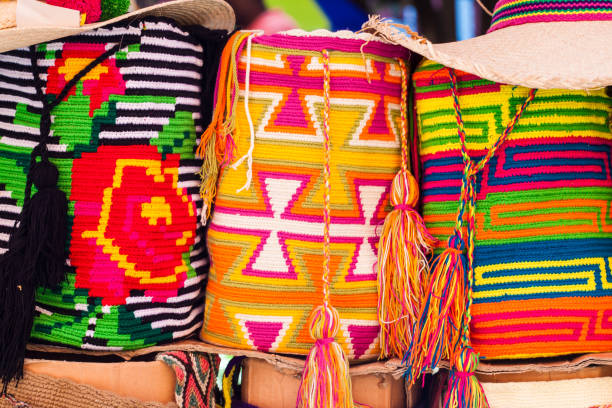
A machine-driven factory line outputs units by the minute. A handmade Wayuu mochila does not. Each bag is crocheted stitch by stitch by the Wayuu people of La Guajira in northern Colombia, working 4 A 8 hours a day around household and community duties. Understanding why this pace exists helps buyers plan realistically instead of expecting factory-style turnarounds.
Comparing Artisan Capacity and Factory Output
A single artisan produces one bag at a time. There is no conveyor belt, no shift rotation, and no overtime button. When demand rises, output scales by adding more artisans to the network, not by running existing ones longer. This structural difference is why supplier network depth matters more than individual weaver speed when you evaluate lead time claims.
Material Preparation and Dyeing Cycles
Before a hook moves, yarn has to be sourced, matched, and sometimes dyed to order. Natural fiber preparation adds 1 A 5 days depending on color count and stock availability. Custom colorways require lab dips and approval loops that factory production avoids entirely. For standard designs using stock yarn, this stage compresses to a single day.
Multi-Stage Hand Construction Process
Every Wayuu mochila bag moves through five distinct stages: yarn prep, spiral base construction, body weaving, strap and finishing, E quality check. Each stage sits with the artisan or a specialist, and there is no parallel processing within a single bag. That sequential structure is the reason 20 A 30 days is a normal window, not a padded one.
Typical Production Timeline by Order Type

Order type moves lead time far more than bag size does.
Lead times split cleanly by order type. Ready stock moves in days because the bags already exist. Standard custom orders follow the artisan weaving calendar. OEM and private label programs add sampling, tooling, and approval cycles on top. The table below shows what to expect for each.
| Order type | Typical lead time | What drives it |
|---|---|---|
| Ready stock replenishment | 3 A 7 days | Inventory on hand, export handling |
| Standard custom woven | 20 A 45 days | Artisan queue, pattern complexity |
| Bespoke single piece | 30 A 60 days | Design iteration, sampling, approval |
| OEM and private label | 8 A 12 settimane | Sampling, tooling, bulk production, QC |
Lead Time for Ready Stock Replenishment
Suppliers holding deep inventory can ship within a week. The clock covers order confirmation, quality check, confezione, and export documentation. For boutiques testing new lines or covering a sudden sell-through, ready stock is the only realistic option that does not require a month of waiting.
Typical Lead Times for Custom Woven Orders
A standard custom order enters the artisan queue at the next available slot. Simple two-color designs in double thread run 10 A 15 days. Dense single-thread kaana patterns push the window toward 30 A 45 days. Pactus Group coordinates across 5,000 artisan families so queue position does not stall your delivery.
OEM and Private Label Program Timelines
OEM programs add three layers to standard weaving: design development, sample approval, and bulk production scheduling. Most projects run 8 A 12 weeks from briefing to first shipment. Larger programs with custom hardware or leather integration can extend to 3 months. Budget that full window before committing to a launch date.
Ready Stock vs Made-to-Order Lead Time
Production lead time and business lead time are two different clocks.
The most useful distinction for wholesale buyers is between production lead time and business lead time. Production lead time is how long the artisan needs to weave. Business lead time is how long your cash is tied up before stock arrives and sells. Ready stock decouples them. Made-to-order locks them together.
Stock Availability and Order Fulfillment
A supplier with thousands of finished units on the shelf can fulfill a 200-piece order in under a week. The buyer pays a slightly higher unit price but avoids the working capital drag of a 45-day wait. For fast-moving styles or seasonal spikes, the trade-off almost always favors ready stock.
Production Scheduling for Custom Orders
Made-to-order pieces enter a queue behind existing commitments. Position in that queue matters more than weaving speed. Two buyers ordering the same design a week apart can see delivery dates three weeks apart if a large OEM program sits between them. Always ask where your order lands in the current schedule.
Hybrid Sourcing Strategy for Boutiques
Most established boutiques run both models. Ready stock covers baseline replenishment and unexpected sell-through. Made-to-order carries the exclusive designs that differentiate the store. See our breakdown of ready stock vs custom handmade bags for how the two compare across price, MOQ, and margin structure.
What Affects Production Time

Four variables decide whether your order lands in ten days or thirty.
Pattern Complexity and Color Count Impact
Every color change asks the artisan to carry or cut yarn, reset tension, and keep the motif aligned, and the cost stacks up faster than you would expect. Here is roughly how color count maps to weaving time:
- Two-tone geometric: about 15 days in single thread
- Mid-range kaana pattern: 20 A 25 days
- Dense multi-color kaana: past 25 days, up to 35
Bag Size, Shape, and Structural Elements
A standard medium mochila sets the baseline. XL crossbody and bucket shapes add 30 A 40 percent more weaving time. Mini bags and pouches come in faster, sometimes close to 12 days for a single-thread build. Square bases take longer than round ones because corners need extra stitching to hold shape under load.
Artisan Skill Level and Workload Distribution
Decades of practice bring faster, more even work. A master weaver may close a complex kaana in 22 days where a newer artisan needs the full 30. Skilled weavers are also booked further ahead. A supplier who knows each artisan pace assigns the right bag to the right hands and avoids bottlenecks.
Seasonal Order Volume and Capacity Constraints
September to November and January to March carry the heaviest order load, matching peak export windows reported by ProColombia. Artisans hold several orders at once during those months. Lead times stretch by 5 A 15 days even for standard designs. Ordering before the peak is the simplest fix.
Single-Thread vs Double-Thread Weaving Time
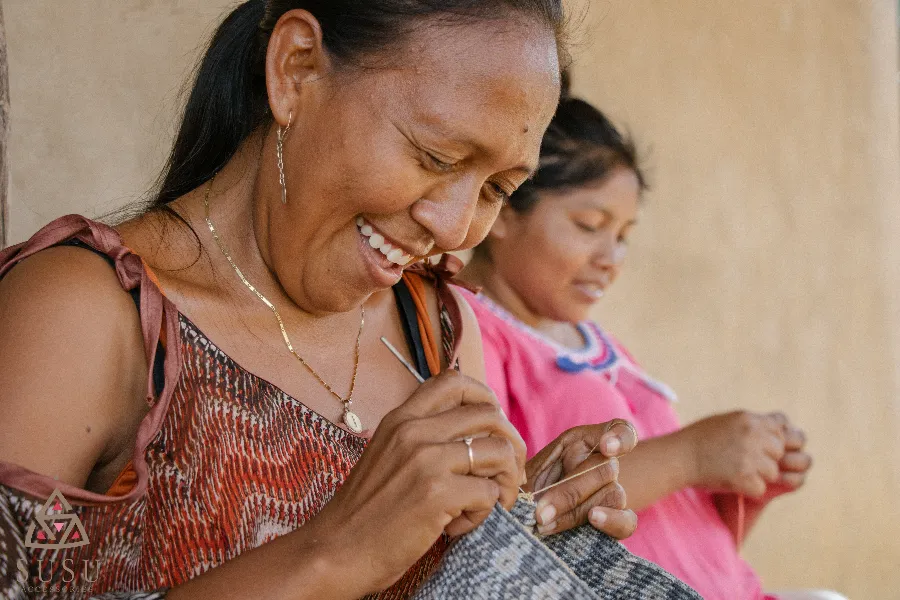
Of everything you can control, thread choice moves production time the most.
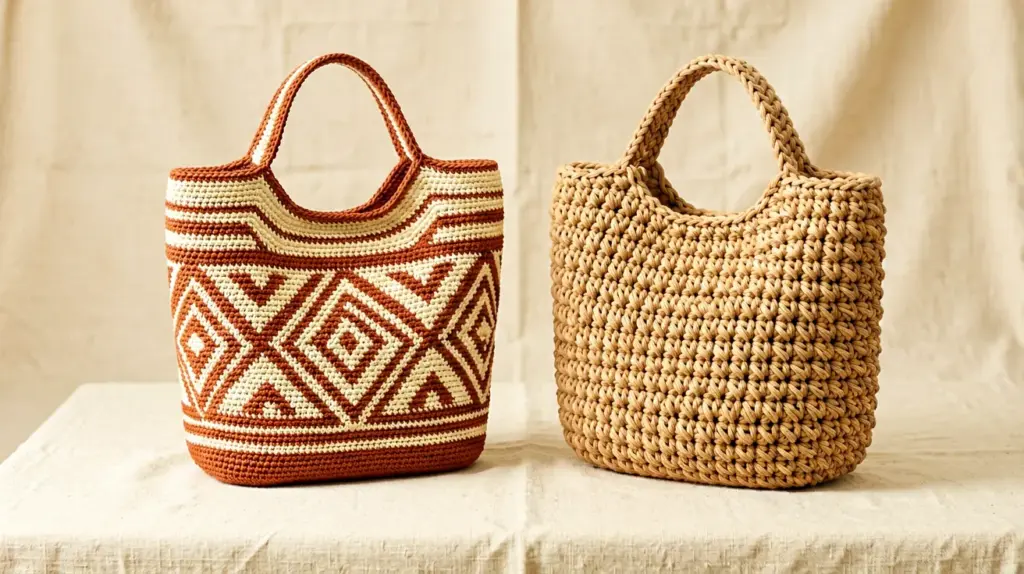
Single thread (1T) and double thread (2T) refer to how many yarns the artisan works with on the hook. The choice affects stitch density, fabric feel, price tier, and most importantly, production time. Understanding the trade-off lets buyers pick a thread type that matches their retail calendar and margin target.
| Dimension | Single thread (1T) | Double thread (2T) |
|---|---|---|
| Lead time | 20 A 30 days | About 10 days |
| Fabric feel | Bene, dense, smooth | Bold, textured, casual |
| Price tier | Premium | Everyday |
| Pattern detail | High resolution kaana | Simpler geometric motifs |
| Best for | Flagship boutique pieces | Fast restock, testing lines |
Single-Thread Weaving Dynamics and Time Cost
1T work uses finer yarn and a smaller hook, so stitches are smaller and the artisan makes more of them per square inch. The spiral base alone takes 2 A 3 days. Most of the 20 A 30 day window sits in body weaving. You can see the density difference in our single vs double thread guide.
Double-Thread Efficiency and Fabric Trade-offs
2T weaving doubles the yarn over the hook, so stitches are larger and the bag comes together quicker. A standard double thread mochila finishes in about 10 days from yarn prep to final check. The saving is real but not free. The fabric is bolder, less detailed, and reads more casual on the shelf.
Choosing Thread Type by Price Tier and Turnaround
Match thread type to shelf price before committing to a production window. Premium boutiques with high sell-through recover the 1T premium. Value-focused or fast-turnover retailers get better margins from 2T. Most stores carry both, with 2T funding the slower, higher-margin 1T pieces through quicker cash conversion.
Looking for handmade bags with reliable lead times?
Pactus Group coordinates production across 5,000+ Wayuu artisan families, with transparent timelines, deep ready stock, and a 20% exchange policy on your first wholesale order.
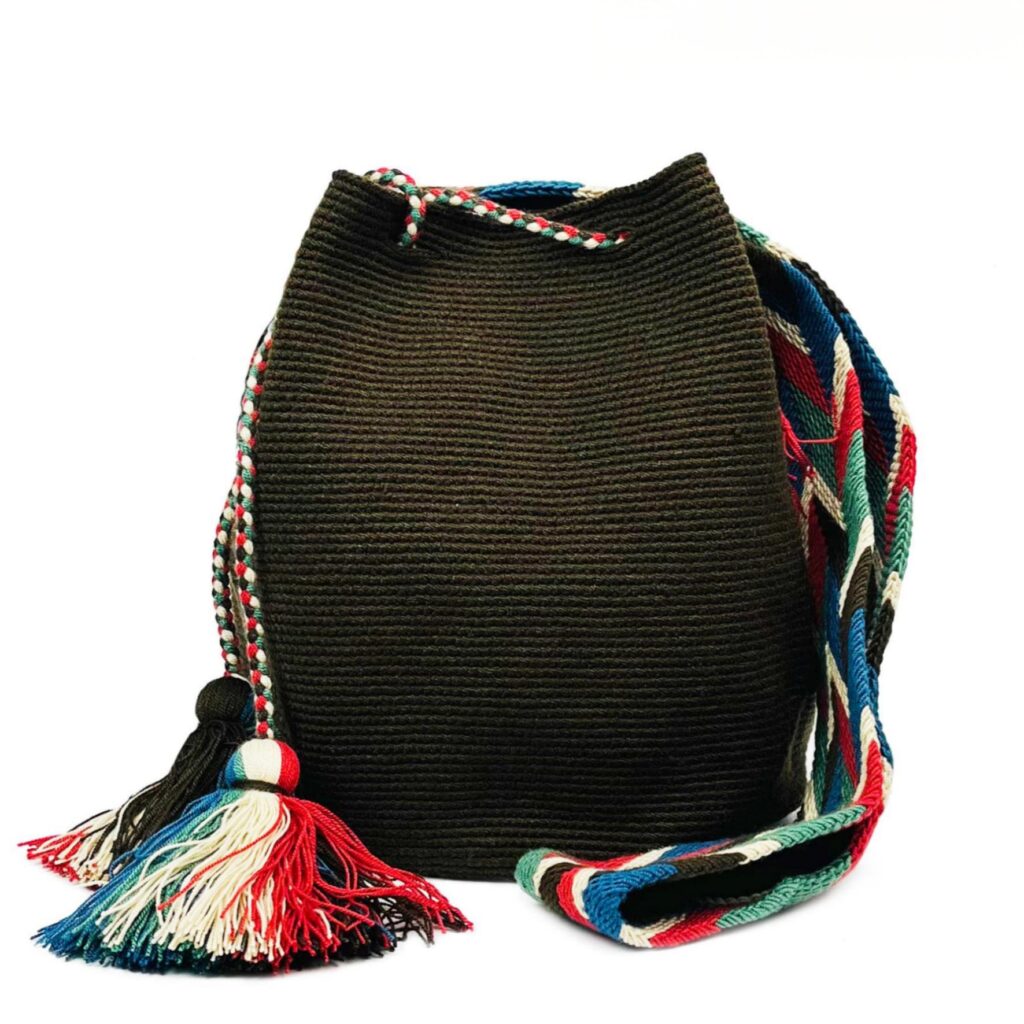
Production Timeline for Wholesale Orders
A bigger order does not automatically mean a proportionally longer one.
A 200-piece order does not take 200 times longer than a single bag. Suppliers with wide artisan networks run pieces in parallel across many households. The bottleneck shifts from weaving hours to coordination, controllo di qualità, and export logistics.
Managing Larger Orders Across Multiple Artisans
For batches under 300 pieces, most suppliers distribute work across 20 A 40 artigiani. Weaving runs in parallel, so production time stays close to the single-piece baseline plus coordination overhead. Orders above 500 pieces may queue behind themselves and stretch by 10 A 20 days depending on network availability.
Quality Inspection and Rework Buffers
Every wholesale batch goes through a full inspection pass before export. That covers base tension, strap load testing, color fastness, and dimensional consistency. Add 3 A 5 days for QC and any rework. Skipping this step to save time is the most common source of buyer complaints and returns later.
Export Preparation and Freight Timelines
After QC, the shipment moves to export documentation, confezione, and freight booking. Air freight from Colombia adds 5 A 7 days. Sea freight runs 25 A 35 days. Customs clearance at destination adds another 3 A 10 days. Read our wholesale sourcing guide for a full logistics breakdown.
How to Shorten Lead Time
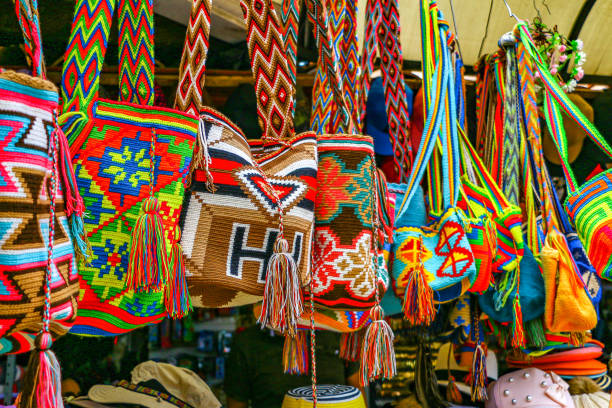
Speed comes from early planning and a supplier with real capacity.
Buyers cannot make an artisan weave faster without hurting quality. What they can do is remove every source of avoidable delay from the calendar. The three levers below routinely shave 10 A 20 days off a wholesale order without touching the craft itself.
Simplifying Designs Without Losing Brand Identity
Fewer colors and simpler geometry cut weaving time dramatically. A four-color kaana runs about 25 days while the same silhouette in two colors runs about 15. Work with your supplier to identify which design elements carry the brand and which can be simplified without customers noticing the difference.
Batch Splitting and Rolling Replenishment
One 400-piece order takes longer than two 200-piece orders placed a month apart. Splitting also lets you adjust the second batch based on the first one sell-through. Rolling replenishment keeps inventory fresh and reduces the working capital tied up in a single large shipment waiting at customs.
Supplier Network and Production Capacity
A supplier coordinating thousands of artisan families absorbs volume a single workshop cannot. Ask how many active weavers they work with and what happens when one drops out mid-run. Network depth is the difference between a promised date and a delivered date. Browse the Wayuu mochila bags wholesale catalog to see ready stock availability.
Production Planning for Seasonal Orders
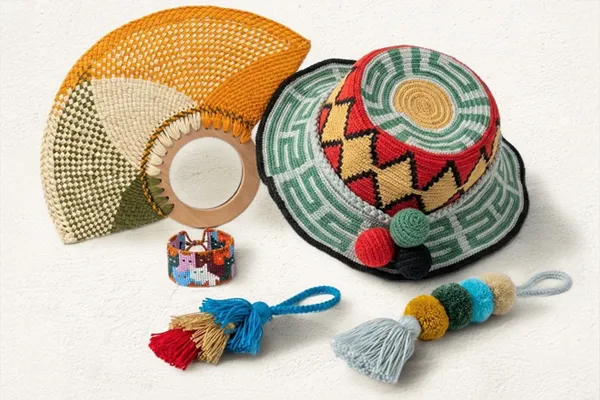
Count backwards from your on-shelf date; that deadline sets the rest.
Seasonal retail has hard deadlines. Holiday stock that arrives in January is dead inventory. Working backwards from your on-shelf date gives you the latest possible order date, and everything before that is buffer you can use for sampling, approval, and unexpected delays.
| Selling season | Order by | Production window | Delivery target |
|---|---|---|---|
| Holiday (Nov to Dec) | Early August | 60 A 75 days | Late October |
| Spring (Mar to May) | Early November | 75 A 90 days | Late January |
| Summer (Jun to Aug) | Early February | 75 A 90 days | Late April |
| Fall (Sep to Nov) | Early May | 60 A 75 days | Late July |
Holiday Season Backward Planning Windows
Holiday is the tightest window because delivery dates are non-negotiable. Order by early August for late October delivery. That gives 60 A 75 days for production plus 15 A 20 days for freight and customs, with a two-week buffer for peak season queue drift.
Spring and Summer Collection Scheduling
Spring and summer collections have more slack because the selling window is longer. Order 90 days out for a soft launch, then replenish mid-season with ready stock if the line performs. This hybrid approach reduces forecast risk on unproven designs and keeps cash flow flexible.
Building Time Buffers for Peak Season Orders
Add 10 A 15 days on top of standard lead times for any order landing in September through November or January through March. That buffer absorbs peak season delays, customs holds, and weather disruptions. Skipping the buffer is the most common reason seasonal stock misses its selling window.
Lead Time Checklist Before Ordering
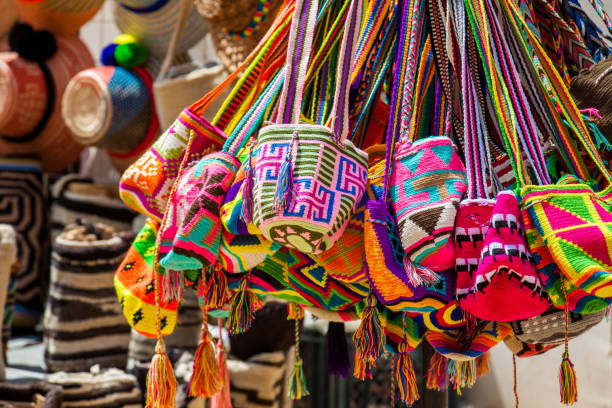
Promised dates need proof. Ask before you commit, not after.
Before signing a purchase order, run through the checklist below. These are the questions that separate an organized exporter from a middleman passing along optimistic numbers. Every answer should be in writing before money moves.
Supplier Verification Questions
Ask the questions that reveal operational depth:
- How many active artisan families do you coordinate?
- What is your current production queue depth?
- What happens to my order if a weaver drops out mid-run?
- Do you hold ready stock, or is everything made to order?
- Can you share references from buyers with similar order sizes?
Contract Terms and Date Commitments
Verbal timelines are not commitments. The invoice or purchase contract should specify production start date, expected completion date, and shipping date. It should also define remedies for missed dates. Read our guide on wholesale handmade bag mistakes for the contract clauses most often skipped by first-time buyers.
Internal Planning and Cash Flow Readiness
Lead time is only half the plan. Your side needs cash flow to cover the deposit, warehouse space to receive the shipment, and marketing assets ready to launch. Confirm all three before locking a production slot. A bag that arrives on time to an unprepared store still misses the season.
Frequently asked questions
How long does Wayuu bag production take?
A standard Wayuu mochila takes 20 A 30 days in single thread and about 10 days in double thread. Custom patterns with dense kaana motifs can extend to 35 days. Ready stock ships within 3 A 7 days from order confirmation.
What is the difference between ready stock and custom production?
Ready stock refers to finished bags held in the supplier warehouse, shipped within days. Custom production enters the artisan queue and follows the weaving calendar, typically 20 A 45 days. Ready stock costs slightly more per unit but frees working capital and covers urgent replenishment.
Can suppliers speed up production?
Only within limits. Double-thread bags start from a shorter baseline and can be prioritized. Single-thread work cannot be rushed without risking uneven tension and pattern errors. Suppliers with deep artisan networks can add parallel weavers to shorten queue time on larger orders.
How early should boutiques place holiday orders?
Order by early August for late October delivery. That gives 60 A 75 days for production plus 15 A 20 days for freight and customs, with buffer for peak season queue drift. Any order placed after mid-September is unlikely to land before the holiday selling window closes.
What is the average OEM production timeline?
OEM and private label programs typically run 8 A 12 weeks from briefing to first shipment. Sampling and design approval take 2 A 4 settimane. Bulk production follows standard weaving timelines. Larger programs with custom hardware or leather integration can extend to 3 months.
Allow Enough Time for Handmade Bag Production
Handmade bags take time because they are genuinely made by hand. Every stitch, color change, and strap carries the work of an artisan following techniques passed down through generations of Wayuu weavers in Colombia. That patience is what customers pay for and what makes the piece hold its price on the shelf.
For wholesale buyers the path is straightforward. Separate production lead time from business lead time, pick the right order type for each style, and plan backwards from the selling season. Choose a supplier whose network depth can hold a promised date. Do that and the craft takes care of the rest, your stock arrives when the customers do.