If you source bags at wholesale, the phrase “Italian leather” appears on spec sheets, price tags, and marketing copy alike — but it says almost nothing on its own. Leather quality is graded by layer, tanning method, and surface treatment, and the gap between the best and worst grades can mean the difference between a bag that ages beautifully for twenty years and one that cracks within two seasons.
This guide walks wholesale buyers through the five grades of Italian leather used in bag manufacturing, from full-grain to corrected-grain, with the numbers that matter at the procurement table: tensile strength, tear resistance, price per square foot, and expected lifespan. Use it to verify what your supplier is actually selling you before you commit to an order.
What Are Italian Leather Grades?
Walk into any bag showroom and you will see the words “Italian leather” on dozens of price tags. But that label alone tells you almost nothing about quality. Italian leather comes in several grades, and the difference between the best and the worst can mean the gap between a bag that lasts twenty years and one that cracks within two.
Leather grades are determined by two factors: which layer of the animal hide is used, and how much the surface has been altered during processing. The outermost layer — the grain side — contains the tightest, strongest fibers. Each subsequent layer beneath it becomes progressively weaker and less breathable.
Italy produces some of the finest leather in the world, thanks to centuries-old tanning traditions concentrated in regions like Tuscany and Campania. But even within Italian tanneries, hides are sorted into different grades based on surface quality, fiber density, and intended use. Understanding these grades is essential for anyone sourcing bags at wholesale level — it directly affects pricing, durability claims, and the story you can tell your customers.
In this guide, we break down the five main grades of Italian leather used in bag manufacturing, compare their performance characteristics side by side, and show you how to verify leather grade before you place an order.
O 5 Grades of Italian Leather, Ranked
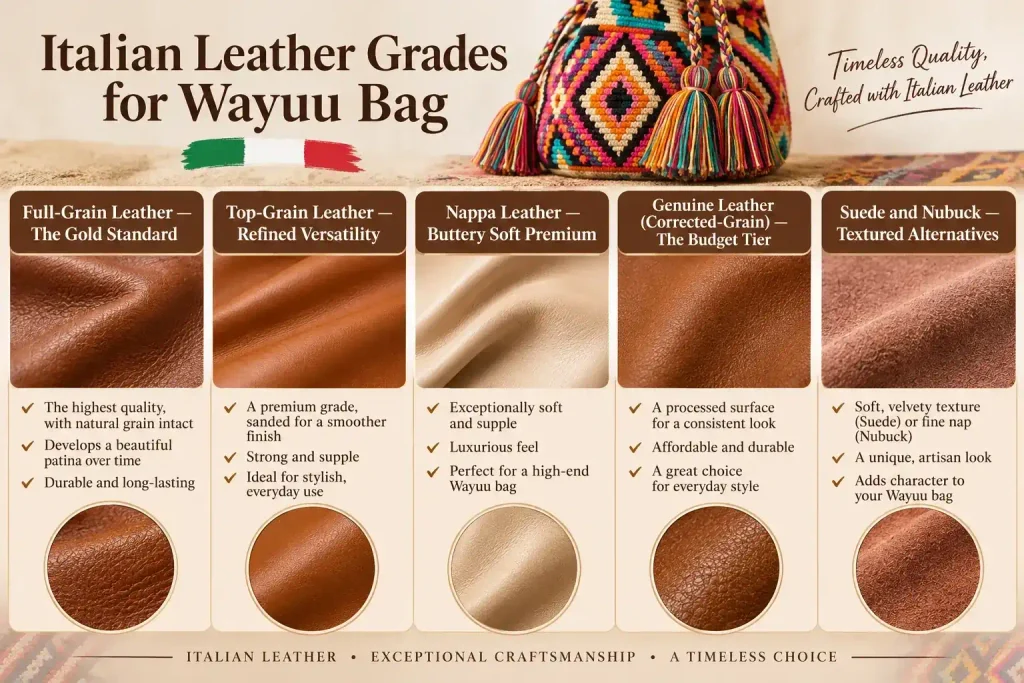
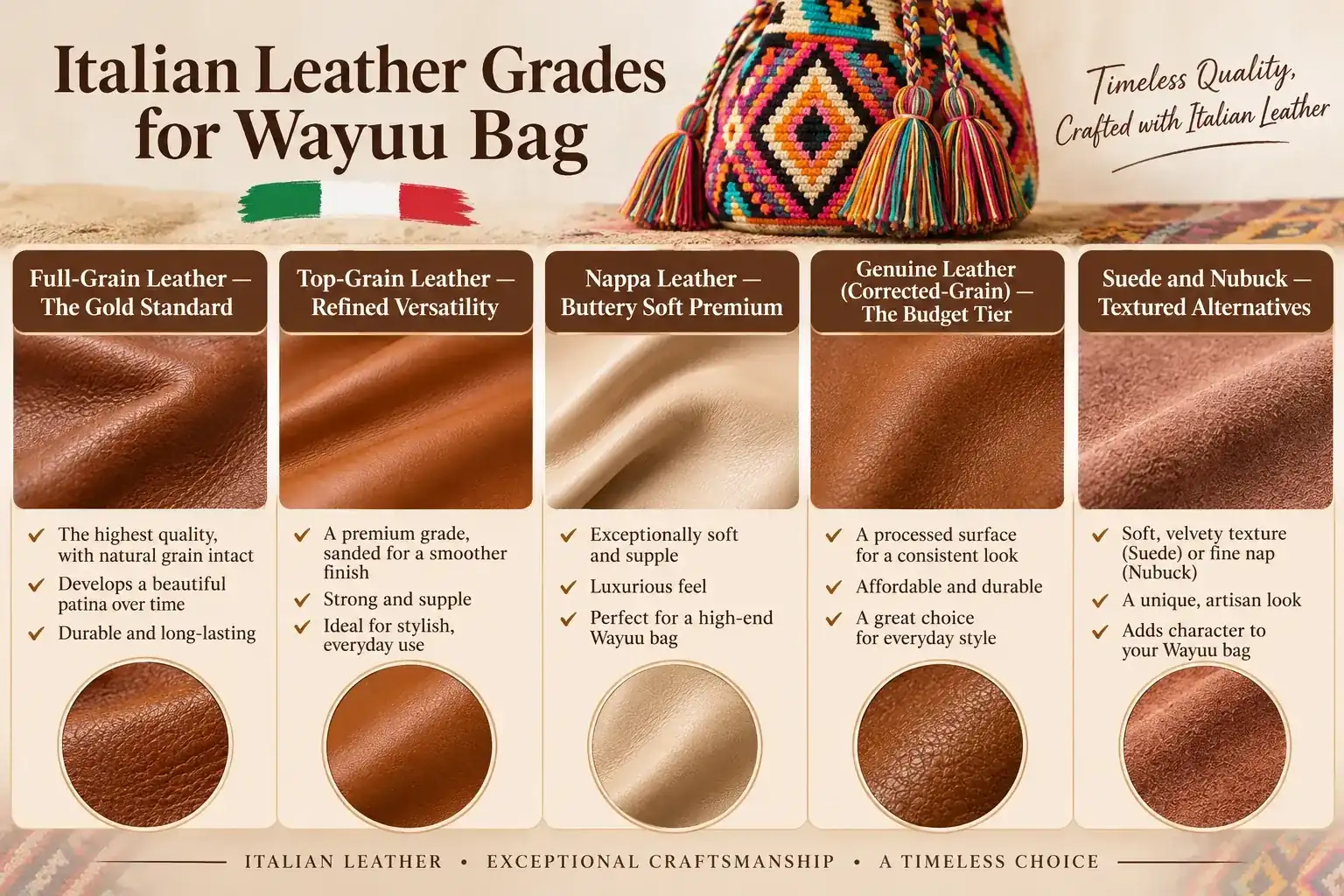
1. Full-Grain Leather — The Gold Standard
Full-grain leather is the entire, unaltered top layer of the hide. Nothing has been sanded, buffed, or corrected to remove natural marks, insect bites, or growth lines. The grain surface remains exactly as it was on the animal, which means every piece is unique.
This grade offers the highest tensile strength among all leather types — typically 20 para 25 MPa (megapascals) — because the tightly interlocked fibers at the grain surface have not been disrupted. Full-grain leather also breathes better than any other grade, which prevents moisture buildup and extends the life of the product.
The most distinctive trait of full-grain leather is patina — a gradual darkening and softening that occurs with use and exposure to light. Rather than looking worn out, a well-used full-grain bag develops a richer, more personalized appearance over time. This aging characteristic is one reason luxury brands favor full-grain hides.
For bag makers, full-grain leather works best for structured totes, travel bags, and any product where the buyer expects long-term durability. The tradeoff is cost: full-grain hides command $80 para $120 per square foot, and the tannery rejects hides with too many surface blemishes, which limits supply.
2. Top-Grain Leather — Refined Versatility
Top-grain leather starts from the same top layer as full-grain, but the surface is lightly sanded or buffed to remove visible imperfections. This produces a more uniform appearance — consistent color, no growth marks, no insect scars — while retaining most of the fiber strength.
Tensile strength typically falls in the 15 para 20 MPa range. The leather is slightly thinner and more pliable than full-grain, making it easier to work with during manufacturing. It takes dye evenly and produces a clean, polished finish that appeals to buyers who prefer a modern, consistent look.
Most mid-to-high-end handbags on the market are made from top-grain leather. It offers an excellent balance between durability and cost ($50 para $80 per square foot), and the uniform surface makes quality control simpler for large production runs.
One limitation: top-grain leather develops only a mild patina compared to full-grain. If your brand story centers on the bag “aging beautifully,” full-grain is the stronger choice. If the focus is on a clean, contemporary aesthetic, top-grain delivers.
3. Nappa Leather — Buttery Soft Premium
Nappa is not a separate layer of the hide — it describes soft, supple leather made from different hide layers, often full-grain or top-grain. The term originated in Napa Valley, California, where the leather was developed for gloves. Today, “nappa” generally refers to leather with a smooth surface and exceptionally soft, supple hand feel, rather than one specific tanning method.
Nappa leather retains strong tensile properties (18 para 22 MPa when made from full-grain stock) but adds a level of tactile luxury that neither standard full-grain nor top-grain can match on their own. It drapes beautifully, resists creasing, and feels warm to the touch.
In bag making, nappa is most commonly used for clutches, evening bags, interior linings of premium bags, and any design where softness is a selling point. At $90 para $130 per square foot, it sits at the top of the price range — justified by the quality of raw hides required (blemish-free skins are essential since the finish is transparent) and the specialized tanning process.
4. Couro genuíno (Corrected-Grain) — The Budget Tier
The phrase “genuine leather” sounds reassuring, but it does not identify a specific leather grade. In some commercial contexts, it refers to lower-grade leather, including corrected-grain or split leather that has been sanded, coated with finishes, or embossed with artificial grain patterns to create a more uniform appearance.
Tensile strength ranges from 10 para 15 MPa, roughly half that of full-grain. The coating gives the leather a plastic-like feel and a very uniform appearance, but it also blocks breathability. Over time, the synthetic coating tends to crack at stress points — edges, folds, corners — while the underlying split fibers stretch and deform.
Genuine leather costs $30 para $50 per square foot and is widely used in fast-fashion bags, promotional items, and budget product lines. It is legitimate leather (as opposed to synthetic alternatives), but buyers should understand that “genuine” is a quality grade, not a guarantee of excellence.
For B2B sourcing, genuine leather makes sense when your retail price point is tight and your customers prioritize immediate appearance over long-term performance. Just be transparent about what they are getting.
5. Suede and Nubuck Leather — Textured Alternatives
Suede and nubuck are not separate grades but rather finishes applied to specific layers of the hide:
- Suede is made from the inner split (the flesh side) of the hide, sanded to create a soft, fuzzy nap. It is pliable and comfortable but more vulnerable to staining, water damage, and abrasion.
- Nubuck is made from the grain side (top layer), sanded on the outer surface to produce a velvety texture. It is stronger and more durable than suede, since the tight grain fibers remain intact beneath the nap.
Tensile strength varies: nubuck runs 14 para 18 MPa (comparable to top-grain), while suede from lower splits may drop to 10 para 14 MPa. Both materials cost $40 para $70 per square foot depending on the source layer.
In bags, suede and nubuck are typically used for interior linings, casual designs, or accent panels rather than the main body of the bag. They add visual and tactile contrast but require more care from the end user — water-repellent sprays and regular brushing are standard maintenance.
Italian Leather Grades Comparison Table
| Grade | Tensile Strength | Tear Resistance | Patina Potential | Price (USD/sq.ft) | Expected Lifespan | Best For |
|---|---|---|---|---|---|---|
| Full-Grain | 20–25 MPa | 400–600 N | High | $80–$120 | 15–25 years | Luxury bags, heritage pieces |
| Top-Grain | 15–20 MPa | 300–500 N | Médio | $50–$ 80 | 8–15 years | Bolsas premium, office bags |
| Nappa | 18–22 MPa | 350–550 N | Medium-High | $90–$130 | 12–20 years | Clutches, forros, soft bags |
| Genuíno (Corrected) | 10–15 MPa | 200–300 N | Low | $30–$50 | 3–5 years | Budget lines, fast fashion |
| Suede / Nubuck | 10–18 MPa | 200–400 N | None | $40–$70 | 5–10 years | Linings, casual accents |
Why Italian Leather Stands Apart
Italy ranks among the world’s leading exporters of finished leather by value, with tanning clusters concentrated in three regions that each bring distinct strengths:
- Santa Croce sull’Arno (Tuscany) — Known for vegetable-tanned leather, the oldest and most traditional method. The Consorzio Vera Pelle Italiana Conciata al Vegetale certifies hides tanned exclusively with natural tannins from chestnut, quebracho, and other plant sources. Vegetable-tanned leather develops the most prized patina and is favored by heritage brands.
- Arzignano (Veneto) — Italy’s largest tanning district by volume, specializing in chrome-tanned leather for fashion and automotive applications. Chrome tanning is faster and produces softer, more water-resistant leather.
- Solofra (Campania) — Focused on sheepskin and goatskin, often used for clothing and smaller accessories.
For bag makers, the relevant distinction is between vegetable-tanned and chrome-tanned Italian leather:
| Aspect | Vegetable-Tanned | Chrome-Tanned |
|---|---|---|
| Process time | 4–6 weeks | 1–3 days |
| Hand feel | Firm, structured | Soft, supple |
| Patina | Excellent — deep, warm aging | Minimal — stays consistent |
| Resistência à água | Low — absorbs moisture | High — repels water |
| Color range | Limited — natural tones, earthy hues | Wide — any color achievable |
| Price | Higher | Lower |
| Environmental impact | Lower — biodegradable tannins | Higher — chromium requires treatment |
Both methods produce excellent leather. The choice depends on the bag’s design intent: structured heritage pieces benefit from vegetable-tanned; moderno, colorful collections benefit from chrome-tanned.
Procurando bolsas artesanais confiáveis no atacado?
Navegue pela coleção PACTUS e solicite o catálogo & preços para sua boutique.
Obtenha catálogo de atacado & Preços →How to Verify Leather Grade When Sourcing Bags
Supplier descriptions can be vague or misleading. Here are five practical tests you can perform — or request from your supplier — before committing to a bulk order.
The Touch Test
Full-grain and top-grain leather feel warm and slightly textured under your fingertips. You can feel the natural grain pattern — tiny pores, subtle ridges, occasional scars. Corrected-grain and bonded leather feel smoother, cooler, and slightly plastic-like due to the synthetic coating. If the surface feels like a laminated countertop rather than skin, it is likely corrected-grain or lower.
The Smell Test
High-quality Italian leather has a distinctive, rich aroma — earthy, slightly sweet, sometimes with a faint smokiness from the tanning process. Low-grade corrected leather and bonded leather smell chemical or synthetic. If the first thing you notice is a plasticky or glue-like odor, the leather has been heavily treated with synthetic coatings.
The Water Drop Test
Place a small drop of water on the leather surface. On full-grain and vegetable-tanned leather, the water will slowly absorb into the hide, leaving a temporary dark spot that fades as it dries. On corrected-grain leather with a synthetic coating, the water will bead up and roll off without absorbing. This test is especially useful for distinguishing vegetable-tanned full-grain from chrome-tanned corrected-grain.
The Edge Inspection
Examine the cut edge of the leather piece. Full-grain and top-grain leather show densely packed, tightly woven fibers near the surface, with a gradual transition to looser fibers underneath. Corrected-grain and split leather show a more uniform fiber structure throughout, or a visible boundary line where the coating ends and the split begins. If the edge looks like a sandwich with a distinct top layer, it is likely a coated product.
Five Questions to Ask Your Supplier
- Which layer of the hide is this? — Full-grain, top-grain, or split?
- What tanning method was used? — Vegetable, chrome, or combination?
- Where was the hide tanned? — Request the tannery name and location. Reputable Italian tanneries will provide this.
- What is the leather thickness? — For bags, 1.0 para 1.4 mm (3–4 oz) is standard. Thinner leather may indicate a split.
- What finish has been applied? — Aniline (transparent, shows natural grain), semi-aniline (light pigmentation), or pigmented (opaque coating)?
Any supplier confident in their product will answer these questions directly. Vagueness or deflection is a red flag.
Italian Leather in Handmade Bags: Where Craft Meets Material
The combination of artisan craftsmanship and premium Italian leather creates a product category that sits well above mass-produced alternatives in both quality and perceived value.
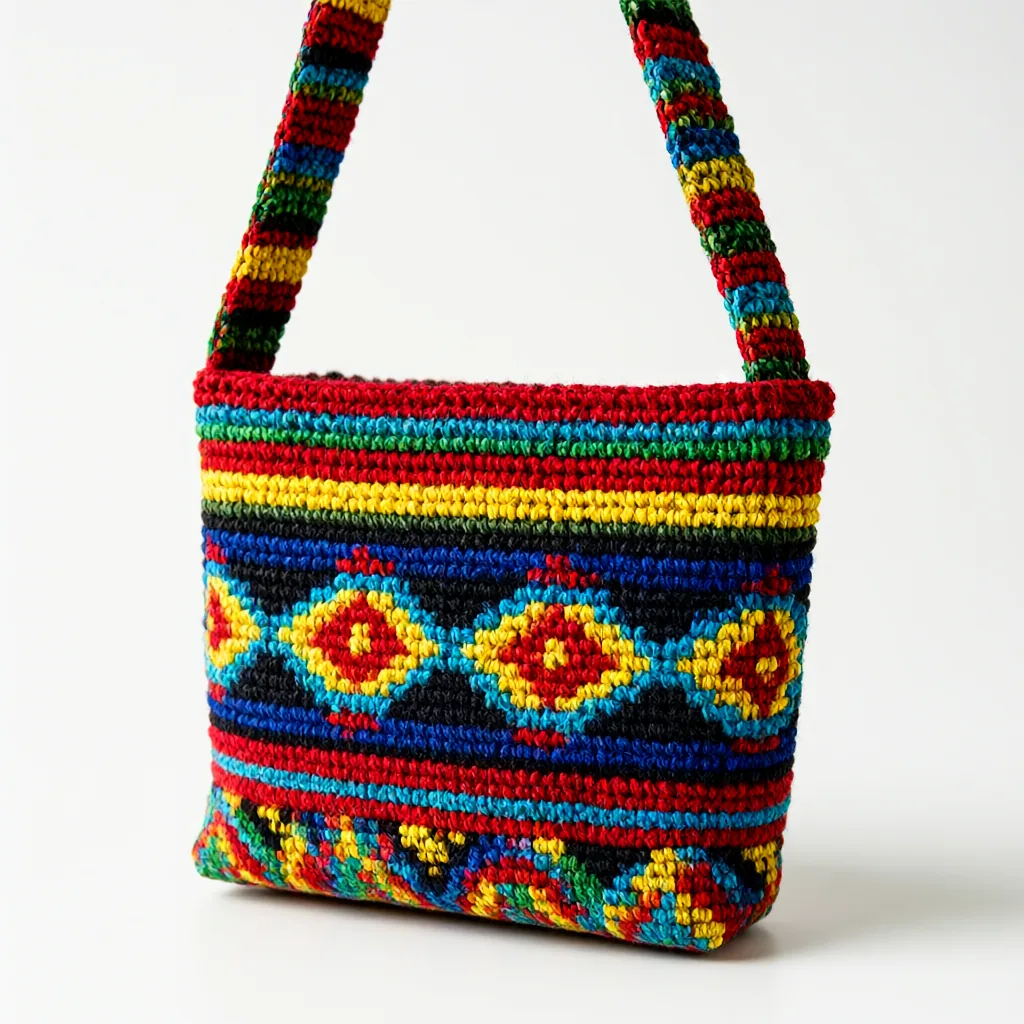
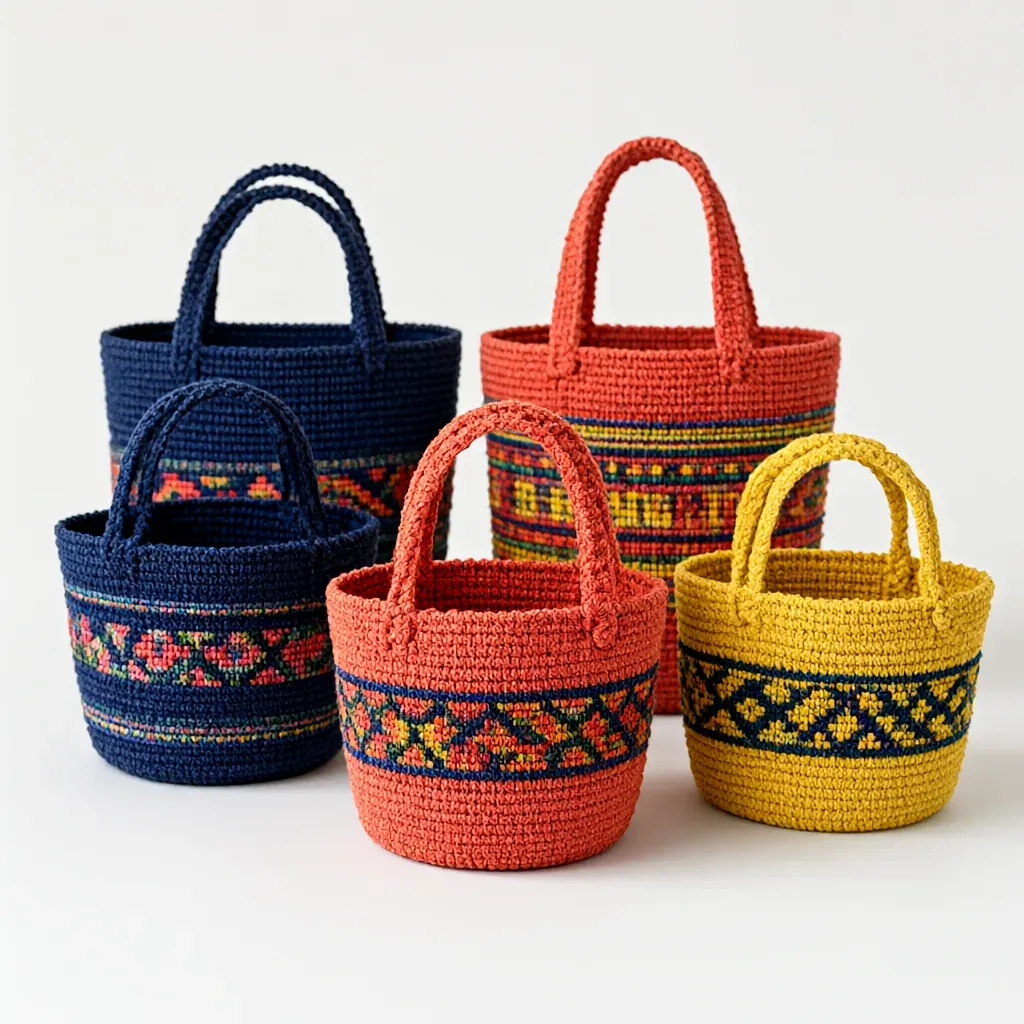
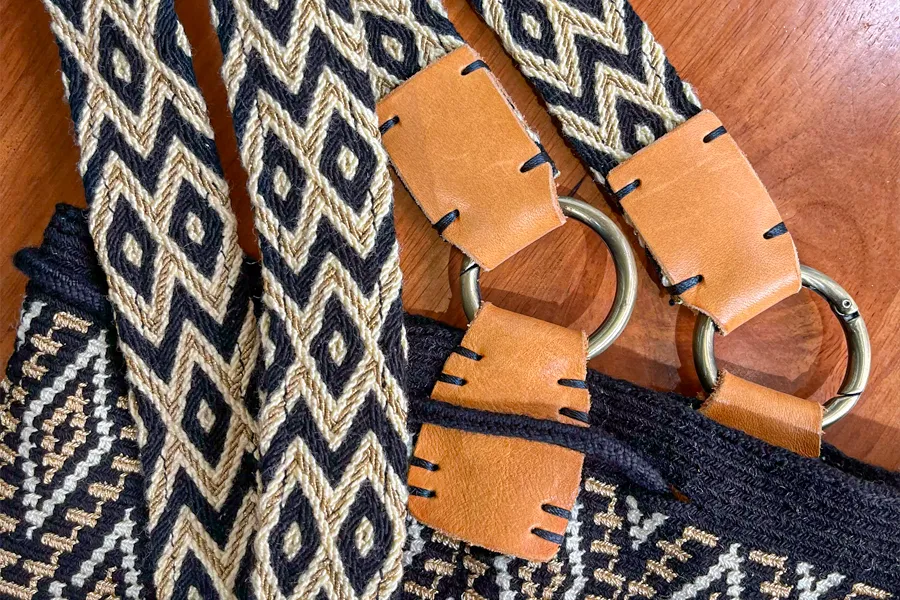
At Pactus, nosso Remake Collection pairs authentic Wayuu handwoven fabric — crafted by Colombian artisans using traditional crochet techniques — with Italian full-grain and top-grain leather accents. Each bag combines two distinct artisanal traditions: the vibrant, geometric patterns of Wayuu weaving and the refined, structured quality of Italian leatherwork.
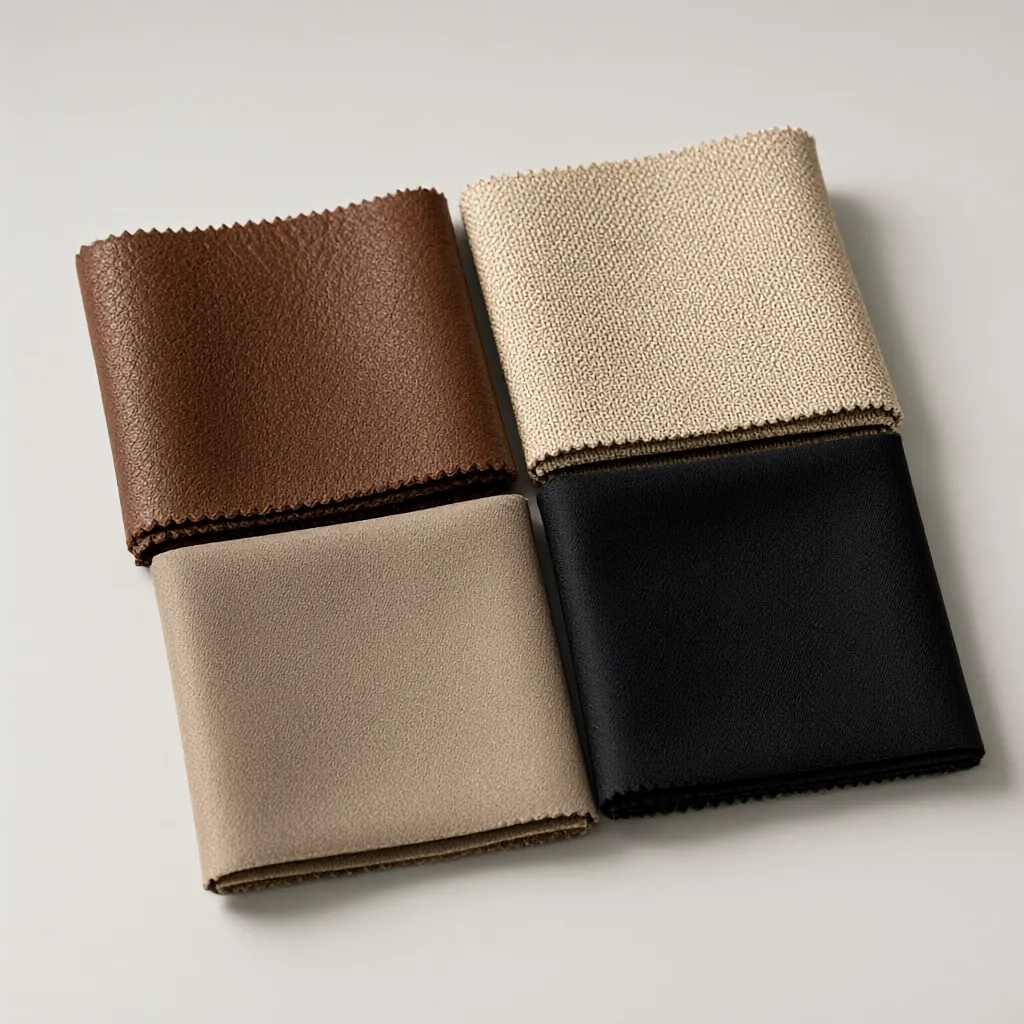
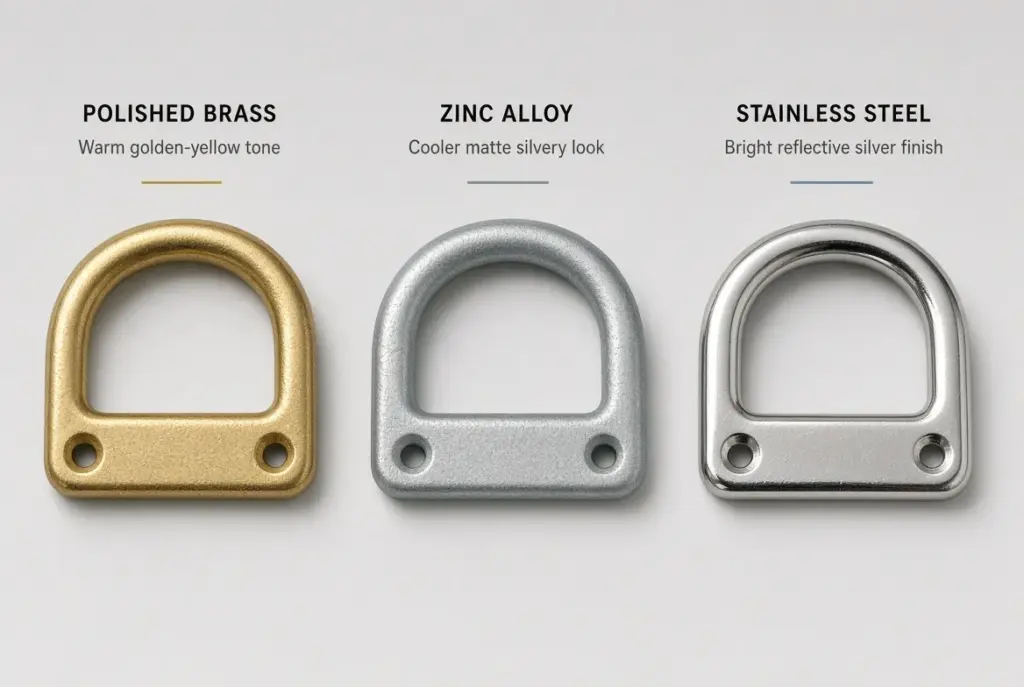
The leather components in our Remake bags — handles, straps, trim, and structural panels — are selected from top-grain and full-grain Italian hides. We pair these with YKK zippers and solid copper hardware to ensure that every metal contact point matches the leather in longevity. A bag that uses premium leather but cheap hardware will fail at the weakest link.
This dual-craft approach gives retailers a compelling story: two continents of artisan heritage in a single product, backed by materials that perform at the level the price point promises. For boutiques targeting customers who value authenticity and longevity over fast-fashion trends, the combination resonates.
Cost-Per-Use: Why Higher Grades Cost Buyers Less Over Time
The sticker price of leather grade can mislead buyers into choosing the cheapest option. A more useful metric is cost-per-use over the product’s lifetime.
| Scenario | Preço de varejo | Expected Lifespan | Cost Per Year |
|---|---|---|---|
| Full-Grain Italian Leather Tote | $280 | 15 anos | $18.67/year |
| Top-Grain Italian Leather Tote | $180 | 10 anos | $18.00/year |
| Corrected-Grain “Genuíno” Leather Tote | $80 | 3 anos | $26.67/year |
The budget bag costs more per year than either premium option — and that calculation ignores the customer dissatisfaction, returns, and brand damage that come from a product that cracks and peels within a few seasons.
For B2B buyers, the implications are concrete:
- Lower return rates — Premium leather bags have fewer material-related defects, reducing reverse logistics costs.
- Higher repeat purchase rates — Customers who are satisfied with product longevity come back for more.
- Stronger brand positioning — Selling bags that age well builds word-of-mouth and review content that no ad budget can buy.
When you explain cost-per-use to your retail customers — or when they discover it on their own — they become advocates for the quality tier you sell. That is the compounding return of sourcing better materials.
Best Leather Types for Different Handbag Styles
Not every bag needs the same leather. The “best” leather depends on the product’s target market, price point, and design intent. Here is a practical specification guide by bag type.
| Tipo de bolsa | Recommended Grade | Why |
|---|---|---|
| Luxury Structured Handbag | Full-Grain Italian | Retenção de forma, cortina premium, develops patina over decades. Heritage positioning demands the top tier. |
| Mid-Range Satchel / Bolsa | Top-Grain Italian | Best cost-to-quality ratio. Uniform surface hides minor imperfections. 10–15 year lifespan. |
| Soft Hobo / Slouchy Bag | Nappa (Full-Grain Lambskin) | Buttery soft drape is the defining feature. Nappa’s flexibility makes it ideal for unstructured silhouettes. |
| Budget Leather Line | Genuíno (Corrected-Grain) | Real leather at an accessible price point. Surface coating provides uniform appearance across large production runs. |
| Casual / Weekend Bag | Suede or Nubuck | Textured finish signals relaxed luxury. Suede pairs well with canvas and denim accents. |
Three Rules for Matching Leather Grade to Product
Rule 1: Match lifespan to customer expectation. A fast-fashion customer who refreshes bags every 2–3 seasons doesn’t need full-grain leather. A heritage brand customer who expects a 20-year companion does. Specifying leather grade above what the customer values is wasted cost.
Rule 2: The bag’s structure dictates the leather’s stiffness. Structured bags (pastas, boxy handbags) need stiffer leather — typically full-grain or top-grain cowhide at 1.2–1.4mm thickness. Soft bags (hobos, slouchy totes) need supple leather — nappa or suede at 0.8–1.0mm. Getting this wrong creates bags that either collapse or feel rigid.
Rule 3: Test with the actual hardware. Leather behaves differently once hardware is attached. D-rings stress the leather at attachment points. Magnetic closures create wear patterns on flap surfaces. Always request a complete prototype — shell, lining, hardware — before approving a material specification for production.
For a deeper look at how leather grade selection fits into your overall material strategy, veja nosso Complete Bag Material Guide for Retailers — it covers the full decision framework from market positioning to per-bag cost calculation.
FAQ: Italian Leather Grades
Is full-grain leather always better than top-grain?
Not necessarily. Full-grain excels in durability and patina development, but top-grain offers a more uniform appearance that works better for certain modern designs. If your bag collection emphasizes clean lines and consistent color across all pieces, top-grain may be the practical choice. If you are building a heritage line where aging character is part of the appeal, full-grain is the stronger option.
How can I tell if leather is really from Italy?
Look for specific provenance markers. The “Vera Pelle Italiana” consortium label certifies vegetable-tanned leather from member tanneries. Reputable suppliers will name the tannery, its location, and provide batch traceability. “Italian leather” without any supporting detail may have been finished in Italy using imported hides — which is legal but different from fully Italian-sourced and tanned product.
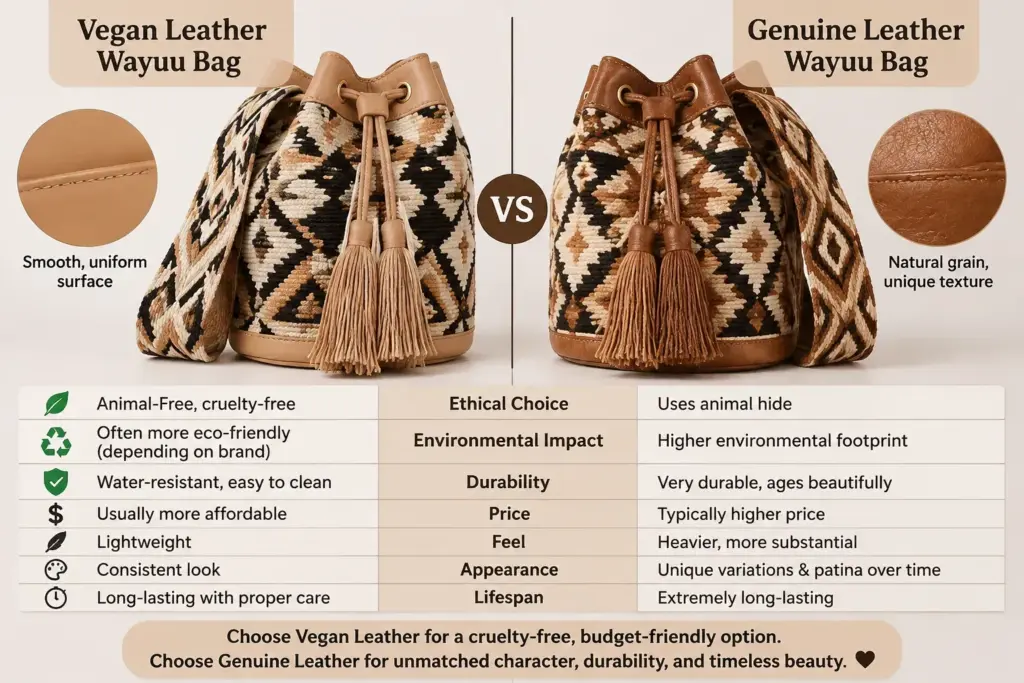
Does vegan leather match Italian leather quality?
Current plant-based alternatives — cactus leather, mushroom leather, pineapple leather — have improved significantly in texture and appearance. However, they generally fall short on tensile strength and long-term durability compared to full-grain or top-grain Italian leather. Most vegan leathers use a PU (polyurethane) binder layer that degrades within 3 para 5 anos. For products marketed on sustainability, vegan leather has merit; for products marketed on longevity, genuine Italian leather remains the benchmark.
What leather grade is best for wholesale bag sourcing?
It depends on your target market and retail price point. For mid-range collections ($100 para $250 retail), top-grain Italian leather offers the best balance of quality, consistency, and cost. For premium lines ($250+), full-grain leather justifies the price with measurable durability and a compelling aging story. Budget lines (under $100) may use corrected-grain leather, but transparency about the grade helps manage customer expectations.
Why do some Italian leather bags crack over time?
Cracking is almost always a sign of corrected-grain or heavily coated leather. The synthetic topcoat — applied to hide imperfections in the underlying split — becomes brittle with age and flexing. When it cracks, the damage is irreversible. Full-grain and top-grain leather do not crack because they have no synthetic surface coating to fail. They may develop surface scratches or wear marks, but these blend into the patina rather than appearing as defects.
Next Step: Now that you understand Italian leather grades, learn how to verify Italian leather authenticity with our 6-point field testing protocol and supplier documentation checklist.